
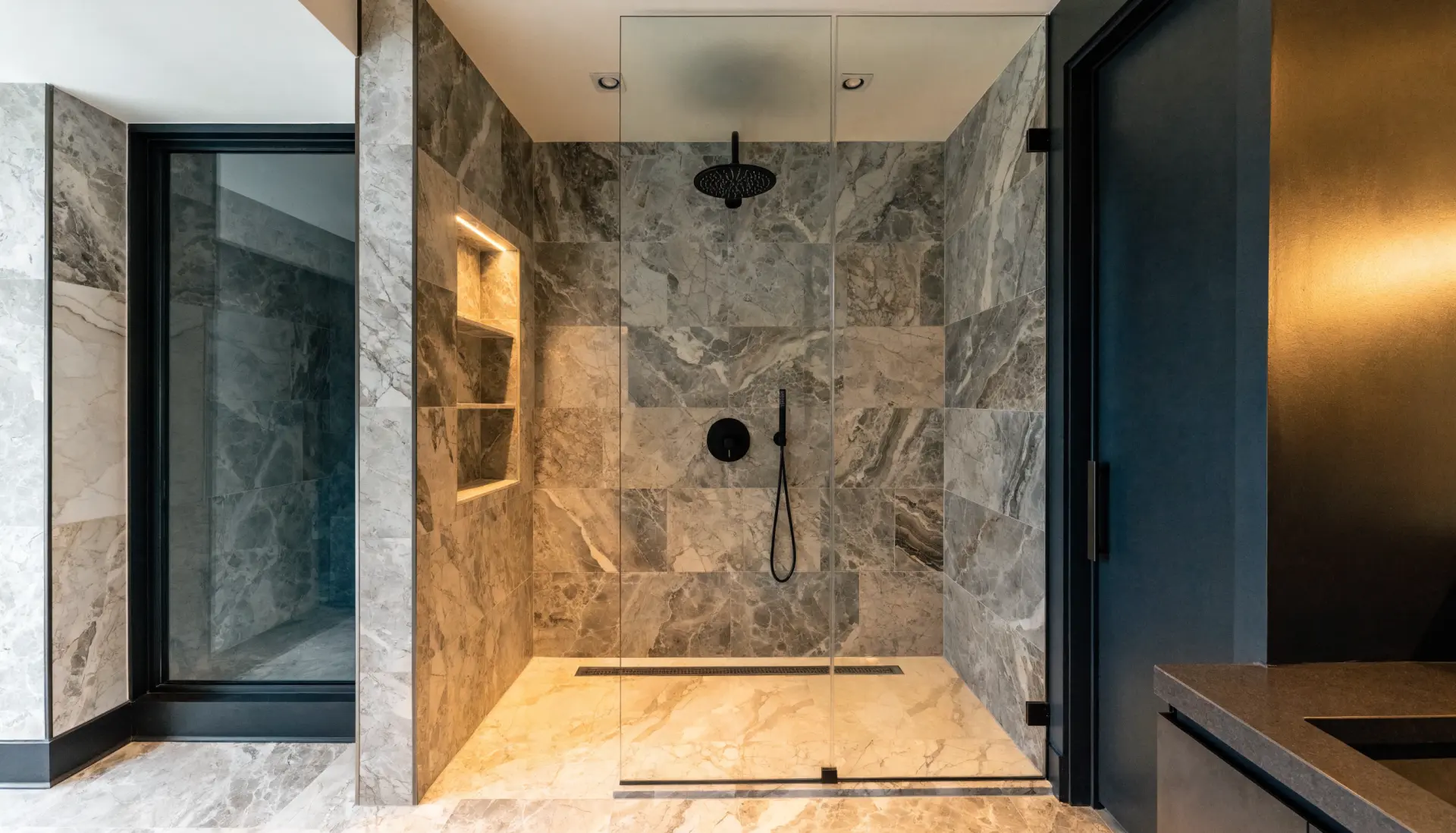
Walk-In Shower Installation
Walk-in shower installation built right — pan, slope, waterproofing, and glass enclosure, put in as part of a full bathroom remodel by a licensed Florida general contractor. Free quote, no trip fee, same-day appointment scheduling.
Walk-in shower installation as part of a full bathroom remodel
Gaven builds the walk-in shower as one phase of a full bathroom remodel — not as a job you can book on its own. A walk-in shower isn't a unit you drop in; it's a waterproofed enclosure that gets built into the bathroom: the pan is sloped and sealed, the walls are waterproofed behind the tile, the drain and valve are roughed in, and the glass goes in last. It's designed and installed alongside the rest of the bathroom, not bolted onto a room that's otherwise staying the same.
Gaven does notinstall walk-in showers as standalone jobs, and does not sell prefab shower kits or one-day shower inserts. If you want a snap-together kit, a prefabricated stall, or a retailer's one-day liner over your existing shower, that's a different kind of product — and Gaven isn't the right fit for it.
For a full bathroom remodel that includes a custom walk-in shower, request a free quote and same-day appointment scheduling.
What a walk-in shower install actually involves
What goes into installing a walk-in shower? More than most people picture. The finished shower is tile and glass, but everything that makes it last is underneath and behind that — and it gets built in a specific order during the remodel.
The sequence runs roughly like this: the old shower or tub comes out, the drain and shower valve are roughed in, the pan (the shower floor) is formed and sloped to the drain, the walls and pan are waterproofed, then it's tiled, and the glass enclosure goes in last. Each step depends on the one before it. You can't waterproof a pan that isn't sloped, and you can't set glass against walls that aren't square.
Two things separate a remodel-built shower from a kit. First, it's custom to the space — the size, the entry, the bench, the niche, and the drain location are all decided for this bathroom, not pulled off a shelf. Second, it's permitted and inspected. The drain and valve rough-in is plumbing work that ties into the full bathroom remodel and gets inspected before anything closes up. That's the part a one-day insert skips, and it's the part that determines whether the shower is still watertight in ten years.
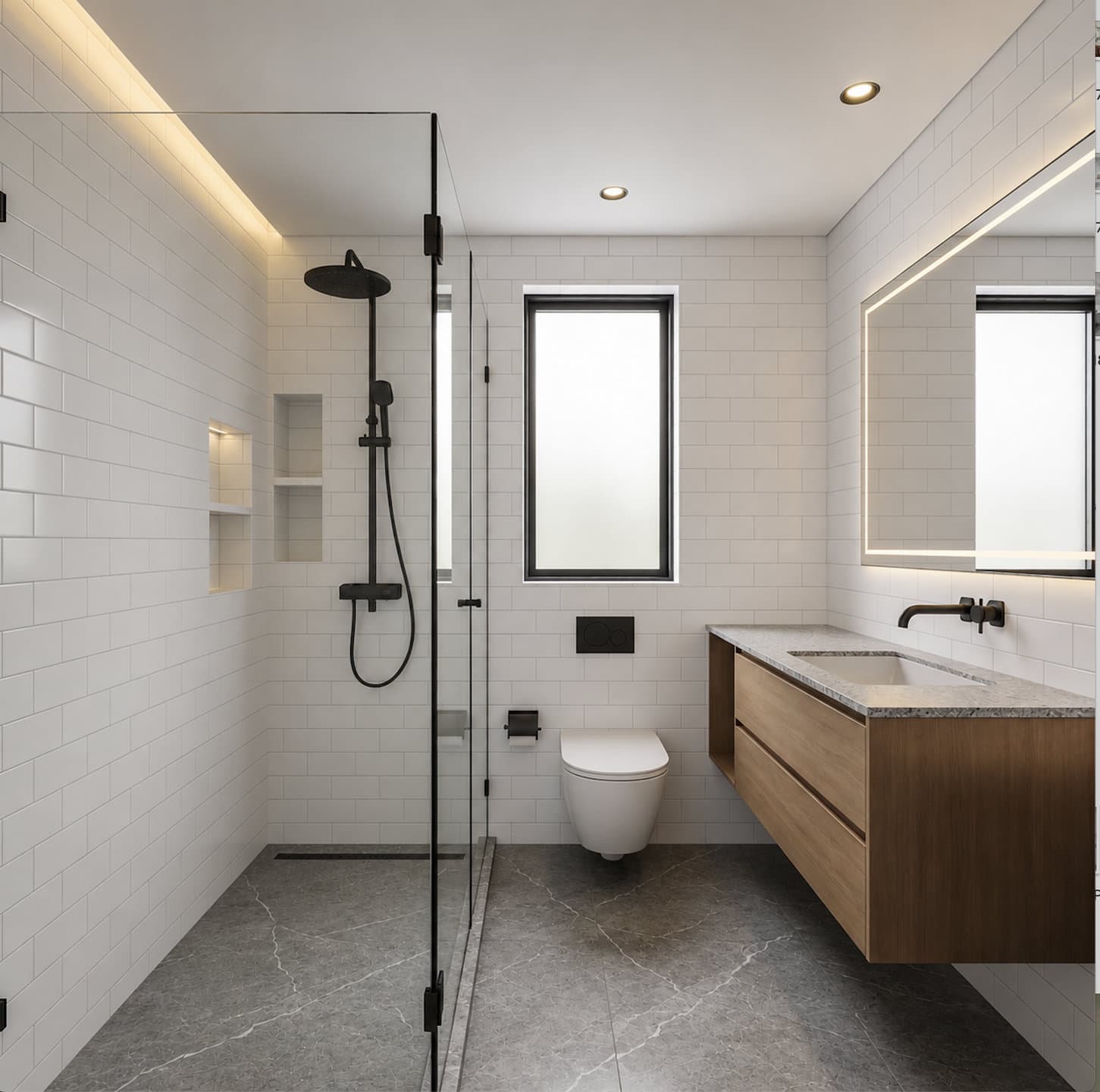
The shower pan and the slope that has to be exact
The shower pan is the single most important part of the build, and the part most likely to fail when it's done wrong. The pan is the sloped floor that carries water to the drain, and the slope isn't a suggestion — it's a code requirement with a specific number.
Under the International Plumbing Code, the shower liner must be pitched one-quarter inch per 12 inches — a 2 percent slope — toward the drain. The residential code sets a band around it: the receptor slope has to be at least a quarter inch and no more than a half inch per foot. Too little slope and water pools and seeps; too much and it's uncomfortable to stand on and tile won't lie flat. Hitting that window exactly is the difference between a shower that drains clean and one that grows mold in the low spots.
There are two ways to build the pan. A pre-formed, pre-sloped pan comes with the slope already built in and installs faster. A traditional mud-set pan is built by hand on site, sloped by the installer, which takes more skill but fits any shape. Gaven chooses the method based on the shower's size and shape, and prices it as part of the full bathroom tier pricing breakdown on the main bathroom remodel page.
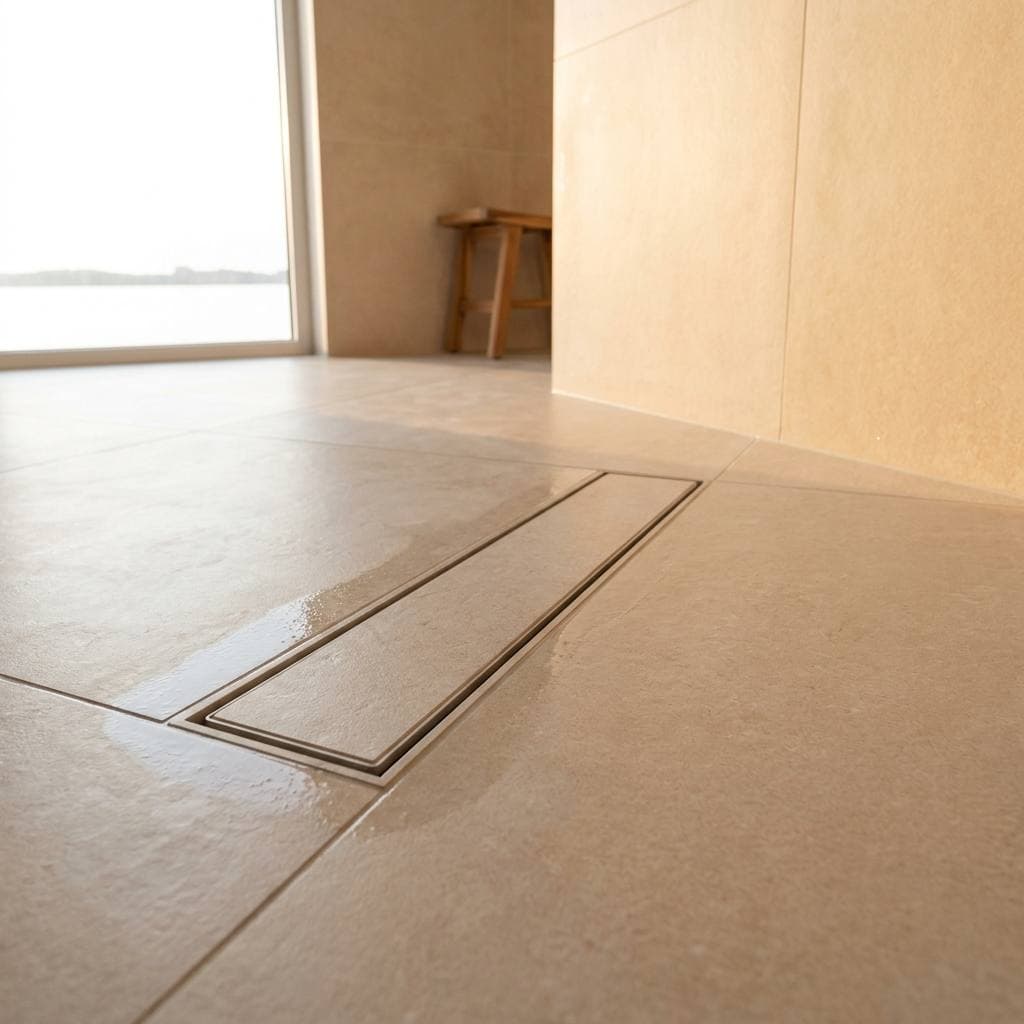
Curbless showers, ADA entry, and aging in place
A curbless walk-in shower — one with no lip to step over, where the floor runs flat into the shower — is one of the most-requested upgrades, both for the look and for aging in place. It's also one of the hardest to build right, because removing the curb removes the thing that normally keeps water in.
A curbless shower works by recessing the bathroom floor slightly and sloping the whole entry toward a drain, often a linear drain set along one edge so the slope runs in a single direction. Done correctly, water has nowhere to go but the drain even without a curb. Done wrong, the bathroom floor floods.
For homeowners building for accessibility, the ADA standards give the targets. A roll-in shower for wheelchair access has to be at least 30 inches by 60 inches, with a threshold no higher than half an inch — which is effectively curbless. Even when a shower isn't being built to full ADA spec, those numbers are a useful guide for a shower meant to stay usable as people age. Gaven plans the entry, the drain type, and the floor recess during design, because a curbless shower can't be added to a floor that's already poured flat.
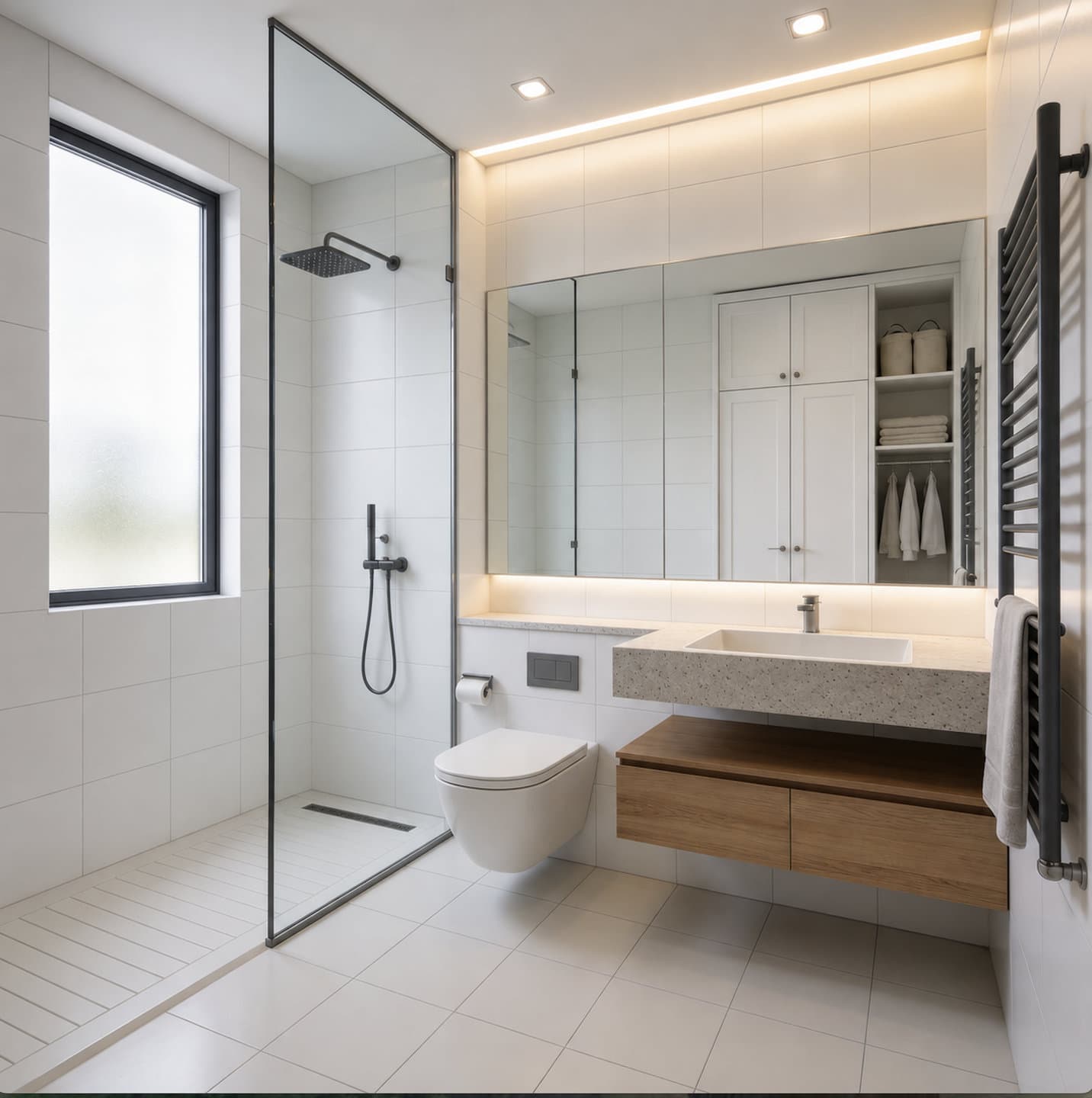
Waterproofing the enclosure (where most showers fail)
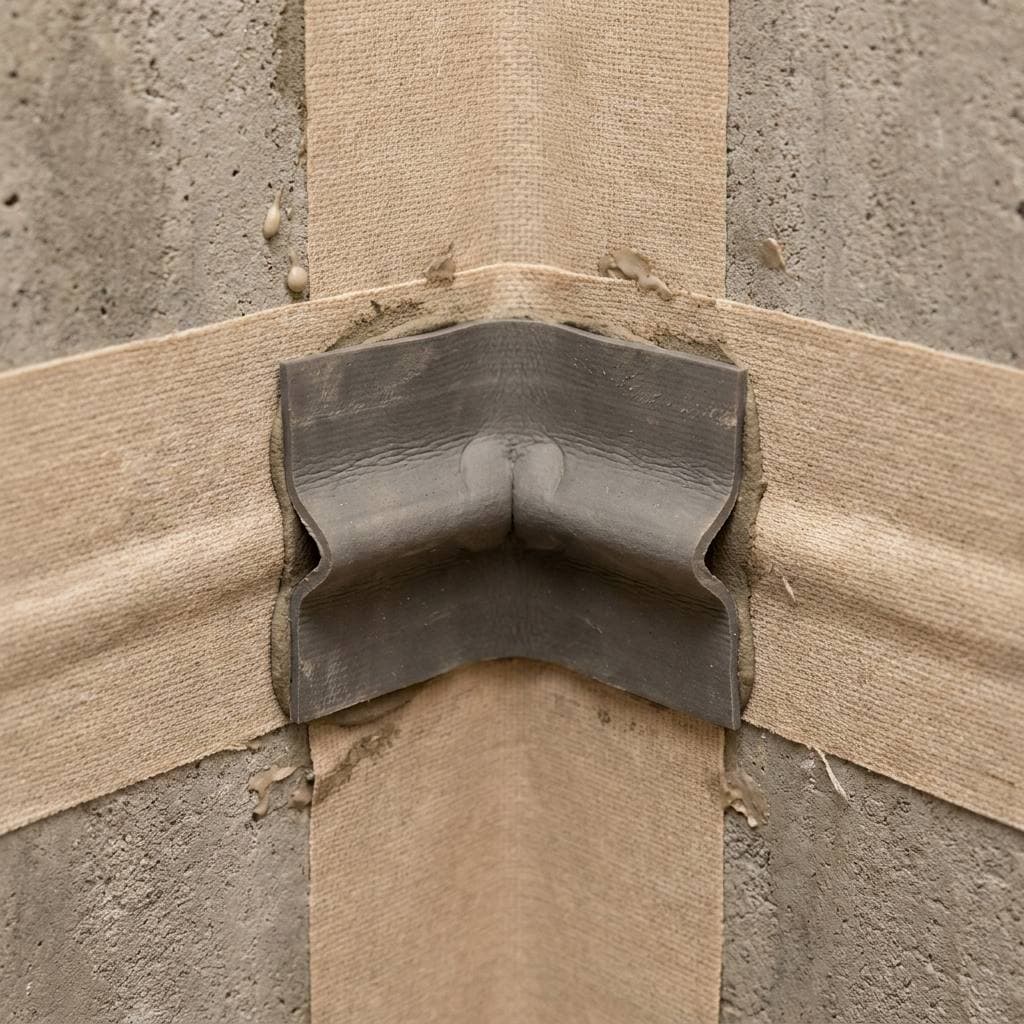
Ask anyone who's torn out a failed shower what went wrong, and the answer is almost always the same: water got behind the tile. Tile and grout are not waterproof. The waterproofing is a separate, continuous layer behind the tile, and it's the layer that actually keeps water inside the shower.
That barrier has to be continuous — across the pan, up the walls to the right height, around the niche, and sealed at every corner and penetration. A gap anywhere is where the leak starts, usually invisibly, rotting the framing behind the wall for months before a stain appears. This is why waterproofing is its own step with its own inspection point, not something brushed on at the end. The membrane goes on, it's checked, and only then does the tile go up.
This is also the honest reason a walk-in shower belongs in a permitted remodel and not a weekend project. The waterproofing is hidden the moment the tile covers it — if it's wrong, you don't find out until the damage is done and the whole shower has to come back out. Gaven treats the enclosure waterproofing as the make-or-break phase, because in a working shower, it is.
Glass, niches, and the finish details that get planned early
The parts of a walk-in shower people actually see — the frameless glass, the recessed niche, the bench — look like finishing touches, but they're decided early because each one changes what happens underneath.
- A frameless glass enclosure needs the walls plumb and the curb or pan edge built to carry the glass; the hardware locations are set before tile, not after.
- A niche— the recessed shelf for bottles — is framed into the wall during rough-in and has to be waterproofed as carefully as the rest of the enclosure, because it's a hole cut into the wet wall.
- A bench has to be sloped slightly so water sheds off it and waterproofed underneath.
- A doorless or curbless walk-inlayout has to be sized so water doesn't escape the opening.
None of these can be added after the shower is tiled. They're planned in design, framed at rough-in, and waterproofed before the surface goes on. The tile and stone that finish the niche and walls are selected as part of the broader bathroom material plan — but the structure that holds and waterproofs them is set here, early, where it can't be changed later.
Questions homeowners ask
Is walk-in shower installation available as a standalone project?
No. Gaven builds walk-in showers only as part of a full bathroom remodel that also includes demolition, plumbing, waterproofing, tile, and final inspection. If you want a prefab kit, a one-day shower insert, or a liner over your existing shower, that's a different product — Gaven isn't the right fit for standalone shower jobs.
What's the minimum slope for a shower pan?
Code sets it at a quarter inch per foot — a 2 percent slope toward the drain — with the residential code allowing up to a half inch per foot. Too little and water pools; too much and tile won't lie flat. Gaven builds the pan to that window exactly, because the slope is what makes the shower drain instead of holding water.
Can you build a curbless walk-in shower?
Yes. A curbless shower runs the bathroom floor flat into the shower with no lip to step over, using a recessed floor and a sloped entry — often with a linear drain — so water still reaches the drain without a curb. It has to be planned before the floor is set, which is why it belongs in a full remodel rather than added later.
Do you charge to come measure and quote the shower?
No. The quote is free and there's no trip fee. The shower scope is measured and priced as part of the full bathroom remodel estimate, delivered at the site visit or within 24 hours.
Why do walk-in showers leak, and how do you prevent it?
Almost always because water got behind the tile — tile and grout aren't waterproof on their own. The real barrier is a continuous waterproofing membrane behind the tile, across the pan and up the walls. Gaven installs and inspects that membrane as its own step before tiling, sealed at every corner and penetration, which is where leaks start when it's skipped.
Can a walk-in shower be made wheelchair accessible?
Yes. An accessible roll-in shower is built at least 30 inches by 60 inches with a threshold no higher than half an inch — effectively curbless. Even short of full ADA spec, those targets guide a shower meant to stay usable as people age. Gaven plans accessible entries during design, since they depend on the floor and drain layout.
Are you licensed to build a walk-in shower in Miami-Dade?
Yes. Gaven Constructions holds Florida Certified General Contractor license CGC1524886, verifiable at MyFloridaLicense.com. The shower is built under that license as part of a permitted full bathroom remodel across Miami-Dade, Broward, and Palm Beach County.
What's the difference between a pre-formed pan and a mud-set pan?
A pre-formed pan comes with the slope already built in and installs faster, good for standard sizes. A mud-set pan is built by hand on site and sloped by the installer, which takes more skill but fits any shape or size. Gaven picks the method based on the shower's dimensions and the design, and explains the trade-off as part of the estimate.
Start a full bathroom remodel quote
Walk-in shower installation is part of the full bathroom remodel work Gaven handles across Miami-Dade, Broward, and Palm Beach County, as a licensed Florida general contractor. Free quote, no trip fee, same-day appointment scheduling.
Last updated August 2026.