
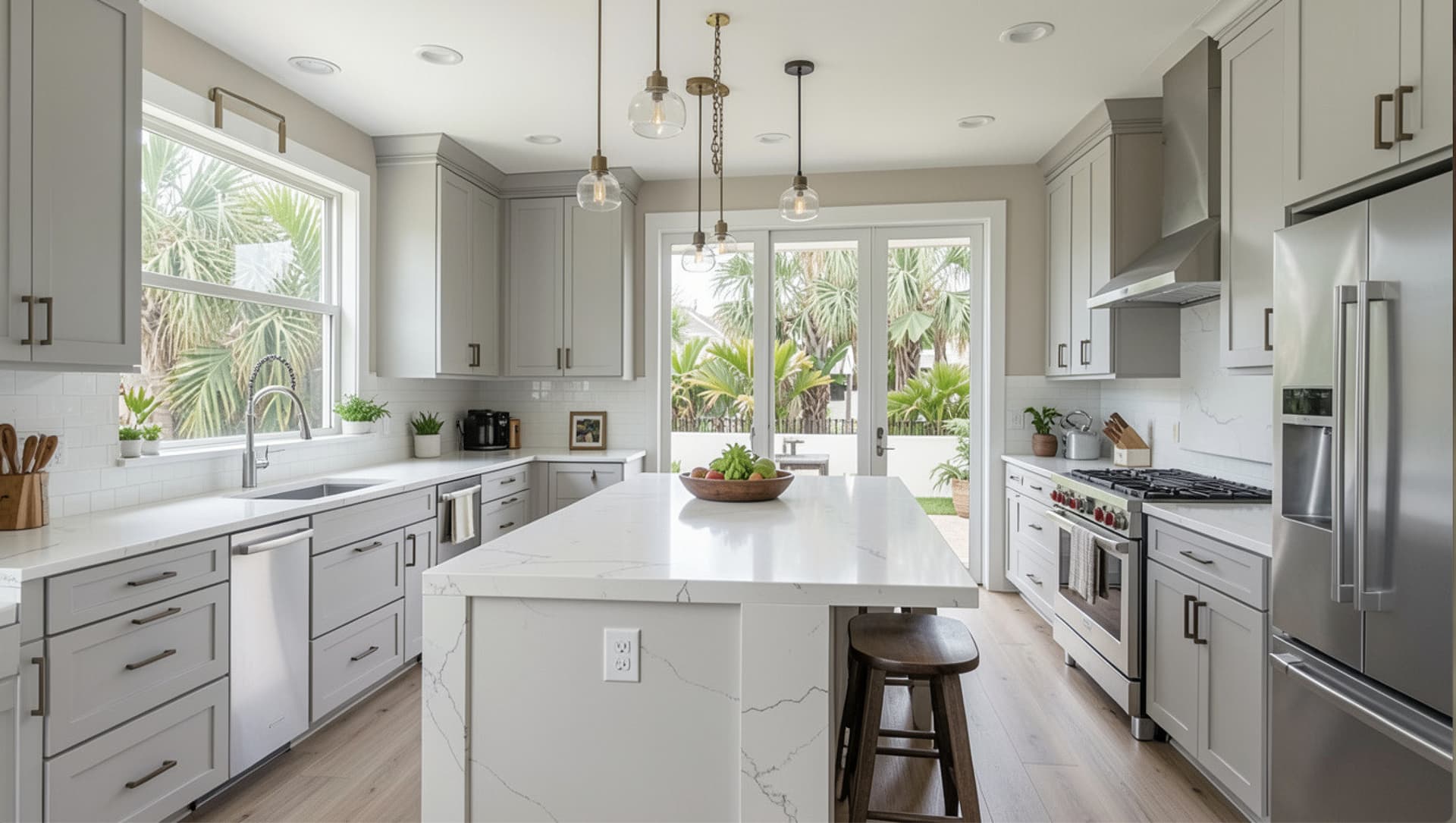
Kitchen Lighting Installation
Kitchen lighting installation — recessed, pendant, under-cabinet, and accent fixtures, planned and installed as part of a full kitchen remodel.
Licensed Florida General Contractor GCGCGC1524886, verifiable at MyFloridaLicense.com. Free written quote, no trip fee, same-day appointment scheduling. Call (786) 397-8380 to walk through your lighting layout.
Over 500 projects completed since 2015. 5.0-star rating on Google, based on 60+ reviews.
Four checks before you sign anything.
- 01
License CGC1524886
Florida Certified General Contractor, verifiable at MyFloridaLicense.com.
- 02
500+ projects since 2015
Full remodels of kitchens, bathrooms, homes, and additions across Miami-Dade, Broward, and Palm Beach County.
- 03
5.0 stars · 60+ Google reviews
A verified Google Business Profile, so you know the ratings are genuine and not curated.
- 04
37+ permits on record
Verifiable on BuildZoom. Permit history is the receipt for licensed work.
Lighting installation as part of a full remodel.
Lighting is the layer that makes a finished kitchen feel polished or feel flat, but it is not the kind of work Gaven takes on by itself. The lighting plan gets designed during the kitchen layout phase, the wiring goes in during the electrical phase rough-in, and the fixtures hang at the end — after drywall, after cabinets, after the counters and backsplash are done. A full kitchen remodel runs 8 to 16 weeks and lands between $20,000 and over $300,000 depending on what you choose. You can see the full kitchen remodel scope and tier pricing on the main kitchen page.
Full kitchen remodels with a layered lighting plan.
- Lighting plan designed during the kitchen layout phase
- Circuits, switch legs, and dimmers roughed in with the electrical
- Under-cabinet wiring routed before drywall and cabinets close
- Recessed cans, island pendants, and accent fixtures hung at finish
- Color temperature and dimmer compatibility spec'd as one decision
If you are remodeling the whole kitchen and the lighting is part of it, it is worth a quick call to grab a free quote and book a same-day appointment to talk through your layout.
Fixture swaps as a standalone job.
- Swapping a few cans or hanging one pendant in an untouched kitchen
- Adding under-cabinet strips with no other kitchen changes
- Bulb, fixture, or dimmer replacement as a single-trade call
- Recessed-can retrofit in an existing ceiling, nothing else changing
- Commercial lighting work — Gaven is residential only
If you just want a few cans swapped or a new pendant hung in an otherwise untouched kitchen, Gaven is not the right fit. A licensed electrician who specializes in residential fixture work will serve that scope better.
The four-layer lighting plan most kitchens get wrong.
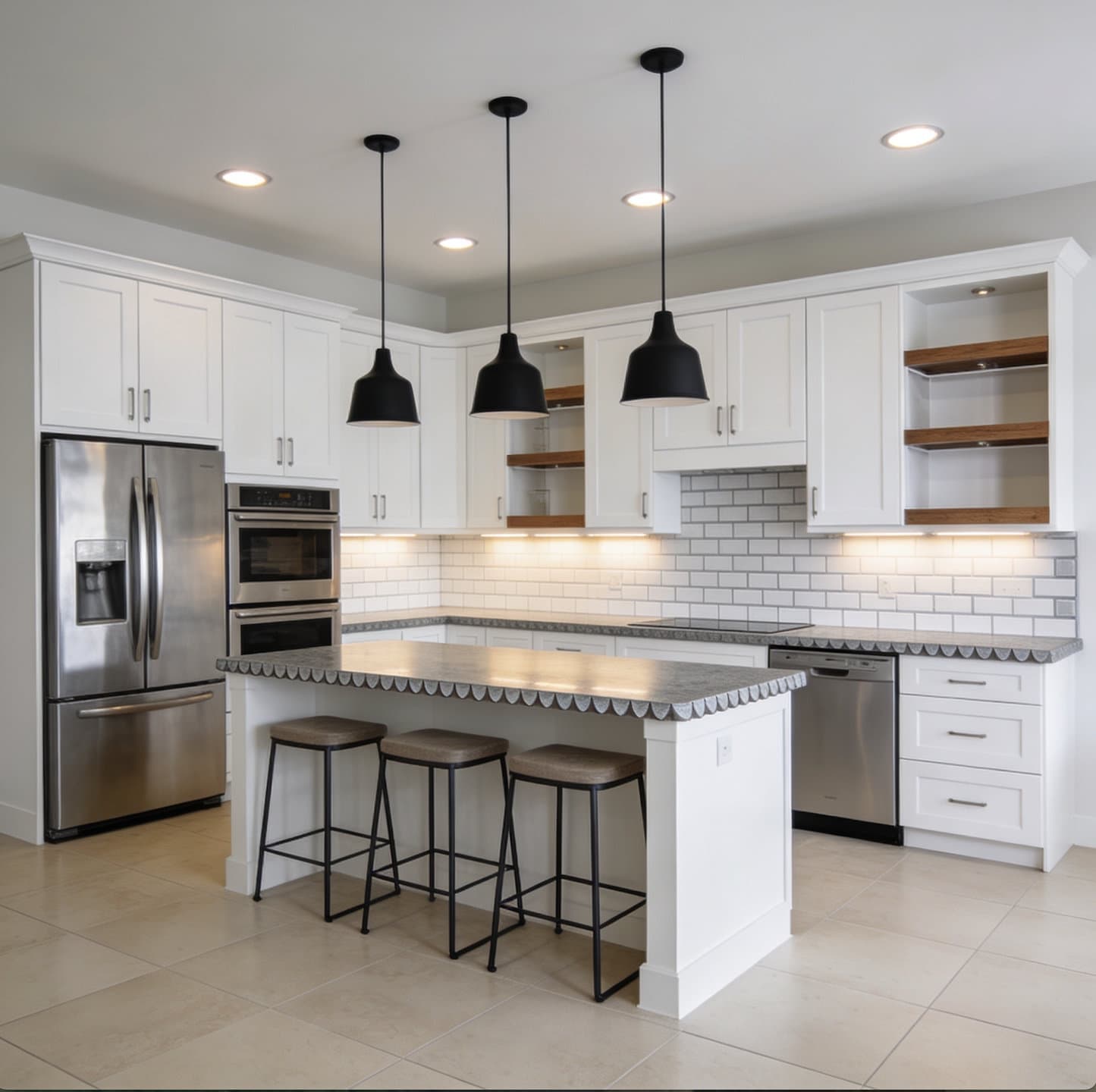
A good kitchen has four layers of light, and most kitchens have only one or two. Ambient light fills the room overall — usually recessed cans evenly spaced across the ceiling. Task light hits the work surfaces directly — under-cabinet strips lighting the counter, a pendant or downlight over the sink. Accent light highlights features — interior lighting in glass-front cabinets, a cove above the upper cabinets, toe-kick lighting at the base. Decorative light is the statement piece — the chandelier over the island, a sculptural pendant in a breakfast nook.
The mistake most remodels make is treating ambient as the whole plan. Recessed cans in the ceiling are great for filling the room, but they cast shadows on the counter because you are standing between the light and the work surface. That is what task lighting fixes — and skipping task lighting is the difference between a kitchen that looks finished and one that actually works to cook in. The four layers do not all have to be expensive; they have to be planned together.
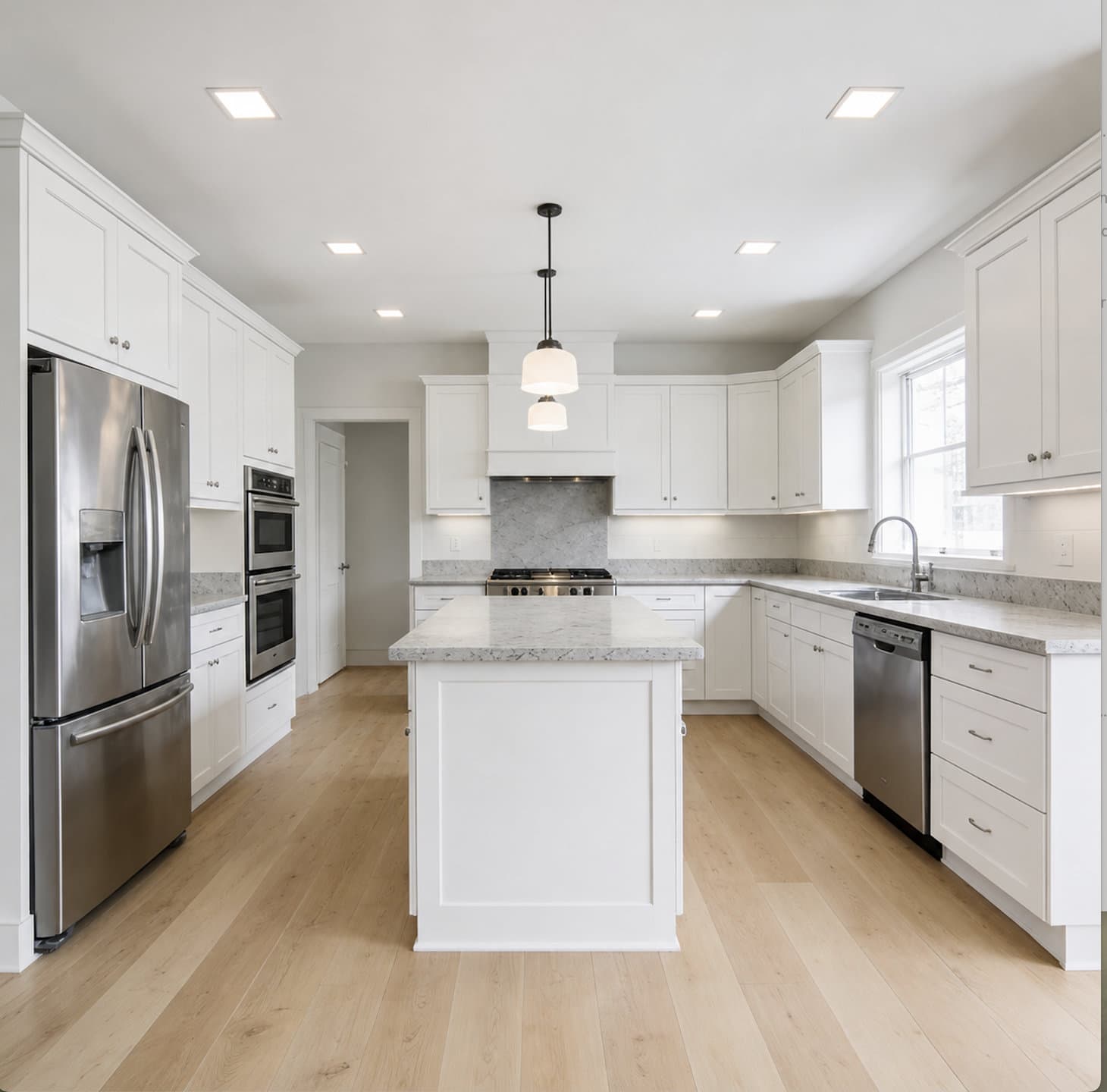
What 2700K vs 3000K vs 3500K actually means.
Color temperature is measured in Kelvin (K), and it is the single decision that makes lighting look right or wrong. 2700K reads warm and yellowy — traditional, cozy, what an old incandescent bulb looked like. 3000K is the most common “natural white” for kitchens — clean but not cold. 3500K and up reads white-to-bluish — modern, office-like, sometimes too clinical for a home kitchen.
The most common mistake is mixing temperatures across the same kitchen — 3000K cans, 2700K pendants, and 4000K under-cabinet strips. The eye picks it up instantly and the kitchen reads “off” even if no one can name why. The fix is simple: pick one temperature, usually 3000K for kitchens, and spec every fixture to match it. Energy Star publishes the certified-fixture list at energystar.gov, where you can verify color temperature and efficiency before ordering.
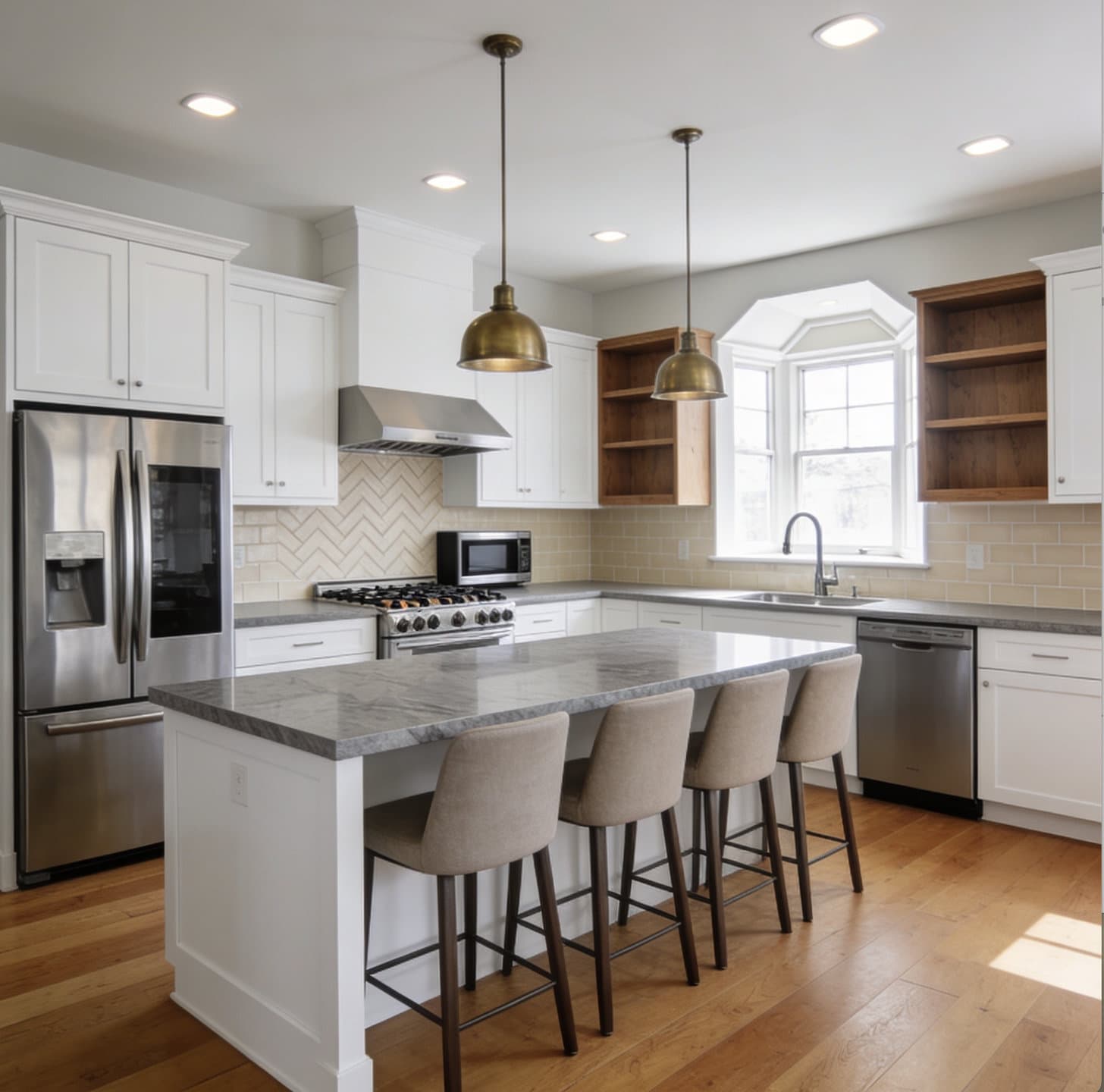
Under-cabinet task lighting — planned with the cabinets.
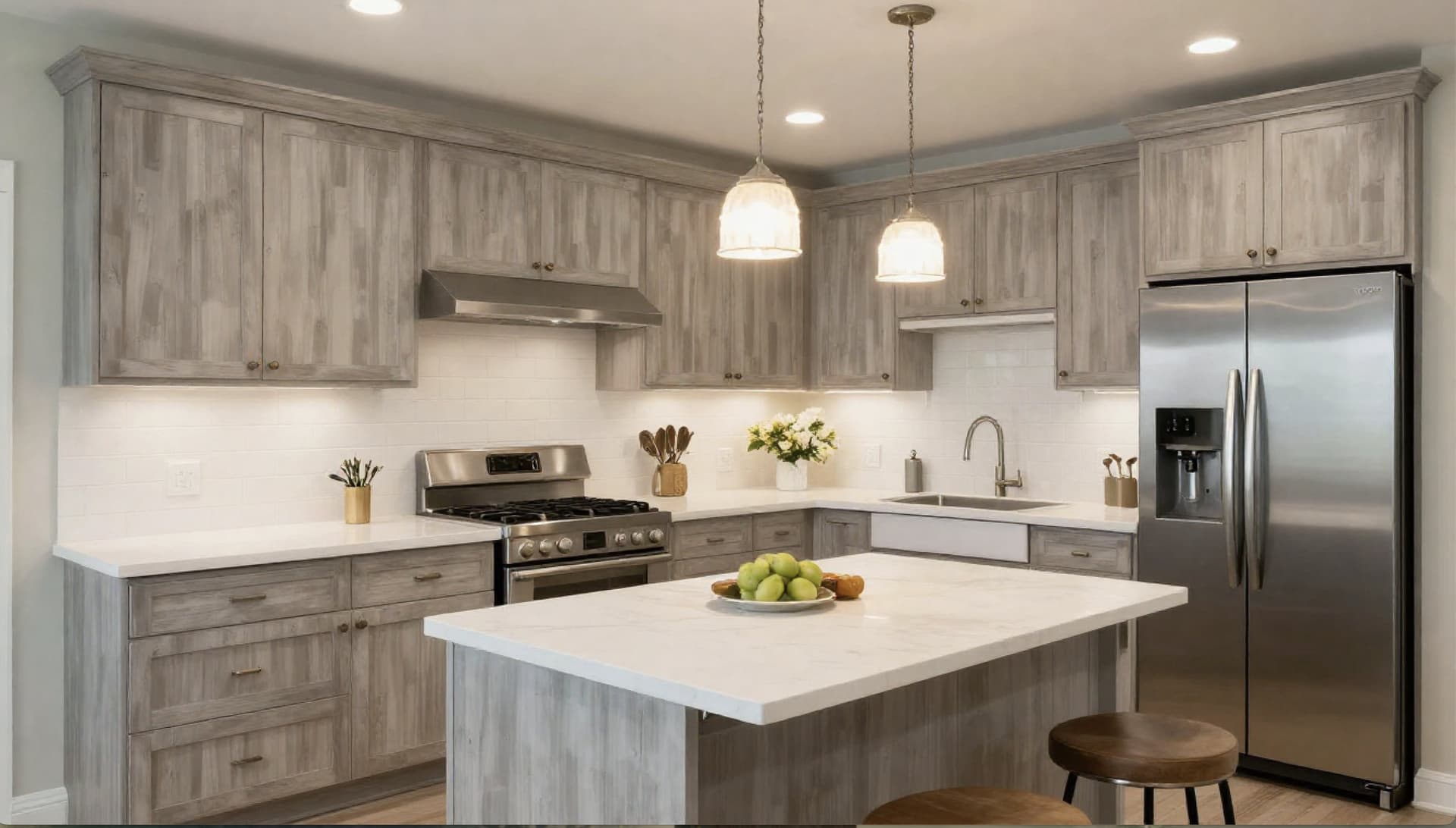
Under-cabinet lighting is the single highest-impact upgrade in a kitchen remodel, because it is the only light that hits the counter without you blocking it. But it cannot be added after the fact, not cleanly. The wiring has to be routed during the cabinet installation phase — through the back rails of the wall cabinets, with the switch tied into the kitchen circuit — before the drywall closes and the cabinets get set. Trying to add it later means surface conduit, visible cords, or tearing out drywall to chase wires.
The fixture options are LED strips (cheapest, slim profile, even wash of light), LED pucks (round downlights, more focused beams), and linear bar lights (more substantial, brightest output). Strips are the most popular for good reason — they hide under the cabinet face frame and disappear when off. Whichever fixture, the spec gets locked at the same time as the cabinet order so the wire routing can be designed in.
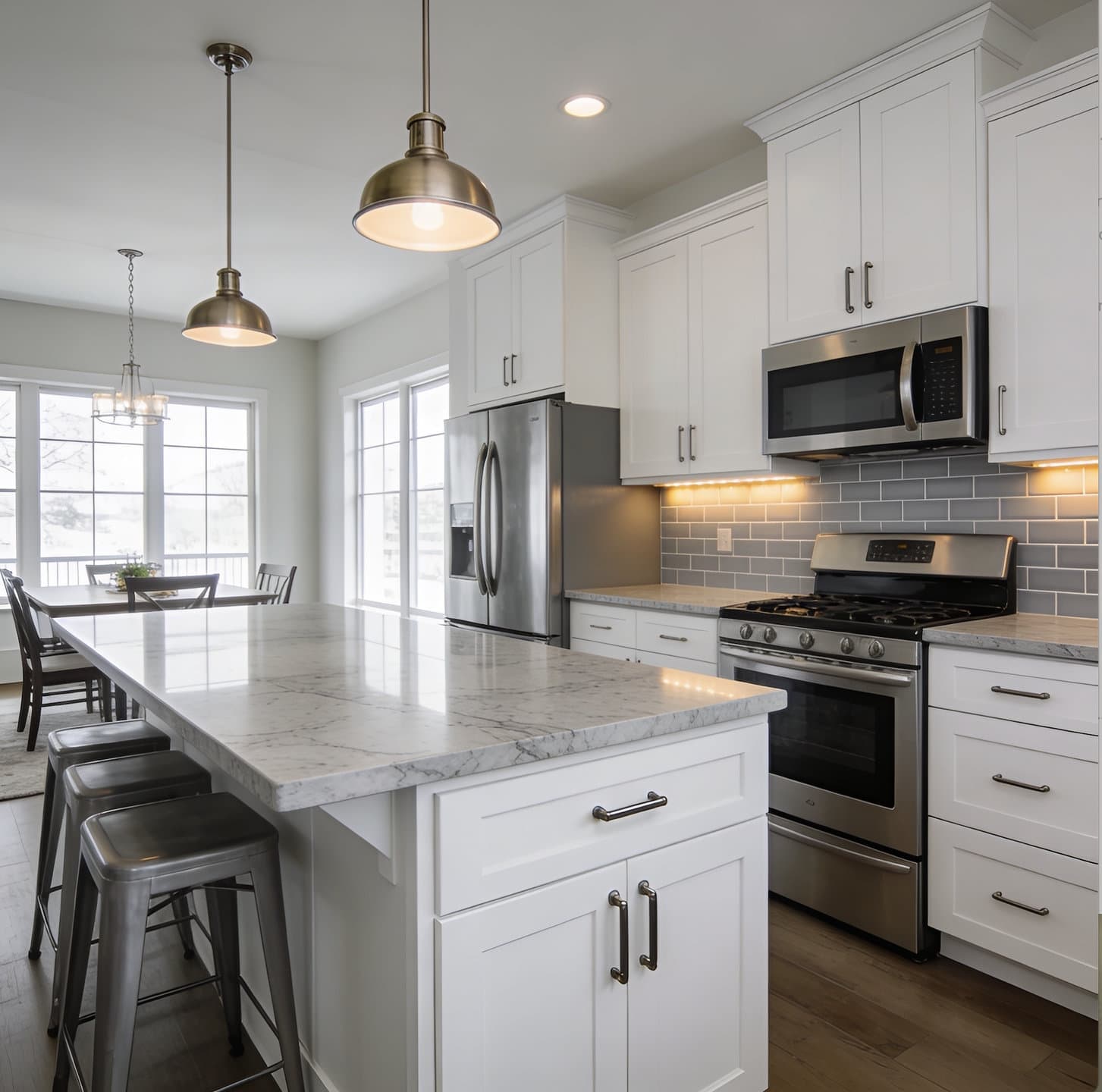
Pendants over the island — getting height and spacing right.
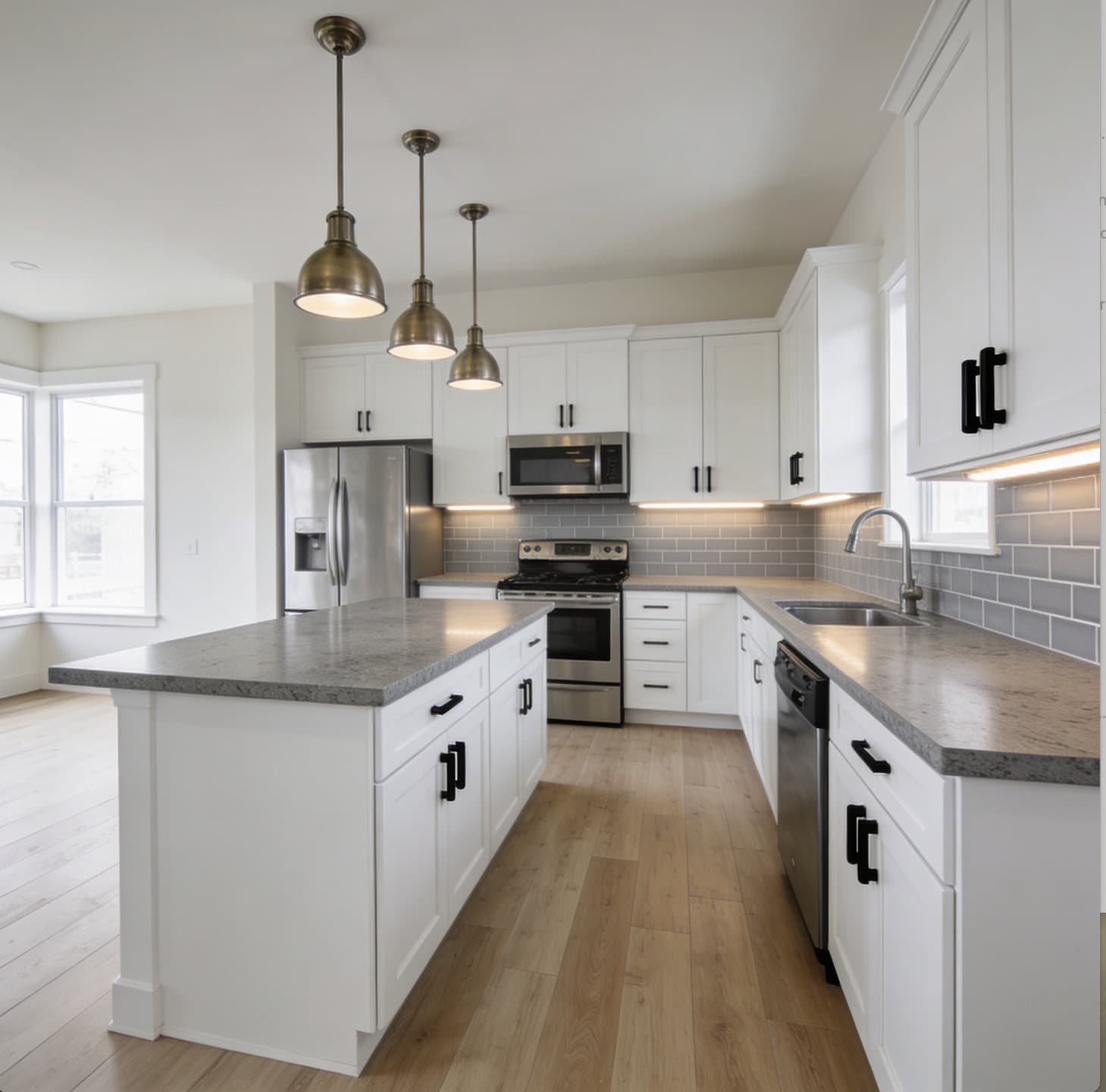
Pendants over a kitchen island are mostly decorative, but they still have rules. The standard is 30 to 36 inches from the bottom of the pendant to the countertop — high enough that someone seated at the island can see across, low enough to anchor the visual space. For multiple pendants, space them 24 to 30 inches apart, and center the group to the island, not to the cabinets above it. People miss this all the time: the wall cabinets aren’t always centered to the island, and if you center the pendants to the cabinets above, they will look off when you actually stand in the room.
The pendant count is also a planning call. Two pendants on an island around 6 feet long; three for islands 8 feet or longer. A single oversized pendant or a linear fixture works on shorter islands and reads more modern. Kichler publishes good fixture spec sheets and dimensions at kichler.com — useful for checking diameter and chord length against your island dimensions before ordering.
Dimmers and switches — the detail that breaks LED kitchens.
LED fixtures and dimmers are not plug-and-play. Every LED driver has a dimming profile — forward-phase (works with most old-style dimmers), reverse-phase / ELV (smoother low-end dim, needed for many premium LEDs), or 0–10V (commercial, sometimes used in high-end residential). If the dimmer does not match the driver, the symptoms are flicker, a hum, a buzz, or the lights refusing to dim past 30%. None of these are obvious until install day, and pulling old dimmers out of finished drywall is no fun.
This is why the fixture spec and the dimmer spec are locked together during the electrical phase, not at the end. The same electrical layout also carries the outlets behind the backsplash, so the lighting circuit, the dimmer selection, and the receptacle plan are coordinated as one decision under the same license that runs the flooring and the rest of the kitchen. It is one of the quiet differences between a remodel that turns on clean and one that ships with a buzz.
Kitchen lighting installation FAQs.
Is kitchen lighting installation available as a standalone job?
No. Gaven installs kitchen lighting only as part of a full kitchen remodel that also includes the cabinets, electrical, and the rest of the kitchen. If you just want a few fixtures changed out in an otherwise untouched kitchen, a licensed electrician is the right call for that scope. We are not the right contractor for standalone fixture swaps.
What is the right way to install LED strip lighting under the cabinets?
LED strip lighting is run under the bottom edge of the wall cabinets, hidden behind the front rail so the light spills out without the strip itself being visible. The strip is powered by a low-voltage driver that lives inside an adjacent cabinet or in a base cabinet, with the wiring routed through holes drilled in the cabinet rails during the install. The strip itself peels and sticks; the real work is the wiring plan that happens before the cabinets close up.
Should under-cabinet lighting be hardwired or plug-in?
Hardwired, if it is going in during a remodel. Plug-in strips are fine as a quick fix in an existing kitchen, but they leave a visible cord running to an outlet — which is exactly what you do not want in a clean new kitchen. Hardwired feeds the strip from inside the cabinet, ties into a wall switch, and there is no cord anywhere. The cost difference is in the labor at rough-in, not the materials.
How do you wire under-cabinet lighting to a wall switch?
The low-voltage driver feeds the strips, and the driver is fed from a 120V circuit that is switched at the wall — usually on the same dimmer that controls the rest of the kitchen lighting, or on its own switch if you want independent control. The wiring runs from the switch box through the wall, into the back of the cabinet run, and to the driver. All of this is roughed in before the drywall and the cabinets go in.
Can lights be installed inside upper cabinets?
Yes, and it is a nice upgrade for glass-front cabinets. Small low-voltage LED pucks or strips mount inside the top of the cabinet box, pointing down, and connect to the same low-voltage system as the under-cabinet lighting. The wiring runs through small holes between cabinet boxes during the install. Like everything else lighting-related, it has to be planned before the cabinets are set, not after.
What's the best way to light a kitchen island?
Two or three pendant lights hung at the right height (30–36 inches above the counter, 24–30 inches apart, centered to the island) is the classic. For a more modern look, a single linear pendant works on islands up to about 7 feet. The island also benefits from being on its own dimmer so you can dim it down for ambient evenings without dimming the rest of the kitchen. Pendant placement is planned with the kitchen island installation so the lights center on it.
How many recessed lights should a kitchen have?
The common rule is one recessed can for every 25 to 35 square feet of ceiling, spaced evenly. A 200-square-foot kitchen usually lands around 6 to 8 cans for ambient light. That is the starting point, not the whole plan — task, accent, and decorative layers go on top of that ambient grid.
Are you licensed for this work across the tri-county area?
Yes. License CGC1524886 is a Florida Certified General Contractor license, verifiable at MyFloridaLicense.com, and it covers full kitchen remodels across Miami-Dade, Broward, and Palm Beach County.
Lighting is one layer of a coordinated kitchen remodel.
Cabinets, counters, backsplash, and lighting all get specified and installed together — that is what makes the finished kitchen line up.
Florida CGC CGC1524886. Free quote, no trip fee.
Lighting installation is part of the full kitchen remodel work Gaven handles across Miami-Dade, Broward, and Palm Beach County. Florida-licensed general contractor, verifiable at MyFloridaLicense.com. Free quote, no trip fee, same-day appointment scheduling.
Want to see your new kitchen come together? Start with a full kitchen remodel quote or call (786) 397-8380 to take the first step.
Monday–Friday, 7:00 AM – 10:00 PM
Last updated August 2026.