
Kitchen Island Installation
Kitchen island installation — structure, overhang support, and the electrical and plumbing brought up into it, built as part of a full kitchen remodel by a licensed Florida general contractor. Free quote, no trip fee, same-day appointment scheduling.
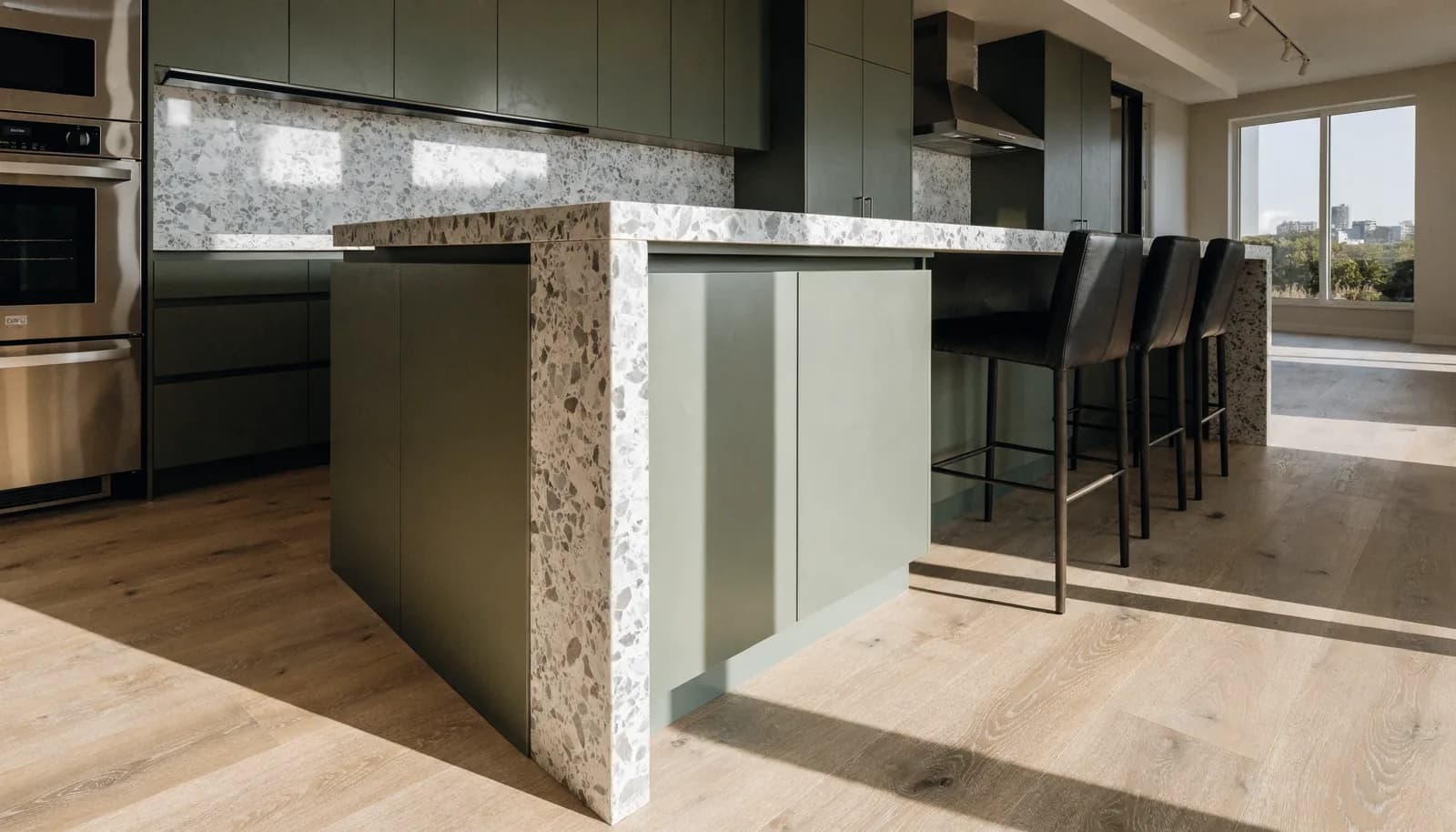

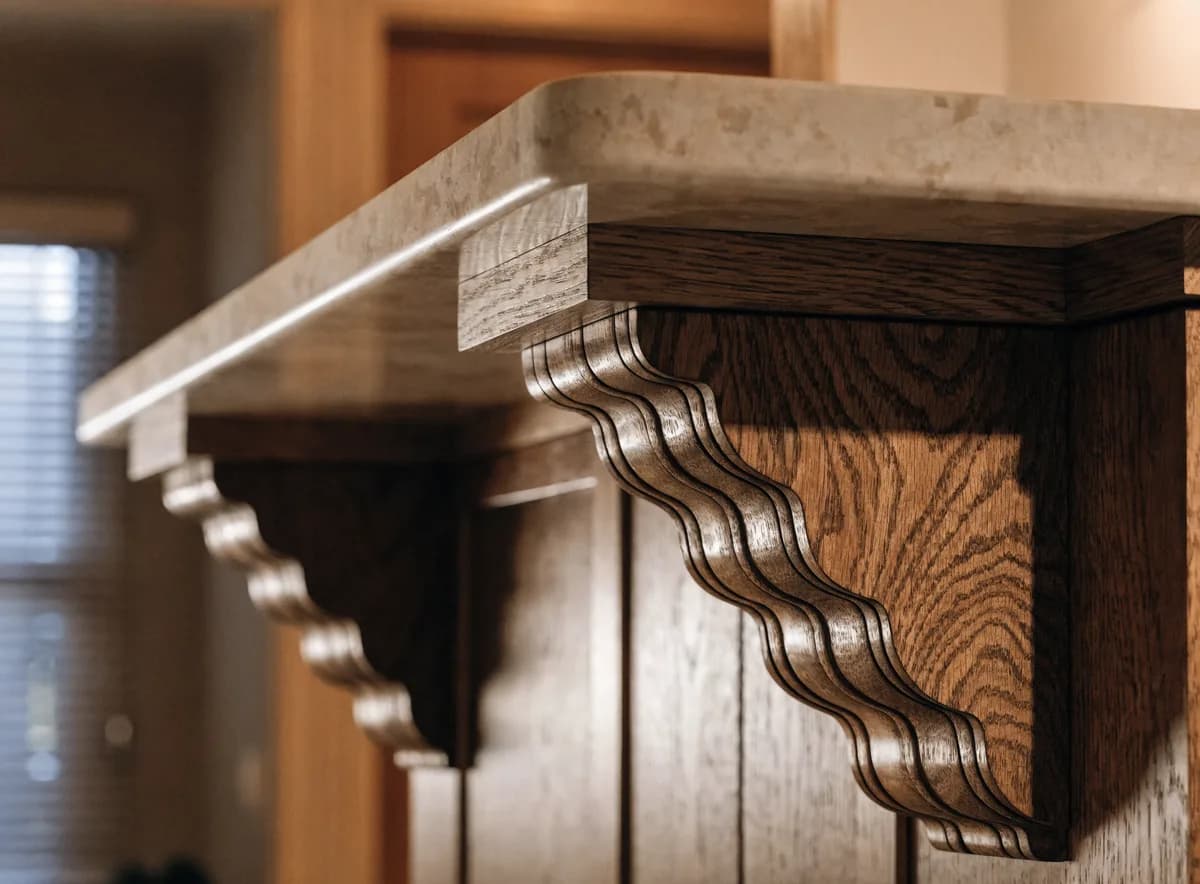
Kitchen island installation as part of a full kitchen remodel
Gaven builds the island as one phase of a full kitchen remodel — not as a job you can book on its own. An island isn't a piece of furniture you set down; it's a structure that gets anchored to the floor, often carries a sink or a cooktop, and ties into the electrical and plumbing run during the remodel. It gets designed and installed alongside the cabinets, countertops, and the rest of the layout, not bolted on afterward.
Gaven does notinstall kitchen islands as a standalone job, and does not sell or place island carts or freestanding furniture pieces. If you want a rolling island or a portable prep cart with no other work happening, that's a furniture purchase, not a remodel — and Gaven isn't the right fit for it.
For a full kitchen remodel that includes a built-in island, request a free quote and same-day appointment scheduling.
How a kitchen island gets installed during a remodel
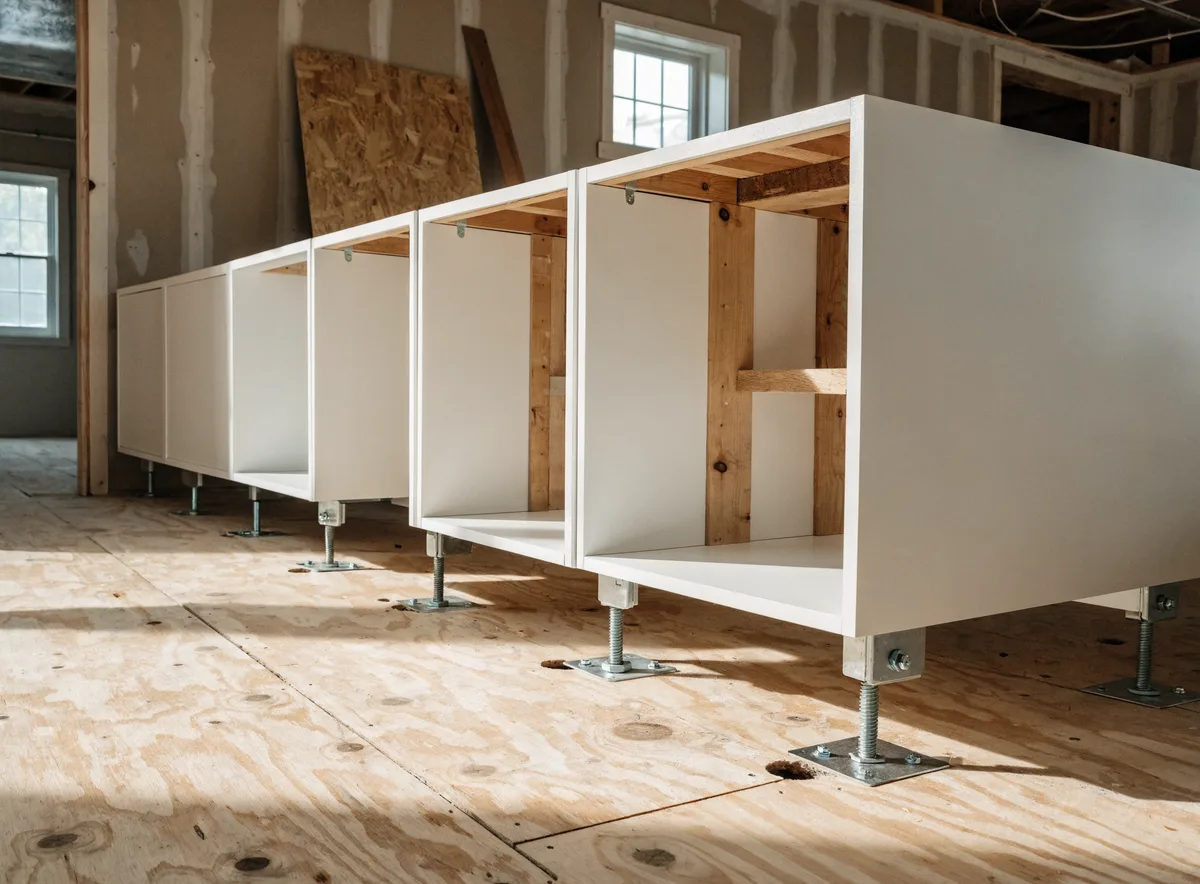
How does a kitchen island actually get installed? A built-in island starts as base cabinets that get leveled and anchored to the floor — not just set in place. Because an island stands free in the middle of the room, it has to be fastened down so it can't shift, and that anchoring has to account for whatever runs up into it.
That's the part that separates an island from the rest of the cabinetry: it's usually the convergence point for systems. If the island has a prep sink, the supply and drain lines come up through the floor — work that's part of the kitchen plumbing installation phase. If it has outlets, a cooktop, or pendant-ready wiring, a dedicated circuit is brought up through the floor too, handled in the electrical installation phase. The island itself is the destination for those systems; the floor penetrations and anchoring are what make it possible.
This is why an island can't be a weekend add-on. The floor has to be opened in the right spots before the flooring goes down, the cabinets have to be set and anchored, and only then does the countertop go on top. Sequence it wrong and you're cutting into a finished floor to chase a drain line.
Overhang support: how far a counter can fly before it needs help
The single most misunderstood part of an island is the overhang — the countertop that extends past the cabinet base, usually for seating. People assume stone is strong enough to hold itself up. It isn't, past a point, and that point is closer than most expect.
A standard countertop overhang with no seating is about 1 to 1½ inches. Once you want to sit at the island, that overhang grows, and so does the load it has to carry. According to Masters Countertops, the maximum unsupported overhang for quartz or granite is roughly 10 to 12 inches, and a useful rule of thumb is that no more than a third of the counter's width should be unsupported. Push past that and the stone can crack or the whole slab can tip.
Manufacturers draw the line at specific thresholds. Midwest Manufacturing's island installation spec states that any overhang over 10 inches needs extended build-up strips, and any overhang over 15 inches requires support carried to the floor. Those numbers are why a seating overhang isn't a finishing detail — it's a structural decision made early, before the cabinets are even set. The surface material itself is a separate choice handled in countertop installation; what matters here is what holds it up.
Corbels, steel frames, and hidden support
Once an overhang passes the unsupported limit, something has to carry it — and how that support is built changes the whole look of the island. There are three common approaches, and the right one depends on how far the counter flies and whether you want the support visible.
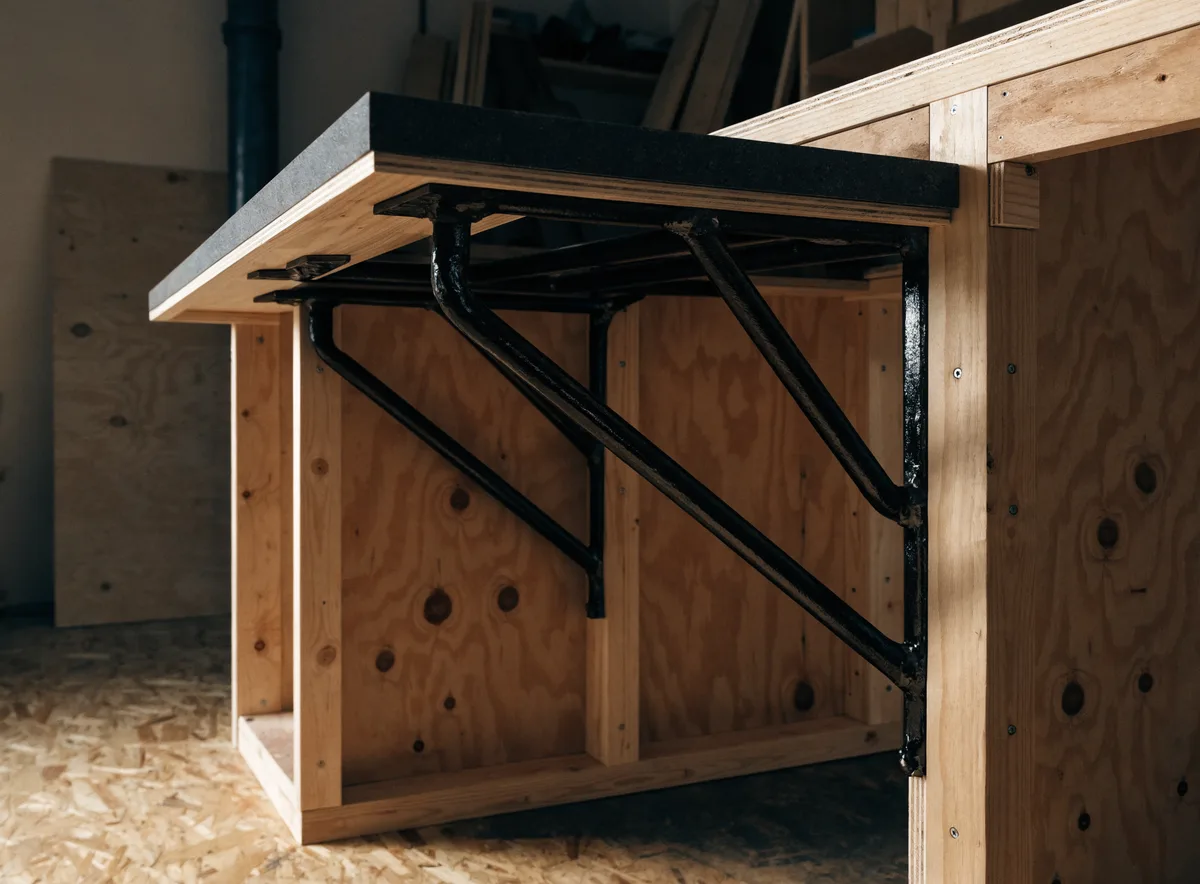
For moderate seating overhangs, wood or metal corbels — the angled brackets you can see under the counter — do the job and become part of the design. For deeper overhangs where you don't want anything visible underneath, the support gets hidden: fabricator SolidSurface notes that large overhangs up to 18 inches can be carried by a welded steel frame built from 1-by-2-inch steel tubing with an eighth-inch wall, set into the cabinet so the counter appears to float. Steel rods or flat bar plates embedded into the cabinet structure do the same thing invisibly.
The decision matters because it has to be made before the cabinets are built. A hidden steel frame isn't something you add after the fact — the cabinet has to be constructed around it. Gaven works this out during the design phase, so the support method matches the look you want and the cabinet installation accounts for it from the start. You can see where the island and its support sit in the full kitchen tier pricing breakdown on the main kitchen remodel page.
Seating, clearance, and the room an island needs around it
An island only works if there's room to use it. Two measurements drive whether an island fits a kitchen: the seating overhang, and the walkway around it.
For seating, Dura Supreme's design guidance puts a comfortable seating overhang at 12 to 18 inches, with at least 15 inches of knee clearance under the counter so people can actually pull a stool in. Too little overhang and there's nowhere to put your knees; too much and you're back into the support problem from the section above.
The walkway is the other half. An island needs enough clear floor around it for cabinet doors and appliance doors to open, for two people to pass, and for the work zones to function — and in a kitchen where the island faces the range, that clearance is what keeps the space usable instead of cramped. There are established clearance standards for this, and a too-big island in a too-small kitchen is one of the most common remodel regrets. Gaven sizes the island against the room during design, so the clearance works before anything is built — not after you discover the dishwasher door hits the island.

What makes an island cost more (and what to plan for)
An island's cost isn't really about the cabinets — it's about everything that converges on it. Two islands the same size can differ by thousands depending on what they carry.
The biggest drivers:
- Systems brought up into it — a prep sink means running supply and drain through the floor; a cooktop or outlets mean a dedicated circuit. Each is its own line item, and each requires opening the floor before flooring goes down
- Overhang support — a hidden steel frame for a deep seating overhang costs more than simple corbels, and far more than no support at all
- Ventilation— an island cooktop can't vent to a nearby wall, so it needs either a downdraft system or a ceiling-mounted hood with ducting run across the kitchen, which is one of the more expensive island upgrades
- Size and the counter material — a larger island carries more counter, and the surface choice is handled in the countertop phase
The honest version: an island is one of the higher-impact line items in a kitchen remodel because it's where the trades stack up. Gaven prices it as part of the full remodel estimate so you see what the island adds before committing to it.

Questions homeowners ask
Q.Is kitchen island installation available as a standalone project?
No. Gaven builds kitchen islands only as part of a full kitchen remodel that also includes demolition, plumbing, electrical, cabinets, countertops, flooring, and final inspection. If you want a rolling cart or a freestanding furniture island with no other work happening, that's a furniture purchase — Gaven isn't the right fit for standalone island jobs.
Q.Does an island overhang need support?
Past a certain depth, yes. A standard overhang of an inch or two supports itself, but a seating overhang doesn't. For stone counters the unsupported limit is roughly 10 to 12 inches; beyond that the overhang needs corbels, a hidden steel frame, or support carried to the floor. Gaven decides the support method during design, because it has to be built into the cabinets from the start.
Q.Can you add an island to my existing kitchen without a full remodel?
This is where the scope gate matters: a built-in island means opening the floor for plumbing or electrical, anchoring the cabinets, and setting a countertop — that's remodel-scope work, not an add-on. Gaven handles islands inside a full kitchen remodel, where the floor, systems, and cabinets are already in play.
Q.Do you charge to come measure and quote the island?
No. The quote is free and there's no trip fee. The island scope is measured and priced as part of the full kitchen remodel estimate, delivered at the site visit or within 24 hours.
Q.How much clearance does a kitchen island need around it?
Enough for cabinet and appliance doors to open, for people to pass, and for the work zones to function — there are established clearance standards for the walkway around an island. A too-big island in a too-small kitchen is a common regret, which is why Gaven sizes the island against the room during design rather than fitting the biggest island that will physically squeeze in.
Q.Can an island have a sink or a cooktop?
Yes, and that's common — but it's what makes the island remodel-scope work. A sink means supply and drain lines run up through the floor; a cooktop means a dedicated circuit and a ventilation plan, since an island cooktop can't vent to a nearby wall. Both are handled in the plumbing and electrical phases of the remodel and planned before the floor goes down.
Q.Are you licensed to build a kitchen island in Miami-Dade?
Yes. Gaven Constructions holds Florida Certified General Contractor license CGC1524886, verifiable at MyFloridaLicense.com. The island is built under that license as part of a permitted full kitchen remodel across Miami-Dade, Broward, and Palm Beach County.
Q.What makes one island cost more than another?
Mostly what it carries. An island with a sink, a cooktop, ventilation, and a deep supported seating overhang costs far more than a simple prep island, because each of those means another trade and, in most cases, opening the floor. Size and counter material add to it. Gaven prices the island as part of the full remodel so the added cost is clear up front.
See the full kitchen remodel
Start a full kitchen remodel quote
Kitchen island installation is part of the full kitchen remodel work Gaven handles across Miami-Dade, Broward, and Palm Beach County, as a licensed Florida general contractor. Free quote, no trip fee, same-day appointment scheduling.
Last updated August 2026.