Gaven Constructions

Home Additions in Miami, FL — Full Room Additions, Second-Story Additions, and Garage Conversions

Home additions Miami homeowners actually finish on schedule and on scope. A home addition is not a remodel and not a new build — it is a third project type with its own engineering: new foundation or load-path retrofit, new envelope tied into the existing one, MEP capacity verified against the existing service, and a permit set that lives in the gap between alteration and new construction. We build room additions, second-story additions, and garage conversions on single-family homes across Miami-Dade, Broward, and Palm Beach County.

Florida Certified General Contractor, license GCG1524886. Operating since 2015. 500+ projects. 5.0 stars across 60+ Google reviews. 37+ BuildZoom-verified permits.

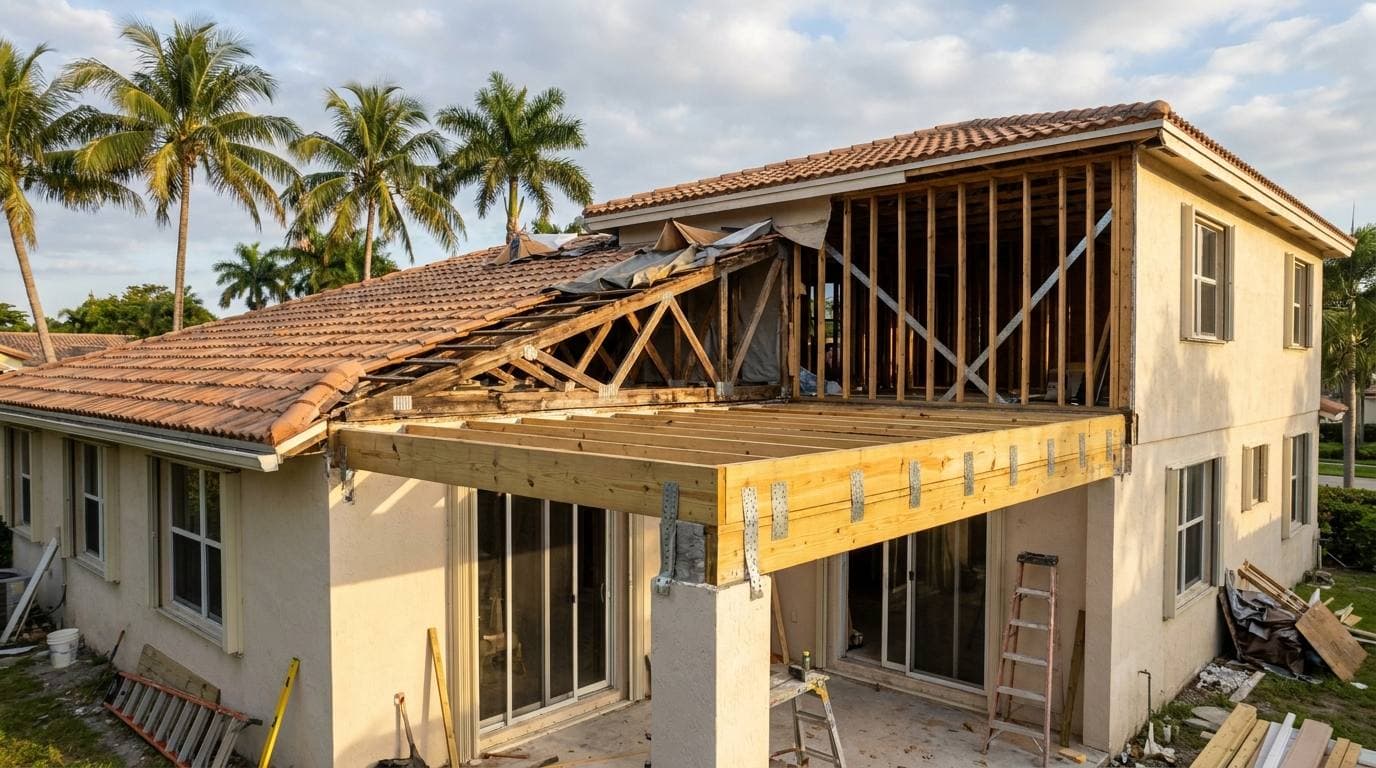
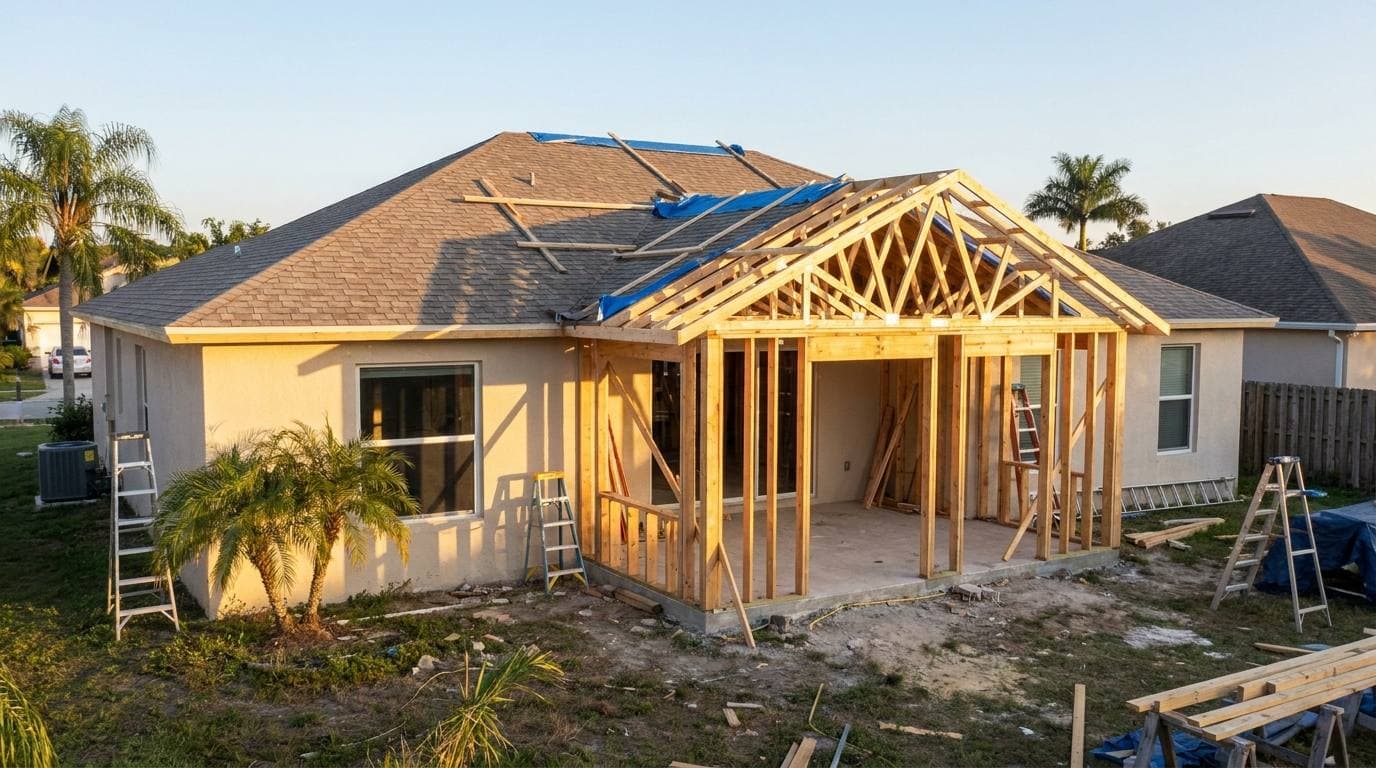
Single-family home rear elevation with framed addition tie-in to existing roof structure, Miami-Dade residential
WHY HOMEOWNERS CHOOSE GAVEN FOR HOME ADDITIONS

Why homeowners choose Gaven for home additions.

500+ Projects, 37+ Verified Permits

Eleven years of full home additions Miami homeowners can verify. 37+ permits on the public BuildZoom registry. Project count and permit count corroborated independently — not marketing math.

5.0 Stars / 60+ Google Reviews

Miami homeowners rate us 5.0 stars across 60+ Google reviews. Reviewers name their neighborhood and project type — read every one.

$0 Trip Fee, Free Quote

We never charge to come walk a home or look at a property. The site visit, FEMA zone screening, structural feasibility check, and written proposal are all free. The price sits in the contract before signing.

License GCG1524886, Verifiable

Active Florida Certified General Contractor — the only license tier authorized for unlimited residential structural scope including additions. Verify at MyFloridaLicense.com before signing with us or anyone else.

REVIEWS

What Miami homeowners say.

Gaven ConstructionsReviews on Google
5.0
SASHA SANTOYO
2 months ago

I don’t usually write reviews, but I had to for this. I’m absolutely in love with my new kitchen! The team was professional, easy to work with, and really listened to what I wanted. Everything came out even better than I imagined, and the quality is amazing you can tell they really care about their work. They stayed on schedule and made the whole process smooth and stress-free, which means a lot during a remodel. I’m so happy I chose them. Highly recommend!

View on Google →
andres sperandio
2 months ago

I’m beyond satisfied with the work Gaven did. They are professional, reliable, and the quality of the finish is exactly what I was looking for. It’s hard to find a team that actually sticks to the timeline and budget in South Florida, but these guys delivered perfectly.

View on Google →
Bradley Stern
6 months ago

Gavin Construction completed a renovation project in my unit, and the experience was excellent from start to finish. They were professional, reliable, detail oriented throughout the entire process, and the price was very fair. They did high quality work, the crew was respectful of the space, and communication was clear and consistent. What stood out most was their work ethic and commitment to doing the job right - no shortcuts, no surprises. If you’re looking for a construction or reno team in the Miami area that delivers quality work and follows through, I’d definitely recommend Gavin Construction.

View on Google →
leslier parra
6 months ago

Tommy was great to me, very professional and he always on time, also gave me the price in Miami, I would recommend it to anyone. Thank you Tommy for building my beautiful kitchen to our family.

View on Google →
Dana Bilnoski
7 months ago

Zion was amazing with ideas and help! He was very attentive and made sure our job was done perfectly to our specifications. His office staff contacted us throughout the project to be sure we were happy with how things were going and to find out if we had any questions or concerns. We had 2 bathrooms completely redone and we love them. We would definitely recommend Zion and Gaven LLC to anyone.

View on Google →
Powered by Google
SCOPE GATE

We build full home additions only — three project types under one Florida CGC license, one team, end to end.

We do build:

  • Room additions single-room or multi-room horizontal additions on a new foundation, tied into the existing exterior wall
  • Second-story additions full or partial second floors over an existing single-story home, including the structural retrofit work
  • Garage conversions attached or detached garage to conditioned living space, full envelope upgrade
  • Combined additions addition scope paired with whole-home renovation when the project warrants both running together

We do not take on:

  • Accessory Dwelling Units (ADUs) or detached guest houses (Florida 2024–2025 ADU legislation has jurisdiction-specific rules that warrant a dedicated project setup, not a line-item)
  • Pool houses, cabanas, or sheds as standalone scope
  • Decks, patios, or pergolas as standalone scope
  • Screen enclosures or sunroom kits
  • Driveway expansions, fence work, or landscape additions
  • Any addition where the homeowner does not own the property or have a clear path to title

The scope gate exists because a home addition is a 4–15 month project depending on type, with engineering, permitting, and inspections that need a single licensed GC running the sequence. Anything smaller is the wrong fit.

WHAT YOU GET

Full-scope home addition: design, structural engineering, MEP integration, permits, inspections, build, and finish. Three project types: single-story room additions, second-story additions, and garage conversions to conditioned living space.

WHO IT'S FOR

Single-family homeowners in Miami-Dade, Broward, and Palm Beach County who need additional conditioned square footage and want one licensed general contractor running the project end to end.

WHAT IT COSTS

$300–$550 per square foot for new conditioned square footage. Garage conversions run lower because the slab and envelope already exist. Second-story additions run higher because they trigger structural reinforcement of the existing first floor. Site visit before quoting.

HOW IT WORKS

Site visit, scope development, structural and MEP engineering, permit set, build, inspections, certificate of occupancy. Six phases. Schedule depends on type and scope.

5.0★60+ Google reviewsLicense GCG1524886Since 201537+ BuildZoom-verified permitsFlorida CGCHome Addition ContractorMiami-DadeBrowardPalm Beach County
SIGNS YOU NEED A HOME ADDITION

Signs you need a home addition.

Most homeowners come to us when one of five situations applies. The right project depends on which one — and on whether the math actually works on your specific property.

The family outgrew the floor plan. A new child, an aging parent moving in, a long-term remote work arrangement, a teenager who needs their own space — the most common driver. The decision is rarely "how much square footage" — it's whether the addition gets you the right rooms in the right adjacencies. A 200-square-foot primary suite expansion does not solve the same problem as an 800-square-foot second-story buildout with two bedrooms and a bath.

The lot can't hold a horizontal addition. Setbacks, lot coverage limits, zoning floor-area-ratio limits, an existing pool, or mature trees often rule out a single-story addition footprint. When the only buildable direction is up, a second story addition Miami homeowners consider becomes the default option — but the structural retrofit on the existing first floor is the real cost driver.

The garage isn't pulling its weight. A two-car attached garage that holds storage and one car is a strong candidate for a garage conversion Miami project — 400–500 square feet of conditioned space without buying new foundation or framing. The infill of the overhead door opening with a HVHZ-rated wall assembly is the technical work.

You're considering moving but the neighborhood holds you. When the cost-per-square-foot math compares the addition to the cost of moving — agent commissions, closing costs, moving costs, the higher tax basis on a new homestead — the addition often wins, even when the contract price looks high in isolation.

You're already remodeling and the scope is creeping outward. A kitchen remodel that wants to break through an exterior wall, a primary bath that wants to expand into the side yard, a whole-home renovation that needs one more bedroom — these are addition projects wearing remodel clothes. We surface this during scope conversations because adding 200 square feet under a separate addition permit is a different project than calling it "an extension of the kitchen remodel" and trying to push it under a renovation permit.

When the right answer is something else — a full kitchen or bathroom remodel rather than an addition — we tell you. If your scope is really a bathroom remodeling miami project that doesn't expand the footprint, the bathroom tentpole page is the better starting point.

WHY ADDITIONS ARE DIFFERENT

Why a home addition in Miami-Dade or Broward is its own project type.

Adding conditioned square footage to an existing home is structurally and procedurally different from remodeling the kitchen or building a new house from dirt up. The new portion has to meet current Florida Building Code 8th Edition requirements, including HVHZ envelope on every new exterior opening in Miami-Dade and most of Broward: impact glazing, NOA-rated assemblies, hurricane strapping, the full envelope spec. The existing portion of the home stays under whichever code cycle it was built to, except where the addition forces it forward.

That last clause is the entire complexity of an addition. The new portion is a code-current new build. The existing portion is grandfathered. The seam between them is where the work is: where the new framing ties into the existing roof, where the new electrical home-run lands at the existing panel, where the new water service ties into the existing supply, where the new slab meets the existing foundation. A contractor who treats an addition as "kitchen remodel plus new walls" gets the seam wrong, and the inspector finds it.

The three addition types we build sit on a spectrum of how much new structure is involved.

Room additions

Single-room or multi-room horizontal additions on a new foundation, tied into the existing exterior wall. New slab or stem wall, new framing, new roof tied into the existing roof structure, new HVAC zone, new electrical home-runs to the existing panel, new plumbing if the room is wet. The existing exterior wall becomes interior, with full new-construction techniques on the new portion and integration techniques on the seam.

Second-story additions

A full or partial second floor over an existing single-story home. The engineering is the inverse of a room addition: no new foundation footprint, but the existing first-floor structure has to be verified to carry the new dead and live loads, and in HVHZ jurisdictions the lateral load path has to be verified against current code. That commonly means foundation reinforcement, first-floor wall reinforcement, hurricane strapping retrofit through the existing roof structure that's about to be torn off, and sometimes a new shear wall added to a first-floor exterior. Second-story additions in Miami-Dade and Broward are rarely as simple as building the same square footage on top. They are a structural retrofit of the existing house plus a new build above it.

Garage conversions

Turn an existing attached or detached garage into conditioned living space. The slab, framing, and roof are already there, but none of it is conditioned-space rated. The conversion is an envelope upgrade, an MEP buildout, and a permit-and-inspection sequence that re-classifies the space from accessory to primary occupancy. The exterior garage door usually gets infilled with framing and a new exterior wall assembly that has to meet HVHZ envelope requirements just like any other new exterior opening.

We do not build accessory dwelling units (ADUs), detached guest houses, or pool houses on this scope. ADUs are a separate conversation. Florida's 2024–2025 ADU legislation introduced jurisdiction-specific rules around addressing, utility connections, and owner-occupancy that warrant a dedicated project setup, not a line-item add to a home addition.

The FEMA 50% rule, the single highest-stakes question on a coastal addition.

If your home is in a FEMA Special Flood Hazard Area, and a meaningful portion of single-family stock in Miami-Dade and coastal Broward is, there is a regulation that can change the project entirely. It is called the substantial improvement rule. The rule, in plain language: if the cost of any improvement to the home (an addition counts) exceeds 50% of the home's pre-improvement market value, the entire structure must be brought into compliance with current flood code. That typically means raising the entire finished-floor elevation to current Base Flood Elevation plus the local freeboard requirement, often four to six feet of elevation gain on a slab-on-grade home built to a pre-current flood code.

The math gets ugly fast. A homeowner planning a $400,000 second-story addition on a $500,000 coastal home in a flood zone hits the 50% threshold by a wide margin. Rather than an addition, the project becomes "addition plus raise the existing house plus replace the foundation system." Add $200,000–$400,000 to the scope and turn a 9-month addition into a 14-month near-rebuild. Sometimes the project still pencils. Sometimes the right answer is a smaller addition that stays under the 50% threshold. Sometimes the right answer is to tear down and start over under a clean new-construction permit.

We check this on every addition project in a flood zone before we quote. The answer determines what project you are actually buying.

WHEN YOU NEED A CONTRACTOR

When you need a home addition contractor (vs. a different scope).

Most of the homeowners who land here split into four buckets. The right answer depends on which bucket fits.

You need new conditioned square footage. Bedroom, primary suite, home office, in-law suite, expanded living area. This is the core home additions Miami scope, and it's what most of this page covers.

You're combining an addition with kitchen or bath scope. A primary suite addition that includes a new primary bath, or a rear addition that opens up an existing kitchen — both are common. The addition runs as the master scope; the kitchen and bath portions run inside it. If the kitchen scope is the larger project and the addition is the smaller piece, the kitchen remodeling miami tentpole is your better starting point and we'll loop in the addition scope from there.

You need a bathroom but the existing footprint can hold it. Then you don't need a home addition — you need bathroom remodeling contractors miami homeowners trust for full bath scope. Our bathroom tentpole covers the four pricing tiers, fixture and finish detail, and the FAQ depth on lead times.

You're considering full whole-home work. A home addition + whole-home gut renovation is one of the most common multi-service Gaven projects. The structural engineering for the addition gets coordinated with the full-house electrical, plumbing, and HVAC redesign. See our home renovation tentpole for the whole-home scope, and we'll integrate the addition into a single project schedule.

We do not build accessory dwelling units (ADUs), detached guest houses, or pool houses on this scope. ADUs are a separate conversation — Florida's 2024–2025 ADU legislation introduced jurisdiction-specific rules around addressing, utility connections, and owner-occupancy that warrant a dedicated project setup, not a line-item add to a home addition.

WHAT IT COSTS

What a home addition costs in Miami-Dade and Broward in 2026.

Pricing on additions varies more than on kitchens or bathrooms because the cost driver mix is different across the three project types. The honest framing is per square foot of new conditioned space, with type-segmented narrative around it.

$300–$550 per square foot of new conditioned space is the working range for room additions and second-story additions in Miami-Dade and Broward in 2026, with finish level driving most of the variance and HVHZ envelope cost driving the rest. Garage conversions sit lower per square foot because slab and envelope already exist; the cost is concentrated in MEP buildout and code-classification work.

Translated to total project bands, with the understanding that scope and finish level move these meaningfully:

Garage conversions
$80,000–$200,000 typical

Single-zone HVAC, electrical for occupancy load, infill of the garage door, full envelope upgrade, finishes. Higher end of the range when the conversion includes a bathroom or kitchenette and full code-current MEP.

Single-story room additions
$150,000–$450,000 typical

New foundation, new framing, new roof with tie-in to existing, full new-construction MEP, finishes. The $150K end is a small bedroom-and-bath addition with a simple roof tie-in. The $450K end is a 600–800 square foot family-room-and-kitchen extension with structural openings cut into the existing wall and a complex roof tie-in.

Second-story additions
$300,000–$800,000+ typical

The first-floor structural retrofit alone can run $40,000–$120,000 depending on the existing framing, foundation, and lateral load path. The new second floor is essentially a new-construction build with full HVHZ envelope. Larger second-story additions or full half-story conversions push above the $800K mark.

The variance drivers worth flagging on a site visit:

The existing electrical service

A 100-amp panel from a 1960s or 1970s home rarely has the capacity for an addition's load. A panel upgrade to 200 amps adds $4,000–$8,000; a service-side upgrade (mast, meter, FPL coordination) adds another $3,000–$6,000.

The existing HVAC

A new addition usually needs its own zone or its own system. Tying a 600-square-foot addition into an existing single-zone air handler typically fails Manual J load calculation. A second air handler and condenser run $8,000–$18,000 installed.

The existing plumbing

A wet addition needs water supply, drain-waste-vent, and sometimes a sewer tie-in capacity check. Cutting through existing slab to extend DWV is the more expensive work.

The roof tie-in

A simple gable extension off an existing gable end is straightforward. A new addition that intersects an existing hip roof, or that requires a valley cricket and modified flashing, is two to four times the labor.

Whether the project triggers the FEMA 50% rule in a flood zone

Discussed above. The single largest pricing variance driver if the home is in a Special Flood Hazard Area.

The honest pricing answer is: site visit, scope development, structural and MEP engineering review, then a fixed-price quote. We don't quote home additions over the phone.

WHY HOMEOWNERS SHORTLIST GAVEN

Why choose Gaven for a home addition.

There are dozens of remodeling contractors marketing additions across Miami-Dade and Broward, and another set of high end home remodeling South Florida builders pitching custom additions at the upper price band. The shortlist worth interviewing shares five operational traits.

Verifiable license and permit history. Florida Certified General Contractor — the CGC tier — is the only license class authorized for unlimited residential structural scope including additions. A Certified Residential Contractor (CRC) is limited to two-story scope; a Certified Building Contractor (CBC) to three. Pull any contractor's permit history at BuildZoom before signing. Gaven holds CGC license GCG1524886 with 37+ BuildZoom-verified permits in the public registry.

FEMA Substantial Improvement screening before quoting. A contractor who hasn't checked your home's pre-improvement market value, your 12-month permit history, and your specific flood zone before pricing your addition is not running the screening that protects your project from a $200K–$400K scope expansion mid-build. Every Gaven site visit covers FEMA SI math first.

Structural engineer relationships, not "we'll find one." Second-story additions and load-bearing wall removals require a stamped structural engineer's set. We work with licensed Florida structural engineers we've used across multiple projects — not a vendor we Google after contract signing.

In-house crews, single point of accountability. The framing crew, finish crew, and project manager that show up on day one are the same names on day 365. We don't outsource project supervision to general subcontracted trades and bill it as "GC services."

Written warranty and lien releases standard, not on request. Every project carries a written 1–2 year labor warranty. Sworn partial payment affidavits at every draw. Final Contractor's Affidavit and lien releases at completion. Florida's Construction Lien Law gives every supplier and subcontractor a lien right against your property — the affidavits are how you stay protected from double-payment exposure.

The five traits above don't disqualify other contractors. They give you the operational vocabulary to compare additions builders on what actually matters during a 4–15 month project, rather than on which firm has the smoother sales pitch.

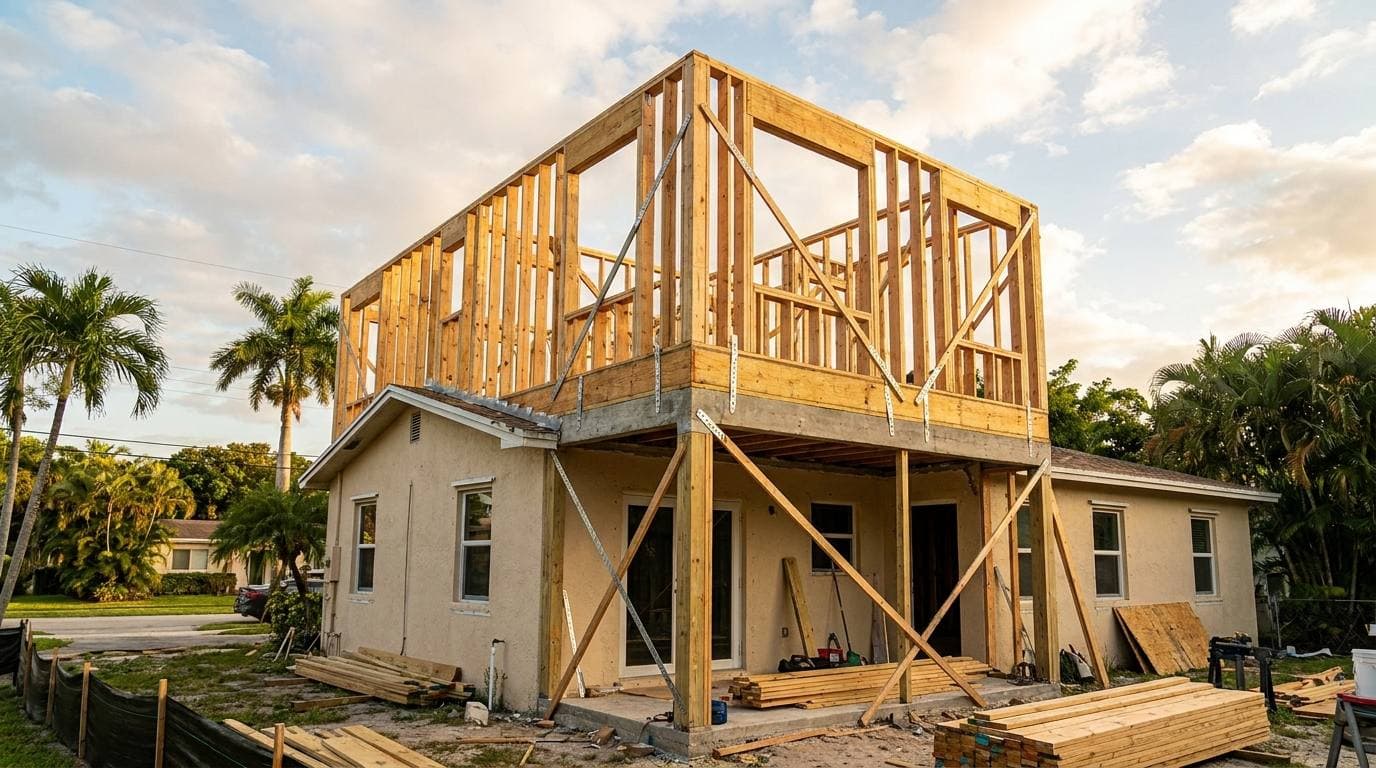
Framing stage at second-story addition tie-in showing hurricane strapping retrofit and existing roof structure removal, Miami-Dade single-family
OUR PROCESS

How a home addition runs, six phases.

Six phases. The first three happen before any new structure goes in. The last three are the visible build.

  1. 1

    SITE VISIT AND FEASIBILITY — TWO TO FOUR HOURS ON SITE

    We measure the existing structure, document the electrical panel and service size, photograph the HVAC equipment and ductwork, locate water service and sewer tie-in, identify the proposed addition footprint, and walk the roof if accessible. For coastal flood-zone homes, we pull the FEMA flood map and check the substantial improvement math against your home's appraised value before we quote scope. Output: feasibility memo and rough scope-and-budget range.

  2. 2

    SCOPE DEVELOPMENT AND ENGINEERING — TWO TO SIX WEEKS

    Architectural drawings, structural engineering, MEP coordination, energy calculations. For second-story additions, the structural engineer's load-path verification and any retrofit drawings drive this phase's timeline. Output: permit-ready drawings and a fixed-price contract.

  3. 3

    PERMIT SUBMISSION AND REVIEW — FOUR TO TWELVE WEEKS

    Varies by jurisdiction in Miami-Dade and Broward. Boca Raton and a handful of Palm Beach County municipalities run on the longer end. Coastal flood-zone homes can require Coastal Construction Control Line (CCCL) review on top of building permits, which adds time. We carry the submission and the back-and-forth with plans review. Output: issued permits.

  4. 4

    BUILD, EXTERIOR SHELL — SIX TO SIXTEEN WEEKS

    Foundation pour or first-floor structural retrofit, framing, roof tie-in, sheathing, hurricane strapping inspection, dry-in. The dried-in milestone is the point at which weather is no longer a project risk for the existing house's interior. Getting there fast is a discipline.

  5. 5

    BUILD, MEP AND FINISH — EIGHT TO SIXTEEN WEEKS

    Rough electrical, rough plumbing, HVAC rough-in, insulation, drywall, interior trim, flooring, cabinetry where the addition includes a kitchen or bath, paint, fixtures. MEP rough inspections and final inspections sequence inside this phase.

  6. 6

    FINAL INSPECTIONS AND CERTIFICATE OF OCCUPANCY — ONE TO THREE WEEKS

    Building final, electrical final, plumbing final, mechanical final, and on the right project type, the Certificate of Occupancy. We hand over warranty documentation, manufacturer specs, as-built drawings, and the full permit packet.

Total schedule, end to end.

  • Garage conversions: 4–7 months
  • Single-story room additions: 7–11 months
  • Second-story additions: 9–15 months

The schedule range for second-story work assumes the first-floor structural retrofit goes as engineered. When existing conditions reveal something the structural engineer didn't see during feasibility, schedule extends. On 1960s and 1970s homes in Miami-Dade and Broward, this happens often enough to mention.

LIVING THROUGH IT

Working in an occupied home.

Most home addition clients live in the home during construction. That is doable, and the discipline that makes it doable is a real cost driver worth naming.

We build a temporary partition wall between the existing conditioned space and the new construction zone before any envelope of the existing house is opened. Dust control runs on negative-pressure air scrubbers in the work zone. MEP shutdowns get scheduled in advance with you, not announced the morning of: water main off, panel de-energized, HVAC shut down for tie-ins. Crews enter and exit through a designated path that doesn't run through your living space. Work hours follow whichever jurisdiction's permitted window applies, which in most Miami-Dade and Broward residential zones is roughly 7 AM to 7 PM Monday through Saturday.

Two project moments are hard to stay through: the day the new construction ties into the existing structure (the day the existing exterior wall becomes interior, or the existing roof opens for a second-story tie-in), and final HVAC commissioning when both systems run together for balance. On second-story additions, two to four nights elsewhere during the roof tear-off is common. The rest of the project is livable with planning.

SERVICE AREA

Where we build.

Home additions across Miami-Dade County (full county), Broward County (full county), and Palm Beach County (full county). HVHZ jurisdictions in Miami-Dade and most of Broward shape the envelope spec on the new portion. Coastal flood-zone work in any of the three counties brings the FEMA 50% rule into play. Inland work in Palm Beach County, parts of west Broward, and parts of west Miami-Dade runs without the flood-zone layer and with a different envelope spec.

We do not build outside this footprint.

LICENSE AND TRUST

License, insurance, and what you get from a Florida CGC on an addition

Florida Certified General Contractor, license GCG1524886, verifiable at MyFloridaLicense.com. The CGC license is the credential required to pull permits for structural work, including additions of any size in Miami-Dade and Broward. A handyman license, a residential contractor license, or a building contractor license cannot legally pull a structural addition permit in Florida. Confirming the license number on every addition contractor you interview is a five-minute exercise on a state website. We make it easier by publishing the number above the fold.

500+ projects since 2015. 37+ BuildZoom-verified permits across Miami-Dade and Broward. 5.0 stars across 60+ Google reviews.

General liability and workers' compensation insurance certificates issued before any crew sets foot on the property. Naming the homeowner as additional insured on request.

License GCG1524886 (Florida CGC)

Project record 500+ projects · 37+ BuildZoom-verified permits

Reviews 5.0 ★ · 60+ Google reviews

Service area Miami-Dade · Broward · Palm Beach

RECENT WORK

Recent work.

Project narratives below are illustrative pending the Phase 0 portfolio audit. No client identification, no named cities below the county level, no identifying details until verified.

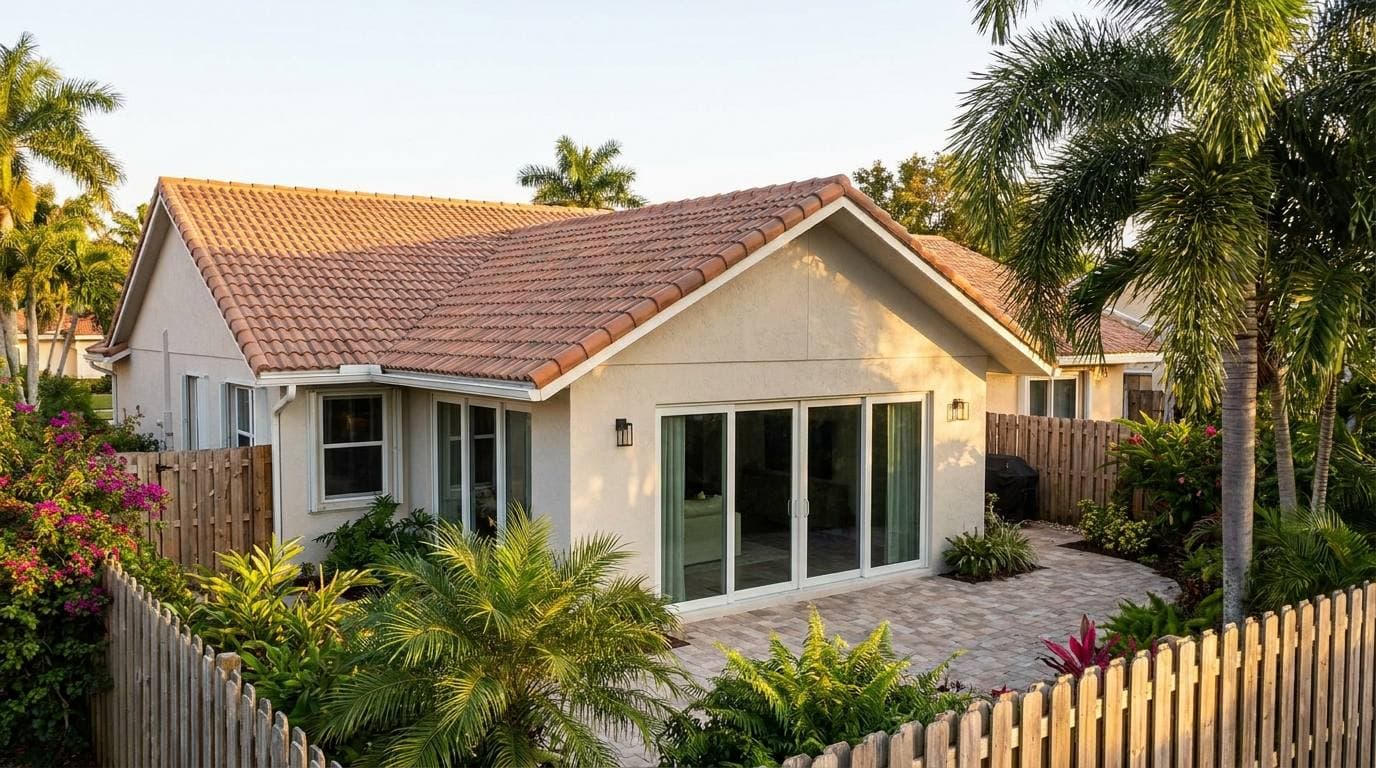
Single-story rear room addition with new gable roof tying into existing hip roof, Miami-Dade residential, illustrative pending portfolio audit

Single-story room addition, Miami-Dade single-family.

Approximately 480 square feet of new conditioned space, primary suite addition with full bath, off the rear of a 1970s slab-on-grade home. New stem-wall foundation, new framing tied into the existing rear wall, new gable roof tied into the existing hip with valley cricket and modified flashing. New 200-amp panel upgrade to support the addition load and an existing-house electrical update. New HVAC zone added to existing system after Manual J recalculation. Project ran approximately 9 months, end to end.

Second-story addition framing stage over existing single-story home with hurricane strapping retrofit visible, Broward County residential, illustrative pending portfolio audit

Second-story addition, Broward County single-family.

Partial second-story addition on a 1960s single-story home, approximately 850 square feet of new conditioned space over the rear half of the existing footprint. First-floor structural retrofit included foundation reinforcement at four bearing points, hurricane strapping retrofit through the existing roof structure during tear-off, and a new shear wall added to the first-floor exterior. New stair, new HVAC system on the second floor, new electrical home-runs to an upgraded 200-amp panel. Project ran approximately 13 months, end to end. Family stayed in the home for the duration except for a four-night window during the existing roof tear-off and the second-story dry-in.

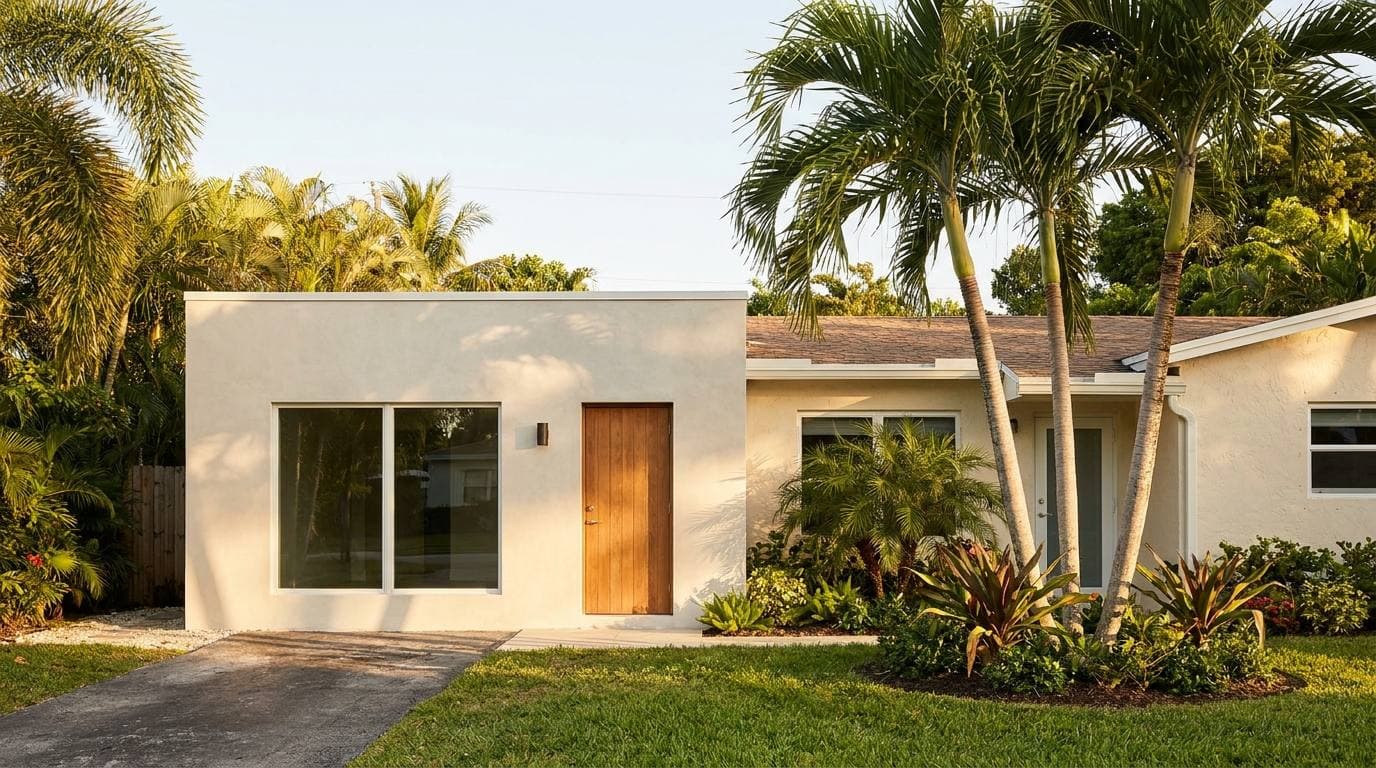
Garage conversion to conditioned living space, exterior infill of overhead door with new HVHZ-rated wall assembly, Miami-Dade single-family, illustrative pending portfolio audit

Garage conversion, Miami-Dade single-family.

Conversion of an existing two-car attached garage to conditioned living space, approximately 420 square feet, configured as a guest suite with full bath. Slab moisture mitigation, full envelope upgrade with HVHZ-rated infill of the overhead door opening, new mini-split HVAC zone, new bathroom plumbing tied into the existing main, new electrical to support occupancy load. Project ran approximately 5 months, end to end.

FAQ

Questions homeowners ask before hiring a Miami home addition contractor.

  • Do you charge to come look at my home or give a quote?

    No. The site visit, FEMA zone screening, structural feasibility check, and written quote are all free. We never charge a trip fee. You only pay when work begins, and the price — scope, schedule range, and pricing band — sits in the contract before signing.

  • How fast can you respond and schedule a site visit?

    Most calls and form requests get a response the same business day during our 7:00 AM – 10:00 PM Monday–Friday hours. Site visits are typically scheduled within 5–7 business days. The realistic call-to-construction-start runway on an addition is 4–8 months once design and permitting are factored in — the discovery and design phase runs 2–5 months before any work begins.

  • What warranty do you offer on home additions?

    Every addition carries a written 1–2 year labor warranty, spelled out in the contract before signing. Cabinetry, fixtures, stone, flooring, and waterproofing systems carry their respective manufacturer warranties on top of our installation warranty. NOA-rated envelope products on the new exterior carry the manufacturer warranty plus the installer-acceptance warranty when the install matches the technical literature. If something fails inside the warranty window because of installation, we come back and fix it.

  • How do I verify Gaven Constructions before I sign an addition contract?

    Three checks before you sign anything with us — or with anyone else. One: verify license GCG1524886 at MyFloridaLicense.com. Two: pull our permit history at BuildZoom — 37+ verified permits on the public registry. Three: read the 60+ Google reviews from our testimonials page, where reviewers name their neighborhood and project type. On a project this size, the ten minutes those checks take is worth the time.

  • What is the difference between a home addition and a remodel?

    A remodel changes what's inside the existing building footprint without expanding it: kitchen reconfiguration, bathroom renovation, full whole-home gut. A home addition expands the footprint by adding new conditioned square footage that ties into the existing structure. The technical envelope is different: an addition involves new foundation work or load-path retrofit, new envelope construction to current Florida Building Code 8th Edition and HVHZ requirements, and integration of new structure with existing, none of which apply to a remodel that stays inside the existing shell.

  • Can I add a second story to my single-story home in Miami-Dade or Broward?

    Usually yes, but the answer depends on the existing first-floor structure's ability to carry the new load and on whether the home's lateral load path meets current HVHZ requirements. A structural engineer's review of the existing foundation, first-floor walls, and connections is required before scope is set. On 1960s and 1970s slab-on-grade homes in Miami-Dade and Broward, second-story additions typically require foundation reinforcement at bearing points, first-floor wall reinforcement, and hurricane strapping retrofit. The retrofit work is real cost: $40,000 to $120,000 of the second-story addition budget on most homes. It is rarely a deal-breaker, but it has to be engineered before contract.

  • What is the FEMA 50% rule, and how does it affect my home addition in a flood zone?

    The substantial improvement rule says that if the cost of any improvement, including an addition, exceeds 50% of your home's pre-improvement market value, the entire home must be brought into compliance with current flood code. In coastal Miami-Dade and Broward, current flood code typically means raising the finished-floor elevation to Base Flood Elevation plus the local freeboard, which on slab-on-grade homes built to a pre-current flood code can mean four to six feet of new floor height. That changes a $400,000 second-story addition on a $500,000 home from an addition into an addition-plus-raise-the-existing-house project, with $200,000–$400,000 of additional scope. We check the math on every flood-zone addition during feasibility, before we quote.

  • Do I need to move out during a home addition?

    Usually no. Most clients stay in the home for the duration. Two project moments are hard: the day the existing structure opens for the new construction tie-in (the day a wall comes out or the existing roof opens for a second-story tie-in), and final HVAC commissioning when both systems run together for balance. On second-story additions, two to four nights elsewhere during the roof tear-off is common. The rest of the project is livable with dust control, scheduled MEP shutdowns, and a designated work zone separated by temporary partition.

  • How long does a home addition take in Miami-Dade or Broward?

    End to end, including engineering, permits, build, and inspections: garage conversions run 4–7 months, single-story room additions run 7–11 months, second-story additions run 9–15 months. Permit review timing in Miami-Dade and Broward varies by jurisdiction and runs 4–12 weeks. Boca Raton and parts of Palm Beach County run on the longer end of the permit window. The build phase itself is rarely the schedule bottleneck. Engineering, permitting, and existing-conditions surprises are.

  • Will my existing electrical, HVAC, and plumbing handle an addition, or do I need upgrades?

    Most additions trigger at least one MEP capacity upgrade. A 100-amp panel from an older home rarely supports a new addition's load, and a 200-amp upgrade adds roughly $4,000–$8,000. A new addition usually needs its own HVAC zone or a second system because tying into an existing single-zone air handler typically fails the new Manual J load calculation. Plumbing capacity is usually sufficient for a single new bath; a kitchen extension or in-law suite with full bath sometimes requires a sewer tie-in or main-line upgrade. We verify capacity during the site visit and price the upgrades into the contract before construction starts, not as change orders.

WHERE ADDITIONS TOUCH OTHER SCOPE

Where additions touch other scope.

Most of our addition projects include a kitchen or bathroom built into the new square footage. Those are the projects that define the firm.

If your addition's centerpiece is a new kitchen, the kitchen page goes deeper, with full pricing tiers, cabinetry and stone references, and a 15-question FAQ.

If it's a new bathroom or primary suite, the bathroom page goes deeper, with full pricing tiers, fixture references, waterproofing standards, and a 15-question FAQ.

If your project is multi-room renovation without footprint expansion, the home remodeling page covers whole-home and multi-room scope inside the existing envelope.

READY TO START?

Start your home addition project today. Free site visit, no trip fee.

Free site visit. No trip fee. Full home additions Miami homeowners can verify. Home addition feasibility starts with two to four hours on site. We measure, document, and check the substantial-improvement math on flood-zone homes before we quote. The site visit, scope conversation, and written proposal are all free. ← Back to home · ← Back to services.

License GCG1524886 · Florida Certified General Contractor & Home Addition Contractor · Serving Miami-Dade, Broward, and Palm Beach County · Monday–Friday, 7:00 AM – 10:00 PM