
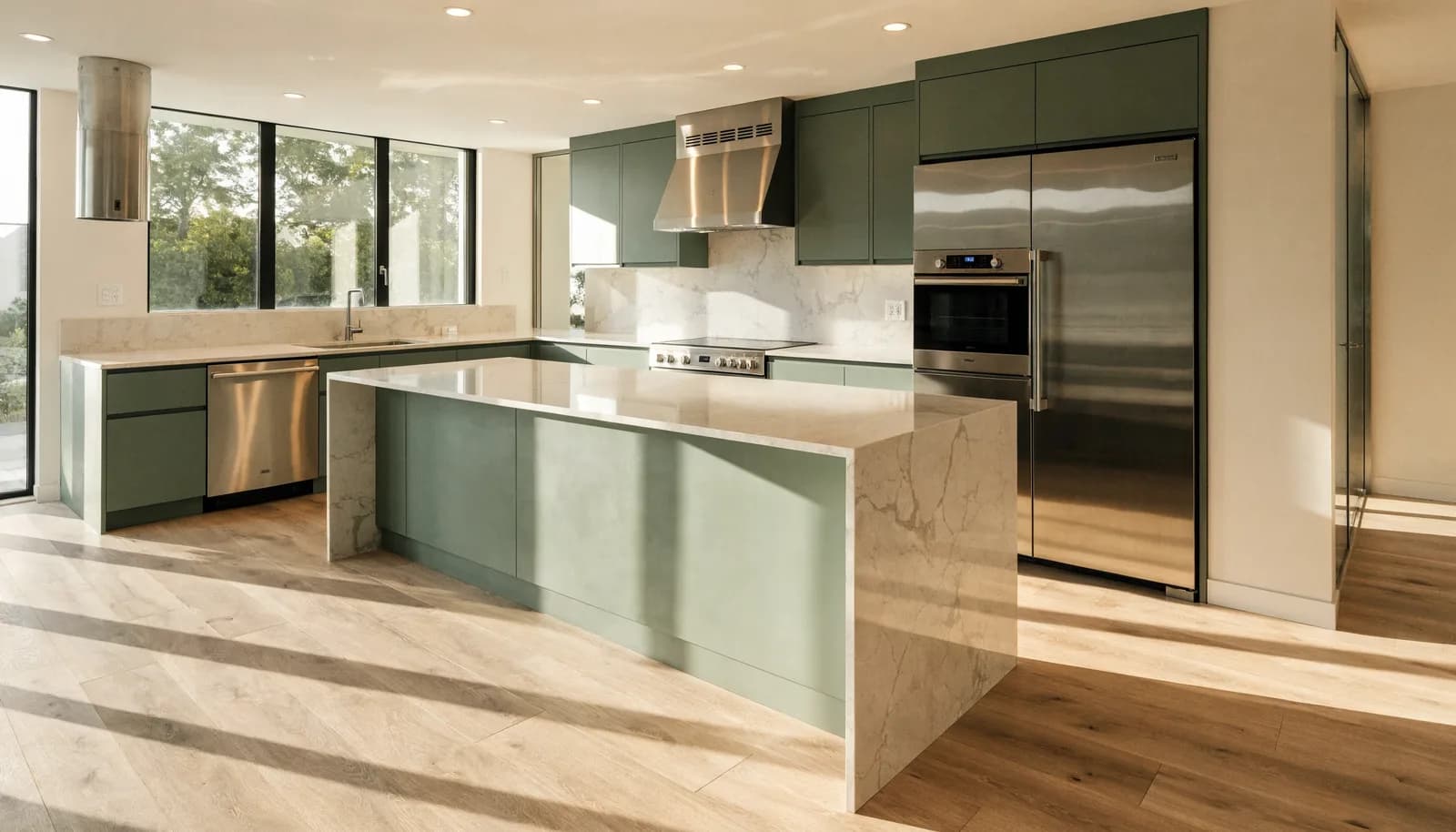
Kitchen FlooringInstallation
Kitchen flooring installation by a licensed Florida general contractor — subfloor prep, moisture protection, and the finished floor laid as part of a full kitchen remodel. Free quote, no trip fee, same-day appointment scheduling.
Kitchen flooring installation as part of a full kitchen remodel
Gaven installs the kitchen floor as one phase of a full kitchen remodel — not as a job you can book on its own. The floor work ties into everything around it: demolition exposes what's under the old floor, the subfloor gets prepped and leveled, the new floor goes in at the right point in the sequence, and the cabinets, countertops, and appliances all sit on top of it. A full kitchen remodel runs 8–16 weeks across four tiers, and the flooring is scheduled inside that window so it lands in the right order.
Gaven does notinstall kitchen flooring as a standalone job. If you want only the floor swapped with nothing else changing — same cabinets, same layout — that's single-trade work, and a dedicated flooring contractor will be faster and cheaper for you. For a full kitchen remodel that includes the flooring, request a free quote and same-day appointment scheduling.
The mistake homeowners find out about too late
Subfloor prep is where a kitchen floor is won or lost
What's under a kitchen floor, and why does it matter? The subfloor — the structural layer beneath the finished floor — decides whether the new floor lasts or fails. Most floor problems people blame on the flooring itself trace back to a subfloor that wasn't prepped right. Cracked tiles, squeaks, planks that won't sit flat: those start underneath.
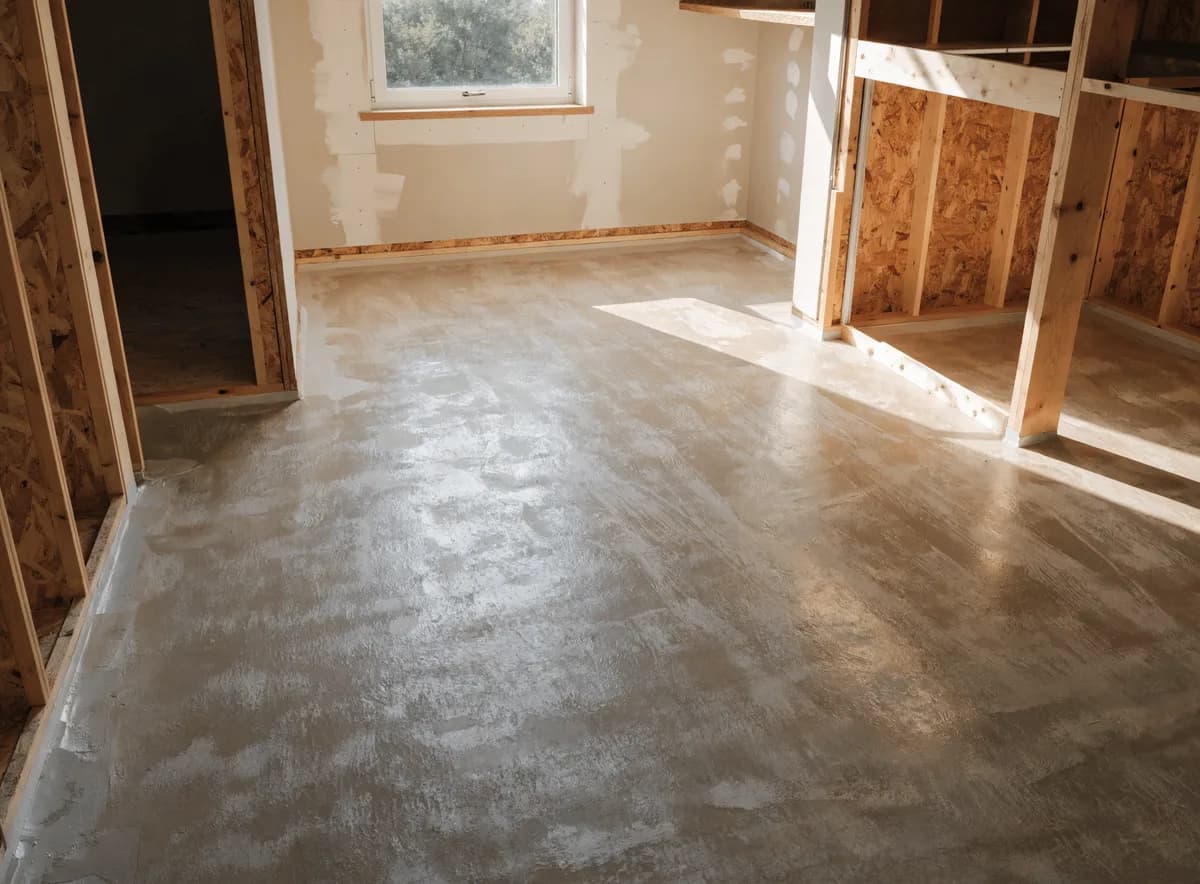
The first thing that matters is flatness. Wood and tile floors have a tolerance for how uneven the surface below them can be. The National Wood Flooring Association sets it at 1/8 inch within a 6-foot radius, or 3/16 inch within a 10-foot radius for wood over concrete. A slab or subfloor outside that tolerance has to be ground down or built up with self-leveling compound before anything goes on top. Skipping that step is how you get a floor that telegraphs every dip and hump within a year.
For homes on a concrete slab — most of Miami-Dade and Broward — the slab itself has prerequisites. The NWFA specifies the concrete should be a minimum of 3,000 psi, and a moisture test has to confirm the slab is dry enough before installation. These are the checks Gaven runs during the prep phase, before the floor is committed, because once the cabinets and countertops sit on a finished floor, fixing the layer underneath means tearing all of it back out.
Moisture and the Miami slab problem
A concrete slab in South Florida is never fully dry the way a homeowner imagines. Ground moisture moves up through the slab continuously, and a wood or laminate floor laid straight onto bare concrete will eventually cup, swell, or lift. This is the single most common reason kitchen floors fail in this climate, and it's entirely preventable.
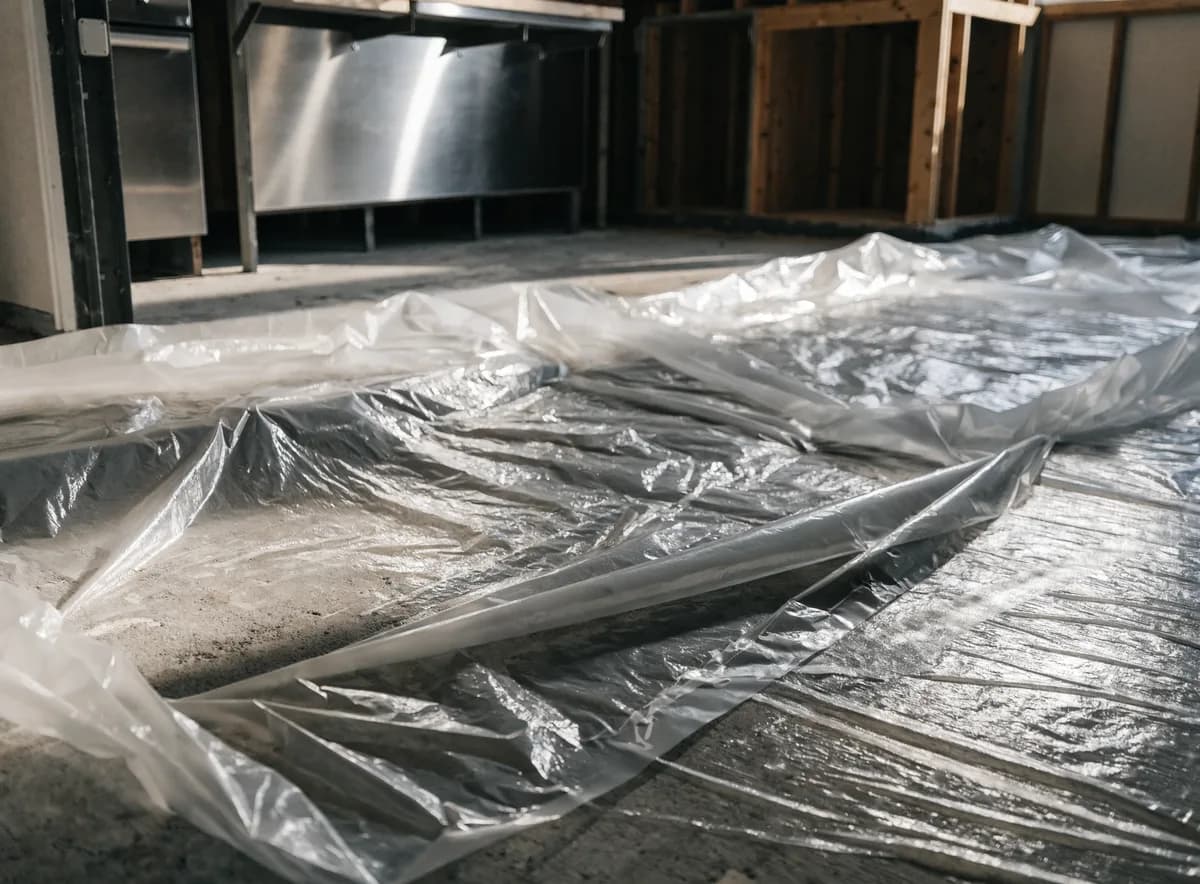
The NWFA recommends a membrane with a perm rating of .13 or less— a 6-mil polyethylene film is the common spec. That layer stops slab moisture from reaching the flooring above it. It's invisible once the floor is down, which is exactly why a cheap install skips it and a proper one doesn't.
This is also where material choice and moisture intersect. Luxury vinyl plank handles moisture better than wood or laminate, which is part of why it's become the default for Miami kitchens. But even vinyl plank needs the subfloor flat and the perimeter expansion gap respected, or it buckles when the slab warms. Moisture protection isn't a product you buy off a shelf — it's a step in the install that either happens or doesn't. You can see how the flooring line item fits the rest of the budget in the full kitchen tier pricing breakdown on the main kitchen remodel page.
Floor-first or cabinets-first: the sequencing decision
Should flooring go under the cabinets, or around them? This is the question that separates a remodel-grade floor install from a flooring-store one, and there's a real answer that depends on the floor type.
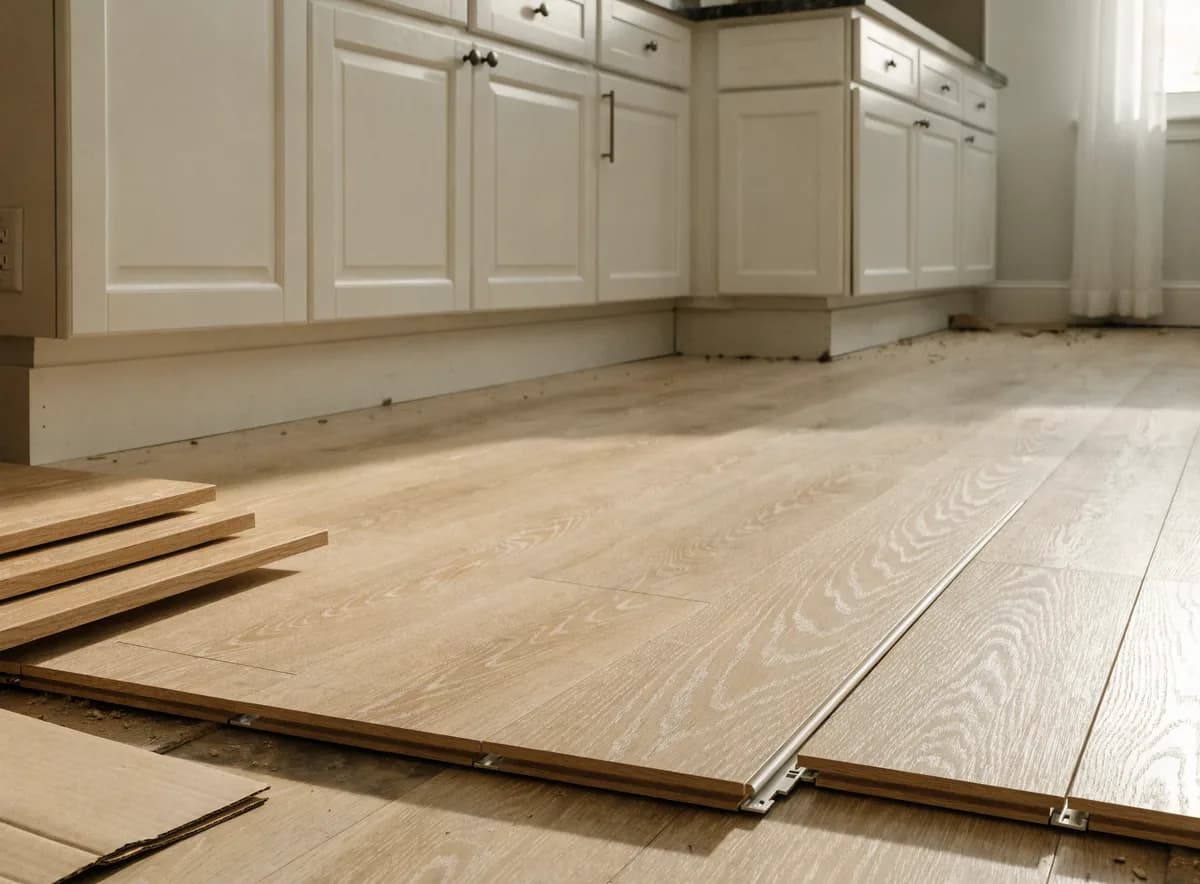
For tile and glue-down floors, the floor goes in first, then the cabinets sit on top. The floor becomes a continuous, sealed surface, and the cabinet height is set on top of the finished floor. For floating floors like luxury vinyl plank or laminate, the better practice is usually to install the cabinets first and run the floor up to them — because a floating floor expands and contracts, and trapping it under a heavy cabinet run can cause it to buckle.
This decision has consequences people don't see until later:
- Cabinet height and appliance fit — if the floor goes in after the cabinets, the finished floor height affects whether the dishwasher still slides into its opening
- Future replacement — flooring run wall-to-wall under the cabinets means the next floor replacement requires pulling cabinets; flooring stopped at the cabinet toe-kick can be replaced without them
- Transitions — where the kitchen floor meets the floor in adjacent rooms, the height has to match or a threshold has to bridge the difference
Gaven sets the sequence during design, so the cabinet installation and the floor install are planned together, not improvised on site. A free-standing kitchen island gets its floor penetrations and anchoring set into the same sequence, before the floor goes down.
Choosing a floor that survives a working kitchen
A kitchen floor takes more abuse than any other floor in the house: dropped pans, standing water at the sink, the refrigerator's point load, chairs dragged across it daily. The material has to survive that, and the install has to account for it.
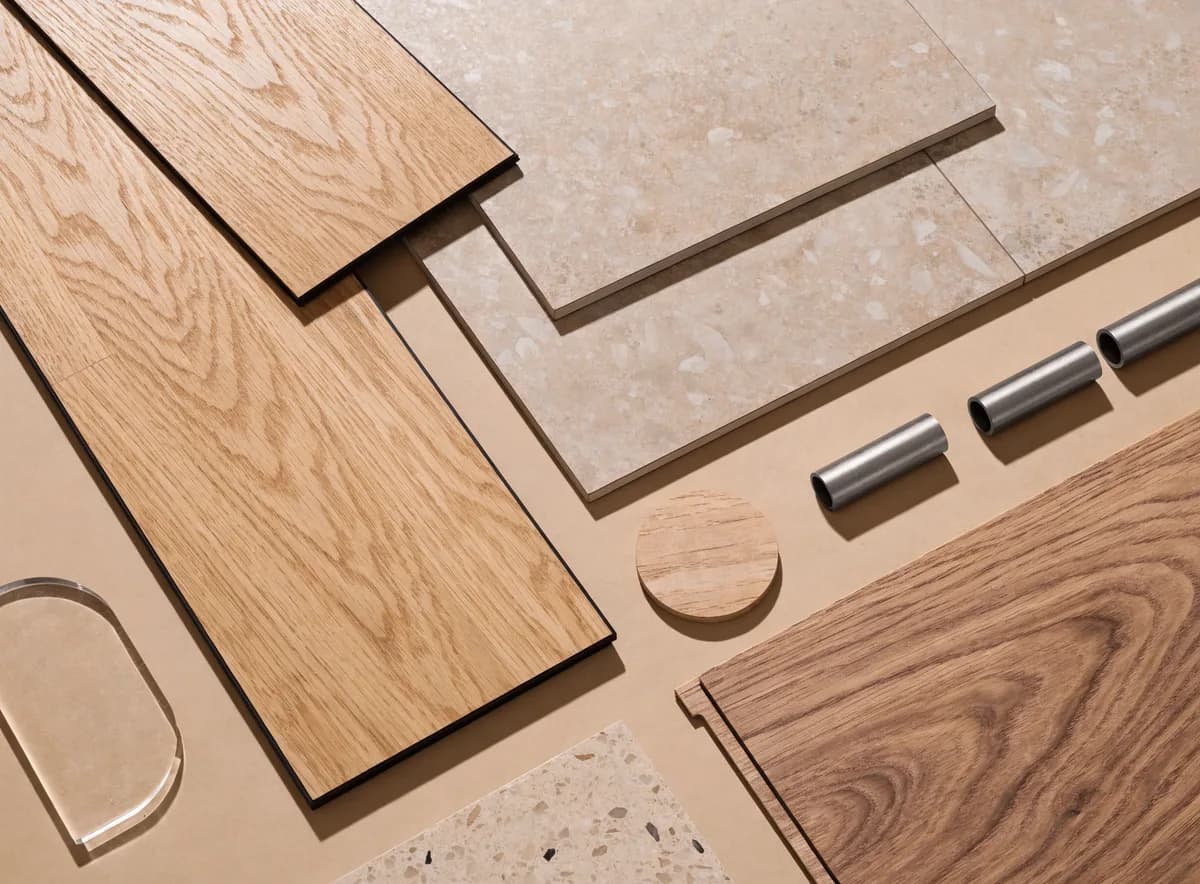
Luxury vinyl plank, porcelain tile, and engineered wood are the three that hold up in a Miami kitchen. Each installs differently. Porcelain floor tile needs a flat, rigid base and proper setting to avoid lippage and cracking — and it's floor tile, set on the floor plane, which is a different job from the wall backsplash tile. Vinyl plank needs the expansion gap and a flat subfloor. Engineered wood needs the moisture barrier and acclimation before it goes down.
One install detail that matters more than people expect: appliance loads. A refrigerator concentrates a lot of weight on a small footprint, and on a floating floor that point load has to be planned for so the floor doesn't dent or separate at the seams. These are the kinds of specifics that get decided during the remodel design, alongside the lighting and electrical plan, not after the floor is already down.
Old floors, asbestos, and what removal really involves
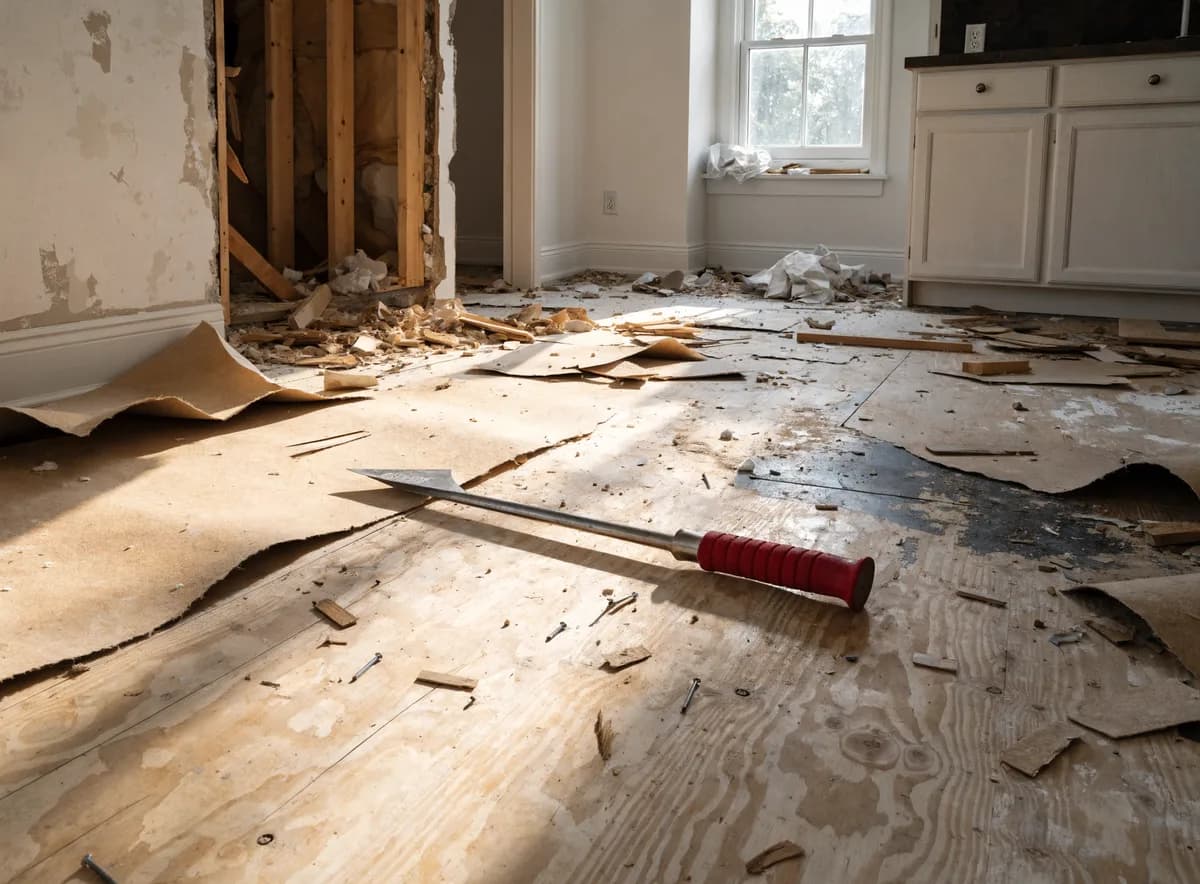
Before any new floor goes in, the old one comes out — and in older Miami homes, that step carries a risk worth naming. Sheet vinyl flooring and the black mastic adhesive under it, installed before about 1980, can contain asbestos. This is not a DIY removal.
The EPA is direct about it: don't sand or try to level asbestos flooring or its backing, and never use a power stripper on flooring that may contain asbestos. When asbestos flooring needs to go, the safe path is often to install the new floor over it where possible, or to have it removed by a qualified abatement contractor — never scraped or sanded by the remodel crew. Disturbing it is what releases the fibers.
There's a second older-home rule that applies during demo: the EPA's Renovation, Repair and Painting rule covers homes built before 1978, because of lead paint disturbed during renovation. Gaven works to those requirements on older homes as part of the project, which is one more reason the flooring phase belongs inside a permitted full remodel and not a weekend floor swap. The plumbing rough-in and the floor demo get sequenced so the hidden conditions under the old floor are dealt with once, correctly.
Questions homeowners ask
Is kitchen flooring installation available as a standalone project?+
How thick should a kitchen subfloor be?+
Can you replace a kitchen floor without removing the cabinets?+
Do you charge to come measure and quote the flooring?+
What flooring holds up best in a Miami kitchen?+
Do you handle subfloor repair if there's damage underneath?+
Are you licensed to install kitchen flooring in Miami-Dade?+
What happens to my old flooring during the remodel — and what if it has asbestos?+
See the full kitchen remodel
Start a full kitchen
remodel quote
Kitchen flooring installation is part of the full kitchen remodel work Gaven handles across Miami-Dade, Broward, and Palm Beach County, under license CGC1524886, verifiable at MyFloridaLicense.com. Free quote, no trip fee, same-day appointment scheduling.
Last updated August 2026.