
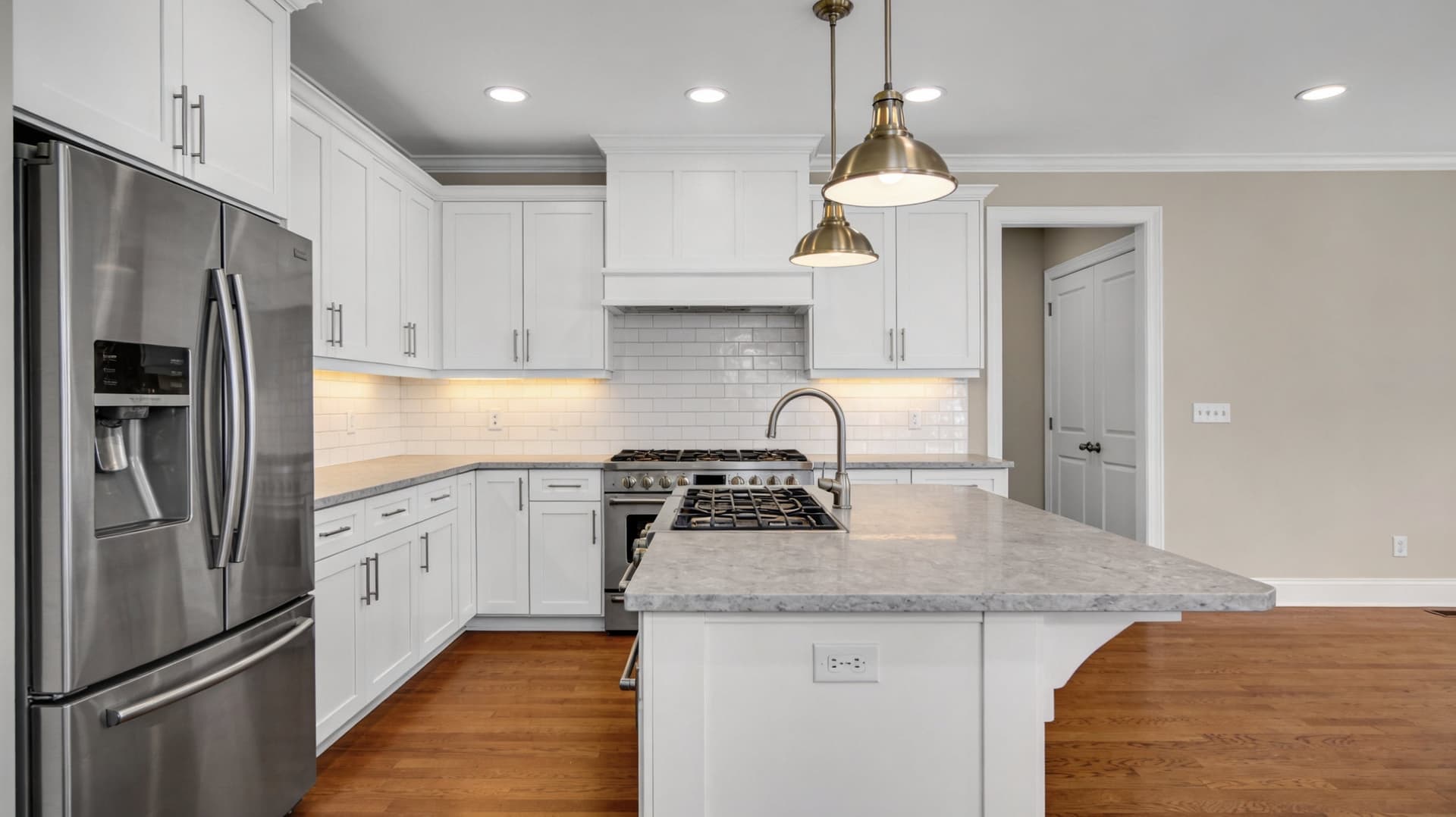
Kitchen Backsplash Installation
Kitchen backsplash installation — subway, mosaic, marble, or a clean run to the ceiling, set as part of a full kitchen remodel.
Licensed Florida General Contractor GCGCGC1524886, verifiable at MyFloridaLicense.com. Free written quote, no trip fee, same-day appointment scheduling. Call (786) 397-8380 to talk through your tile and layout.
Over 500 projects completed since 2015. 5.0-star rating on Google, based on 60+ reviews.
Four checks before you sign anything.
- 01
License CGC1524886
Florida Certified General Contractor, verifiable at MyFloridaLicense.com.
- 02
500+ projects since 2015
Full remodels of kitchens, bathrooms, homes, and additions across Miami-Dade, Broward, and Palm Beach County.
- 03
5.0 stars · 60+ Google reviews
A verified Google Business Profile, so you know the ratings are genuine and not curated.
- 04
37+ permits on record
Verifiable on BuildZoom. Permit history is the receipt for licensed work.
Backsplash installation as part of a kitchen remodel.
The backsplash is one of the last big visual moments in a kitchen remodel, and it is one of the most fun to pick, but it is not the kind of work Gaven takes on by itself. The backsplash goes in after the cabinets are set, after the countertops are templated and installed, and after the electrical outlets along the counter wall are roughed and trimmed. Putting it in any earlier means tearing parts of it out when something underneath moves. A full kitchen remodel runs 8 to 16 weeks and lands between $20,000 and over $300,000 depending on what you choose. You can see the full kitchen remodel scope and tier pricing on the main kitchen page.
Full kitchen remodels with a new backsplash.
- Demo, electrical, plumbing, drywall, and cabinet install sequenced first
- Countertops templated and set before any tile goes up
- Tile selection — subway, mosaic, large-format, or natural stone
- Outlet spacer-ring planning so cover plates sit flush
- TCNA-method installation, grout, edge profile, and sealing
If you are remodeling the whole kitchen and a new backsplash is part of it, it is worth a quick call to grab a free quote and book a same-day appointment to talk through tile and layout.
Backsplash swaps as a standalone job.
- Replacing only the backsplash with no other kitchen changes
- Tile-only installs as a single-trade job
- Grout repair, regrout, or sealing on an existing backsplash
- Bathroom-only or shower tile work outside a full kitchen scope
- Commercial tile work — Gaven is residential only
If all you want is a new backsplash with nothing else in the kitchen changing, Gaven is not the right fit. A tile contractor who specializes in single-trade installs will give you the focused service that scope needs.
Where the backsplash lands in the install sequence.
The backsplash is one of the last pieces to go in, and that order matters. The bottom row of tile sits right on top of the countertops, so the tile starts only after the counters are set, leveled, and sealed at the wall. Before that, the cabinets had to be installed and the counters templated to them. Everything stacks: cabinets first, counters next, backsplash on top. Skip the order and you end up with tile cut to a counter line that has not been finished — and the corrections show.
Most backsplashes run from the top of the counter to the bottom of the upper cabinets, usually about 18 inches. That is the standard. A “full-height” backsplash — counter to ceiling behind a cooktop or across a feature wall — is a different beast. It uses far more tile, takes more cutting around outlets and the hood, and the labor jumps to match. Whichever you pick, the height has to be locked in during the design phase so the right tile quantity gets ordered.
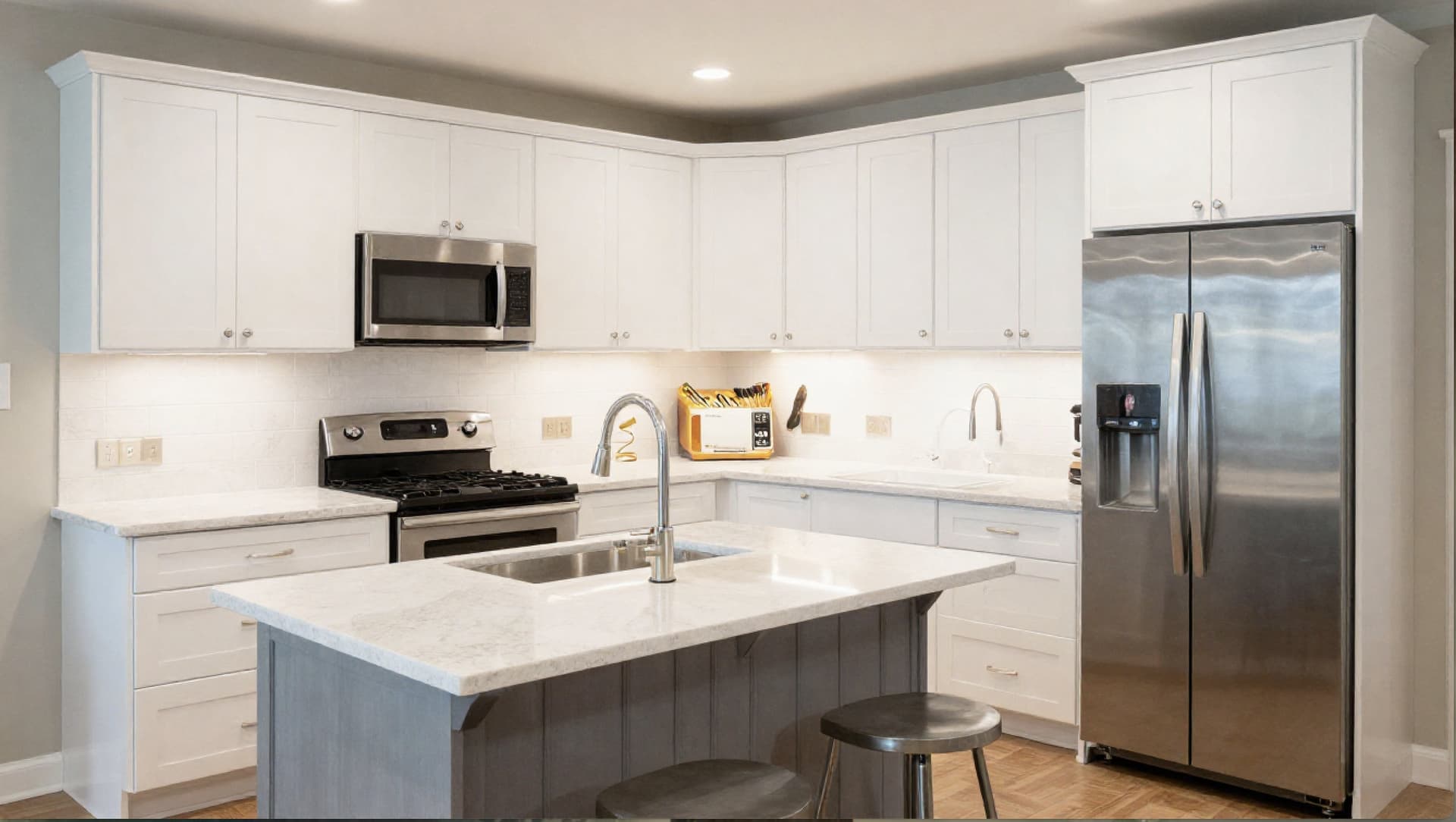
How tile choice changes the install — subway, mosaic, large-format, natural stone.
The tile itself drives most of the install decisions. Classic subway tile, in a 3-by-6 ceramic, is the easiest tile to install cleanly: predictable size, forgiving substrate, standard thin-set. Mosaic sheets, especially glass mosaics, look beautiful but require a different mortar. You use a white polymer-modified thin-set so the gray of standard mortar does not show through the translucent glass tiles. Large-format tile, anything in the 12-by-24 range and bigger, demands a much flatter wall — small dips that subway tile would hide will show as lippage on a big slab tile. Natural stone (marble, travertine) is also installed in white thin-set and needs to be sealed before grouting, because grout pigment can stain unsealed stone.
The Tile Council of North America publishes the installation specs the industry follows; their guidance is at tcnatile.com. A good installer follows TCNA methods regardless of the tile, which is why a kitchen remodel with the backsplash run by the same contractor team produces cleaner results than a one-off tile job rushed at the end.
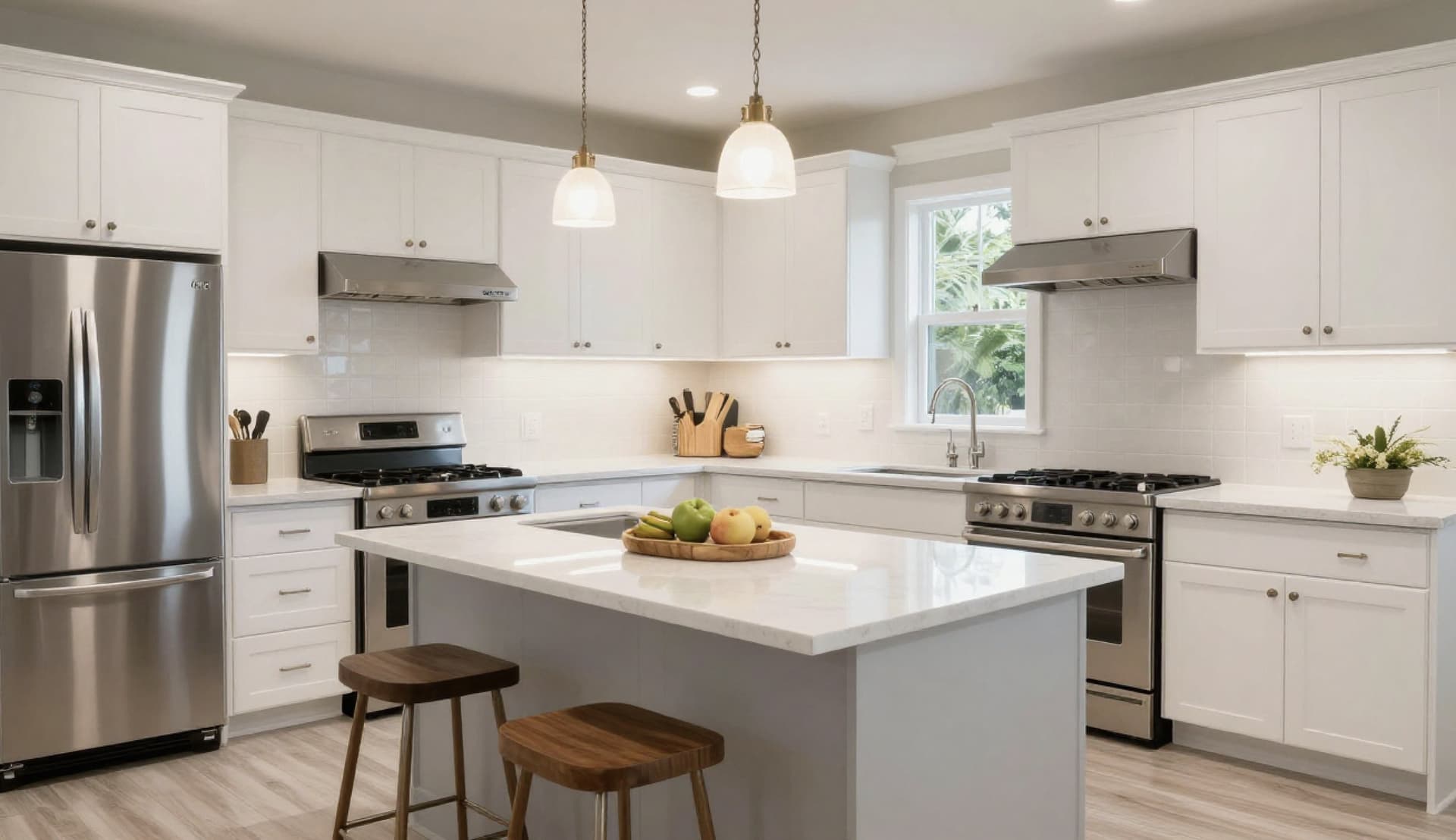
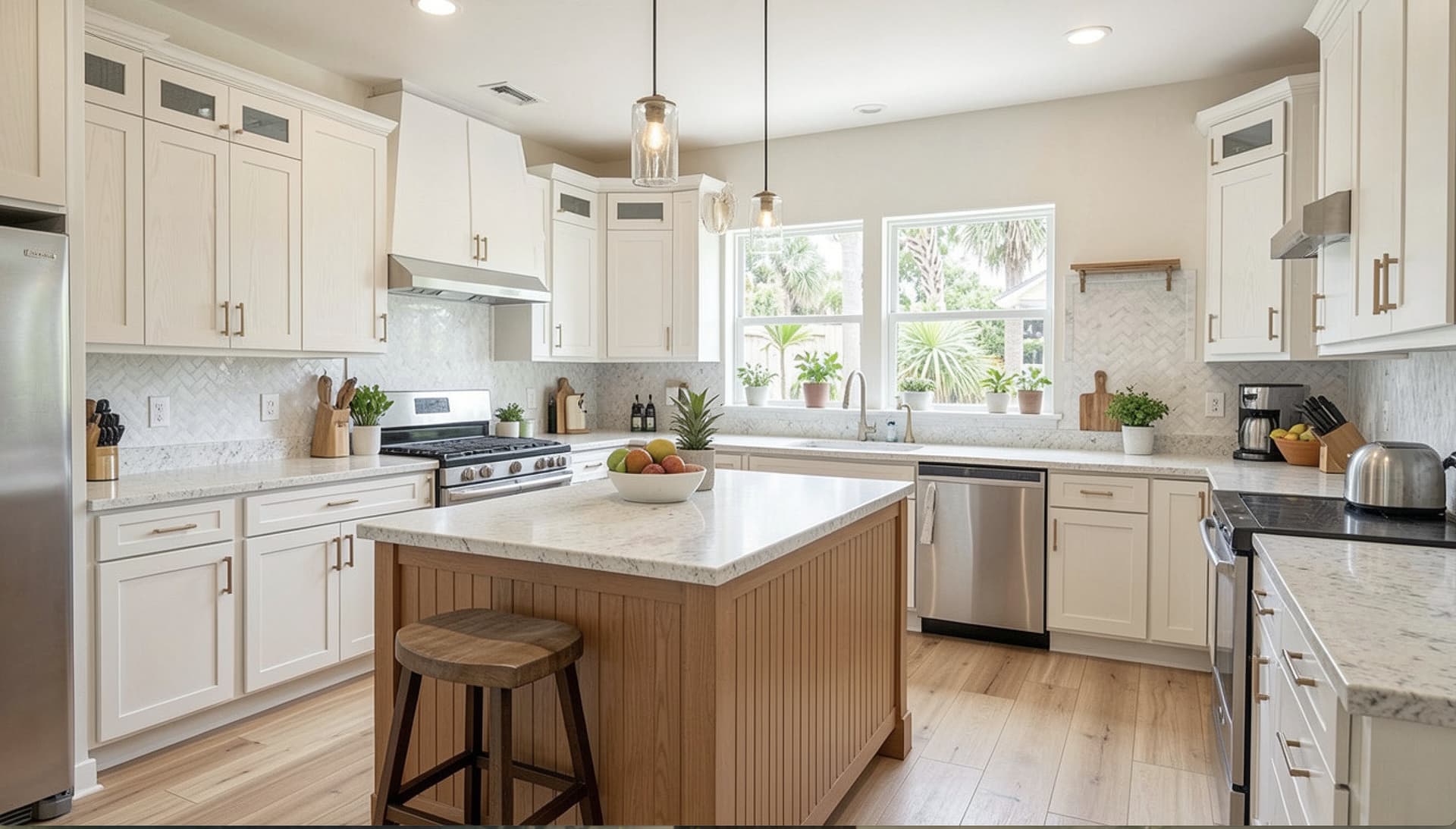
Grout, mortar, and the details that make it last.
Two unglamorous decisions decide whether a backsplash still looks good in five years: the grout joint width and the grout type. Rectified-edge tiles, the ones with crisp factory-cut edges, can take very tight joints, down to about 1/16 of an inch, which is what gives a modern backsplash that sleek, almost-continuous look. Standard cushion-edge tiles need a wider joint, usually 1/8 inch, to absorb the slight size variation between tiles.
Then the grout itself. Cement grout is the default and the cheapest, and with a sealer it does fine in most spots. Epoxy grout costs more and is harder to install, but it is stain-proof and waterproof — the right call behind a cooktop where oil and tomato sauce splash. For most kitchens we run a mix: cement on lower-traffic runs, epoxy where the splashes happen. The grout color is a real design decision — light grout reads cleaner with light tile, dark grout grids out a pattern and shows less staining.
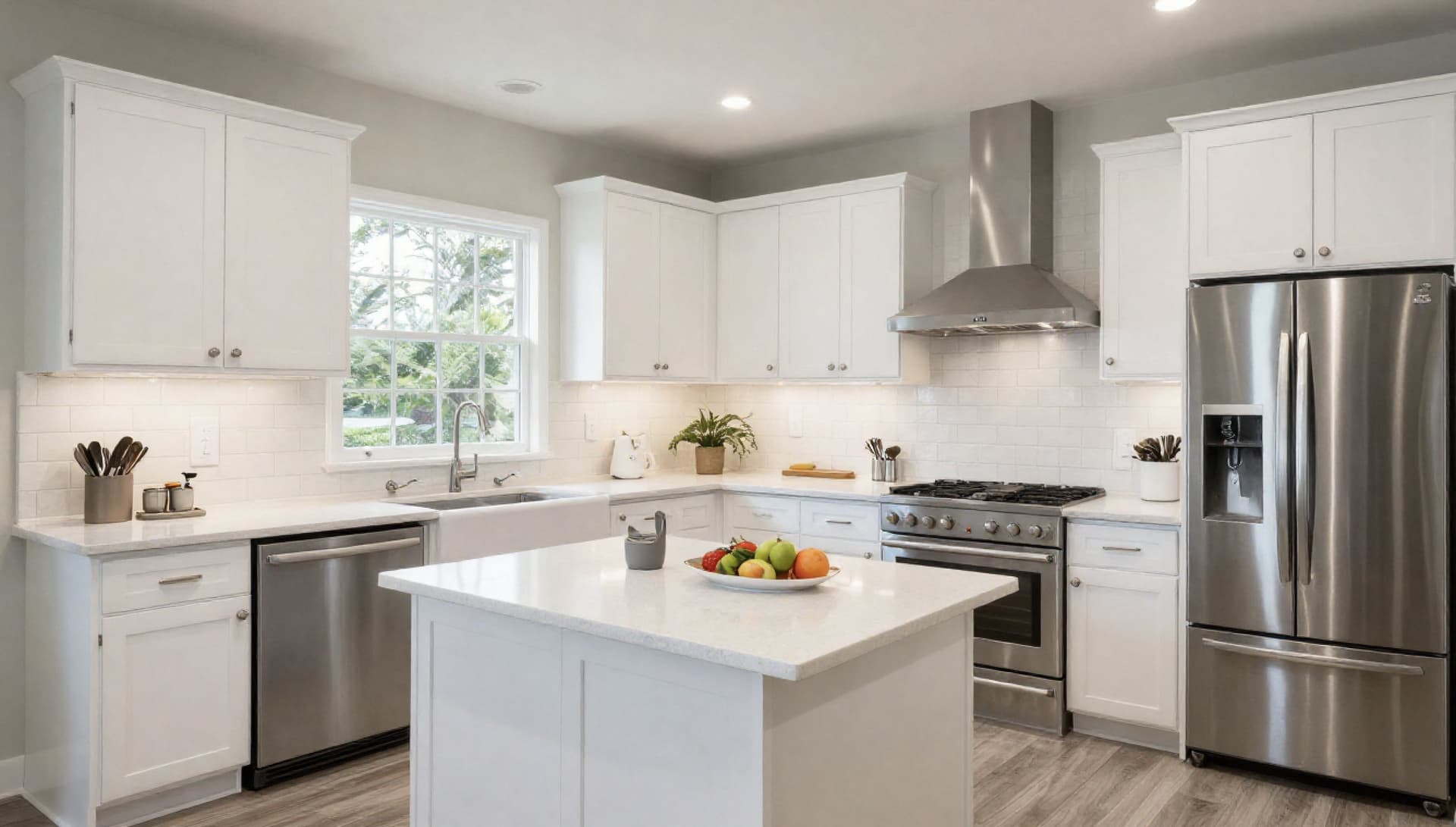
Outlet integration — the part most installers get wrong.
The kitchen counter wall is full of electrical outlets, because the National Electrical Code requires a receptacle within reach along every counter run. That is not changing for the backsplash. What does change is how those outlets sit in the new wall surface. After the tile goes on, the outlets are about a quarter inch behind the surface plane, and the cover plates will not sit flush anymore. The fix is outlet box extenders — also called spacer rings — that push the outlet forward so the device sits proud of the tile and the cover plate lays flat.
This sounds minor, but it is one of the most failure-prone steps in a backsplash install. A tile contractor who shows up after the fact has no control over where those outlets were placed, and the cut tile around each one tells the truth about how careful the planning was. Because Gaven coordinates the cabinet installation, the electrical rough-in, the plumbing rough-in, the flooring, the kitchen island, and the backsplash under license CGC1524886, the outlet layout is planned with the tile pattern in mind from the start — not corrected after the fact. The same electrical layout carries the switch legs for the lighting, so the outlets, the backsplash, and the lighting circuit all get coordinated as one plan.
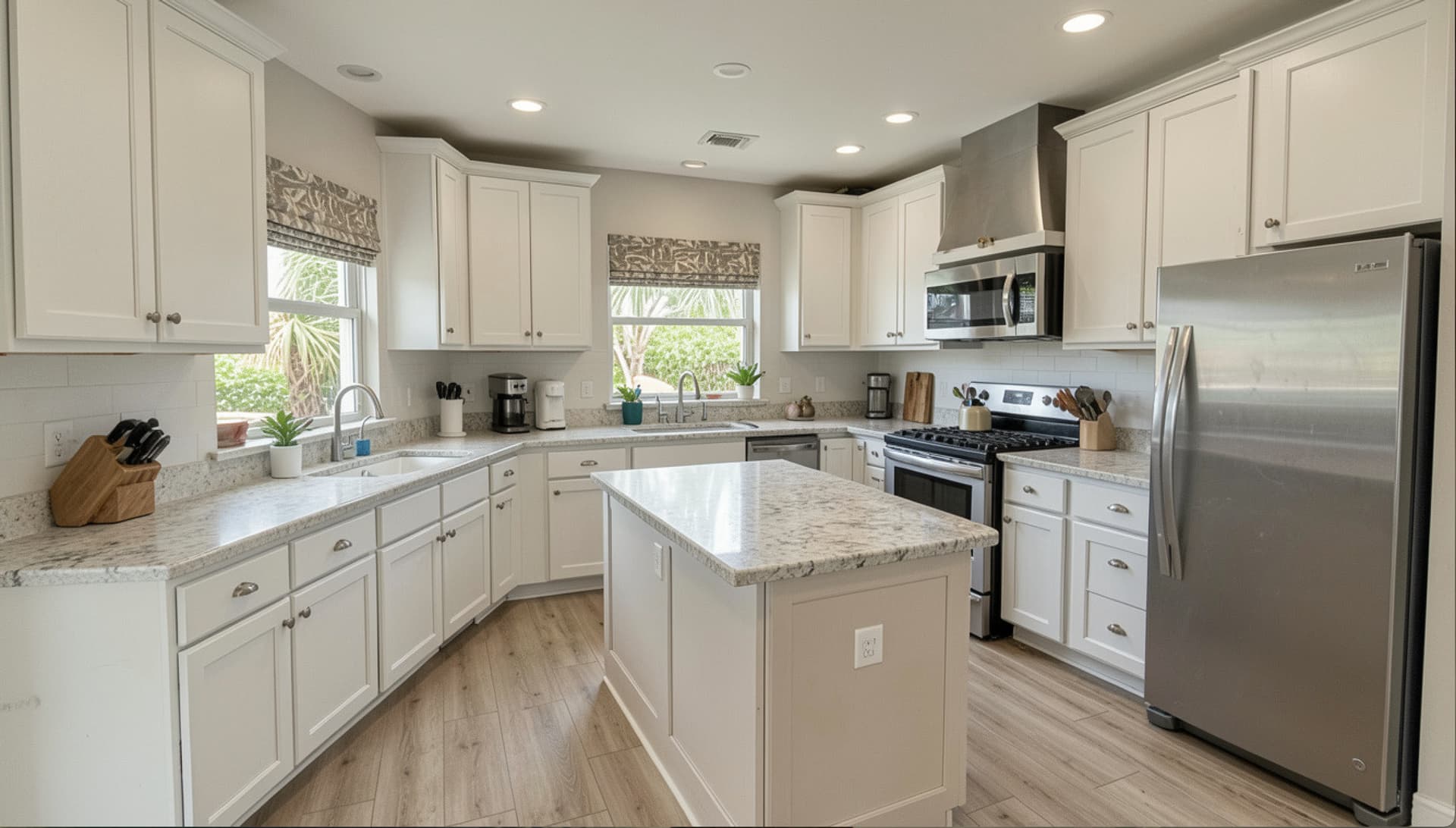
Edge finishes and where the tile ends.
A backsplash has to terminate somewhere, and how it ends is a design call that gets overlooked. The three common options: a Schluter metal edge profile, which gives a crisp manufactured line in stainless, brass, or matte finishes; a bullnose tile, where the tile itself has a rounded factory edge that closes the run; and a mitered edge, where two tiles are cut on a 45-degree bevel and joined to make a clean corner with no visible profile. Schluter publishes their edge-profile catalog at schluter.com; it is the industry standard for clean tile terminations.
Which one is right depends on the tile, the kitchen, and the look. A modern flat-front kitchen reads better with a metal profile or a mitered edge. A traditional kitchen reads better with bullnose. The wrong call here does not break the kitchen, but the right call is one of the small details that separates a thoughtful remodel from a builder-grade one.
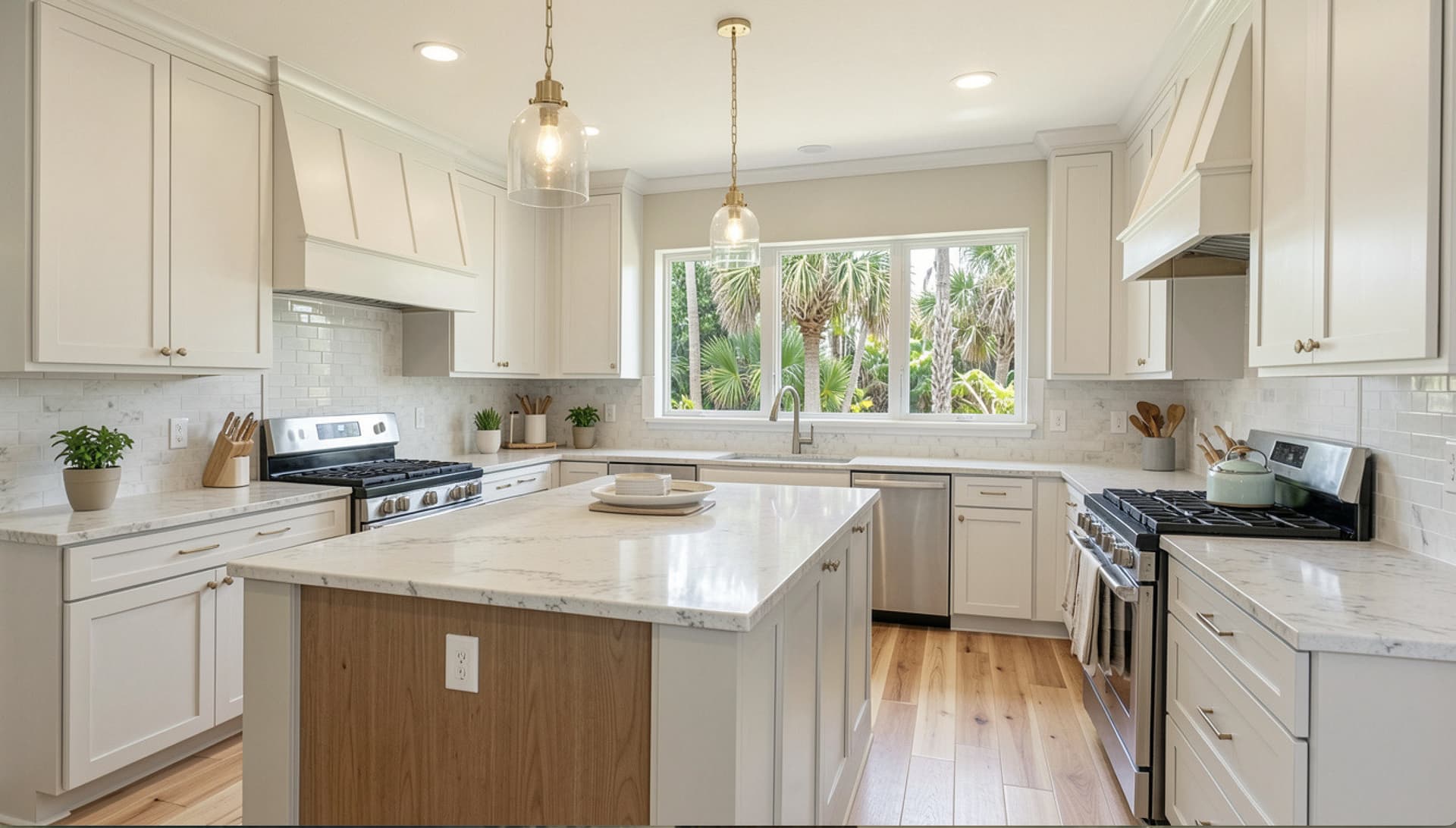
Backsplash installation FAQs.
Is backsplash installation available as a standalone project?
No. Gaven installs backsplashes only as part of a full kitchen remodel that also includes the cabinets, countertops, electrical, and the rest of the kitchen. If all you want is a new backsplash with nothing else changing, look for a tile contractor who specializes in standalone tile work. We are not the right fit for that scope.
Does the backsplash go in before or after the countertops?
After the countertops. The bottom row of tile sits on the counter, so the counter has to be installed, leveled, and sealed at the wall before tile starts. Putting the backsplash up first means redoing it when the counters come in.
Roughly how much should a tile backsplash run inside a full kitchen remodel?
Backsplash material and labor typically lands between about $15 and $40 per square foot installed, which puts a standard 25–30 square-foot run somewhere in the $500–$1,500 range. The number swings with the tile (basic ceramic vs. glass mosaic vs. natural stone) and the pattern (straight subway is the cheapest to set; herringbone or chevron takes more time). Inside a full remodel, the backsplash rarely drives the tier — cabinets and counters do.
How many days does the tile work take?
Most backsplashes go up over one to three days. Day one is layout, cutting, and setting the tile in mortar; the mortar needs about 24 hours to cure before grouting. Day two is grouting, sealing, and finishing. A small straight subway run can finish in a single day; full-height or intricate patterns push the longer end.
How tall should a kitchen backsplash be?
Standard height is the run from the top of the counter to the bottom of the upper cabinets — usually around 18 inches. A “full-height” backsplash runs all the way to the ceiling, most often behind a cooktop or across a feature wall. Both are valid; full-height uses more tile and more labor and changes the design feel of the kitchen.
What are the most common backsplash mistakes?
Three keep showing up. First, skipping wall prep — an uneven or dusty wall means weak bond and visible lippage, especially with large-format tile. Second, the wrong mortar — using gray thin-set under glass mosaics so the dark color shows through, or skipping polymer-modified thin-set on natural stone. Third, the outlets — failing to push the outlet boxes forward with spacer rings, so cover plates do not sit flush. All three are why a coordinated remodel produces a different result than a rushed one-off install.
Can a tile backsplash go right on top of drywall?
For a kitchen backsplash, yes — clean, flat drywall is an acceptable substrate as long as it is in good condition. Wet areas like showers are different and need cement backer board or a waterproof membrane, but a kitchen backsplash sees splashes, not soaking water. If the existing drywall is damaged, water-stained, or out of plane, it gets patched or replaced before the tile goes on.
Are you licensed for this work across the tri-county area?
Yes. License CGC1524886 is a Florida Certified General Contractor license, verifiable at MyFloridaLicense.com, and it covers full kitchen remodels across Miami-Dade, Broward, and Palm Beach County.
The backsplash is one piece of a coordinated kitchen remodel.
The cabinets, the counters, and the surfaces all get specified and installed together — that is what makes the finished kitchen line up.
Florida CGC CGC1524886. Free quote, no trip fee.
Backsplash installation is part of the full kitchen remodel work Gaven handles across Miami-Dade, Broward, and Palm Beach County. License CGC1524886, verifiable at MyFloridaLicense.com. Free quote, no trip fee, same-day appointment scheduling.
Want to see your new kitchen come together? Start with a full kitchen remodel quote, or read the sibling deep-dives on cabinet installation and countertop installation — the phases that come right before the tile. Or call (786) 397-8380 to take the first step.
Monday–Friday, 7:00 AM – 10:00 PM
Last updated August 2026.