
Live reviews loading from Gaven's Google Business Profile.
The full 5.0-star rating, all 60+ reviews, and the firm's response history are visible directly on Google.
View on Google →
Bathroom remodeling Miami, FL — full remodels across Miami-Dade, Broward, and Palm Beach County. Free quote, no trip fee, estimate at the visit.
Gaven Constructions builds for the South Florida climate — proper waterproofing, sized ventilation, marine-grade hardware. We handle the permit, the inspections, and the schedule. Not vanity swaps or tile-over-tile.
10+ years of full kitchen and bathroom remodels across Miami-Dade, Broward, and Palm Beach County. 37+ permits verifiable on the public BuildZoom record. Most bathroom contractors miami homeowners interview can't produce a permit history this long.
Miami homeowners rate us 5.0 stars across 60+ Google reviews, with neighborhood and project type named in the review text. Read every one — link below.
We never charge to come look at your bathroom. Site visit, scope conversation, and written proposal are free. The price is in the contract before signing — tier band, scope, timeline, all of it.
Active Florida Certified General Contractor. Verify the license at MyFloridaLicense.com before signing — with us or anyone else. Every project carries a written 1–2 year labor warranty plus manufacturer warranties on fixtures, stone, and waterproofing systems.
The full 5.0-star rating, all 60+ reviews, and the firm's response history are visible directly on Google.
View on Google →Most Miami homeowners arrive at the bathroom remodel decision through one of five signals. Knowing which signal applies tells us whether a full bathroom remodel is the right project — or whether you should be calling someone else.
Soft tile in the shower floor, dark grout lines that don't clean up, paint bubbling on the wall outside the bath, a musty smell that doesn't go away with cleaning. Once water has gotten behind the substrate in a Miami bathroom, the failure is no longer cosmetic — it has reached the framing or the slab. Spot repairs cannot fix it. The bathroom needs full demo, new ANSI A118.10 waterproofing, and rebuild from substrate up.
Glass shower doors with corroded hinges from saltwater air, plumbing fixtures with pitted chrome from coastal humidity, supply lines older than 25 years, a vanity faucet that drips no matter how many cartridges get replaced. Fixture failure is rarely standalone — it signals a bathroom that has reached the end of its operational life. Full remodel scope.
A 1990s primary bath with a builder-grade vanity, no walk-in shower, an undersized toilet room, and zero storage. A second bath with the toilet directly visible from the hallway. A guest bath sized for a 5-year-old in a house that now hosts adult guests. Layout work means structural changes — relocating plumbing, possibly moving a wall, reframing for a curbless shower — and that's full-remodel scope.
A homeowner planning to age in the home needs a curbless walk-in shower, grab-bar blocking in the walls, ADA-compliant clearances, and a comfort-height toilet. These changes cannot be bolted onto an existing bath — they require demo, framing for blocking, and full waterproofing rebuild.
Old galvanized supply lines flagged on inspection, a non-permitted DIY remodel that failed at sale, water damage triggering an insurance-required reconstruction, or a bathroom scope that crosses the FEMA 50% rule on a flood-zone home — all force full-remodel work, sometimes with envelope and structural scope attached.
If you need a single faucet swap, a toilet replacement, a shower door installation, or a vanity-only update — that's not Gaven scope. We do full bathroom remodels only. Calling a handyman, a plumber, or a glass-only fabricator is the right move for partial work, and we'd rather direct you there than bill you for a project mismatch.
A full bathroom renovation in Miami is the highest-stakes line item in coastal South Florida residential remodeling. A serious bathroom renovation in Miami anchors on the same six conditions every renovation faces. The climate, the building stock, and the regulatory layer all push back on assumptions that work in dry climates or northern markets. The six conditions below define the specification we build to. They are not features. They are the floor.
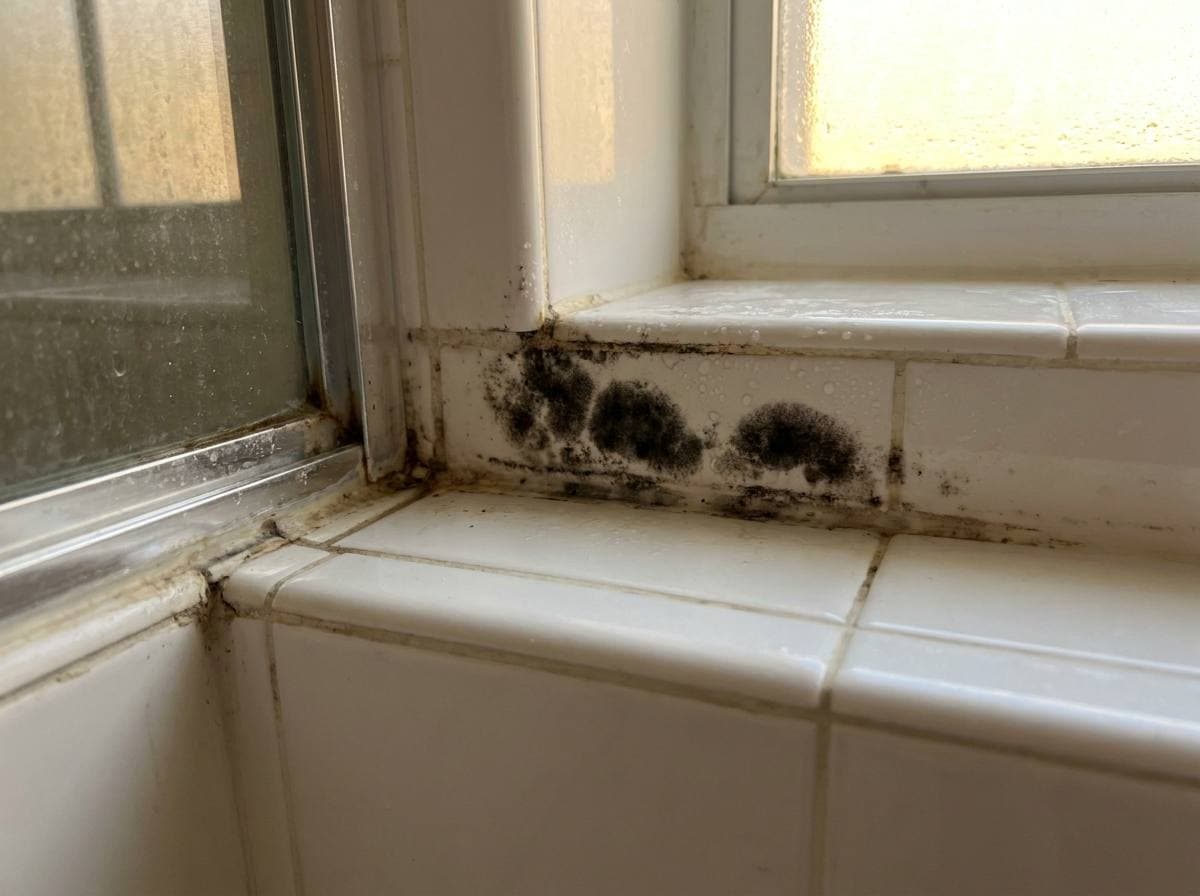
Coastal South Florida bathrooms operate in a humidity load that does not exist anywhere else in the continental United States. Outdoor relative humidity sustains above 80% overnight year-round. Indoor RH in a bathroom with a hot shower hits 100% within minutes and decays slowly. The IRC code-minimum exhaust rate of 50 CFM intermittent is a national floor designed for moderate climates. Coastal primary baths require 80–110 CFM at 0.25" w.g. static, sized at roughly 1 CFM per square foot for shower-equipped baths and doubled for primary suites with multi-head showers, steam generators, and freestanding tubs. Undersized ventilation in this climate manifests within 12–24 months: mold colonization on grout and silicone seams, finish failure on solid-wood vanities, hardware corrosion, and engineered-cabinet veneer delamination.
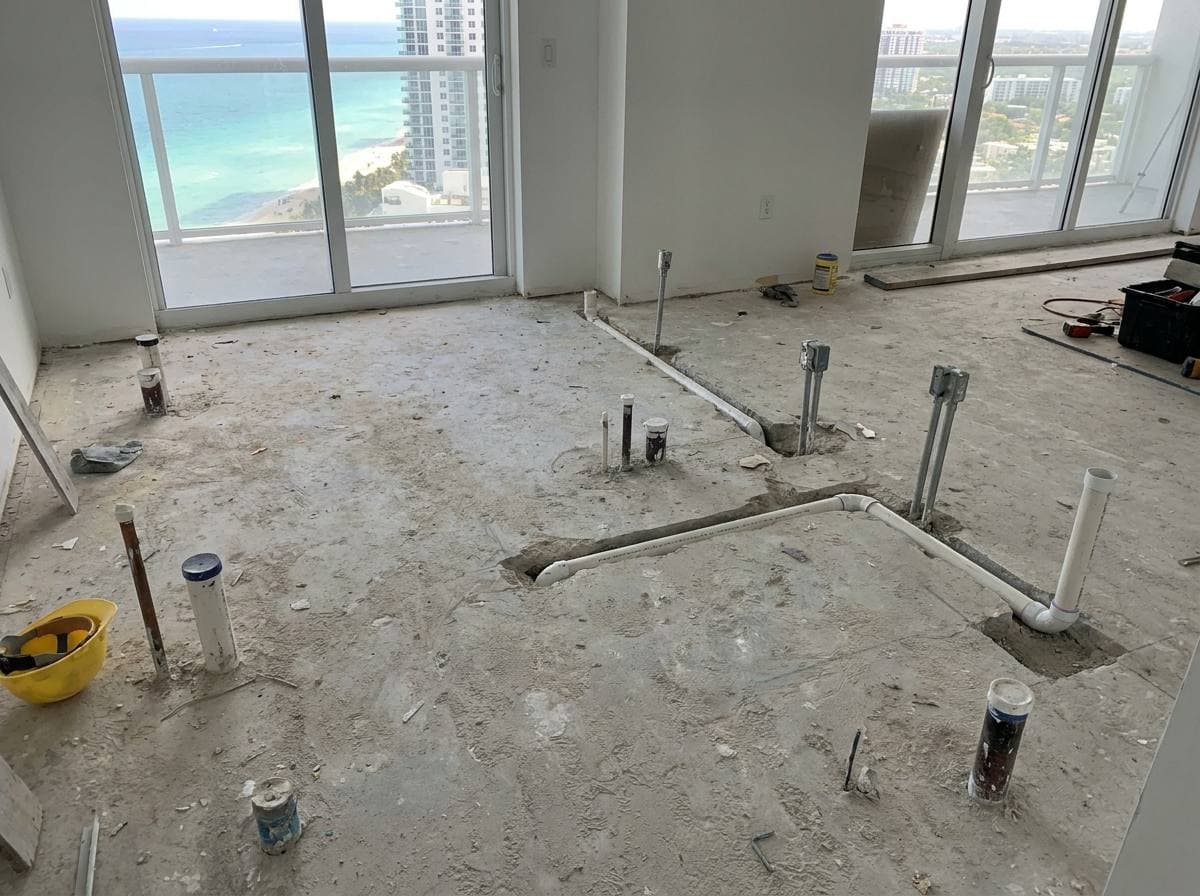
Most South Florida residential housing stock sits on slab-on-grade construction or, in high-rise condos, on post-tensioned concrete floor slabs. Either constraint limits how far a fixture can move from its existing rough-in. Per IPC Chapter 9, the maximum trap arm distance from a fixture to its vent runs 5 feet for a 1-1/2" trap arm at standard 1/4"-per-foot slope. Move a toilet, lavatory, or shower drain beyond that range and the project crosses from cosmetic remodel into plumbing renovation — new wet-vent or vent-stack work, often penetrating a slab in single-family construction or constrained to within-unit routing in a high-rise. This is the single largest variance driver in condo bathroom remodels.
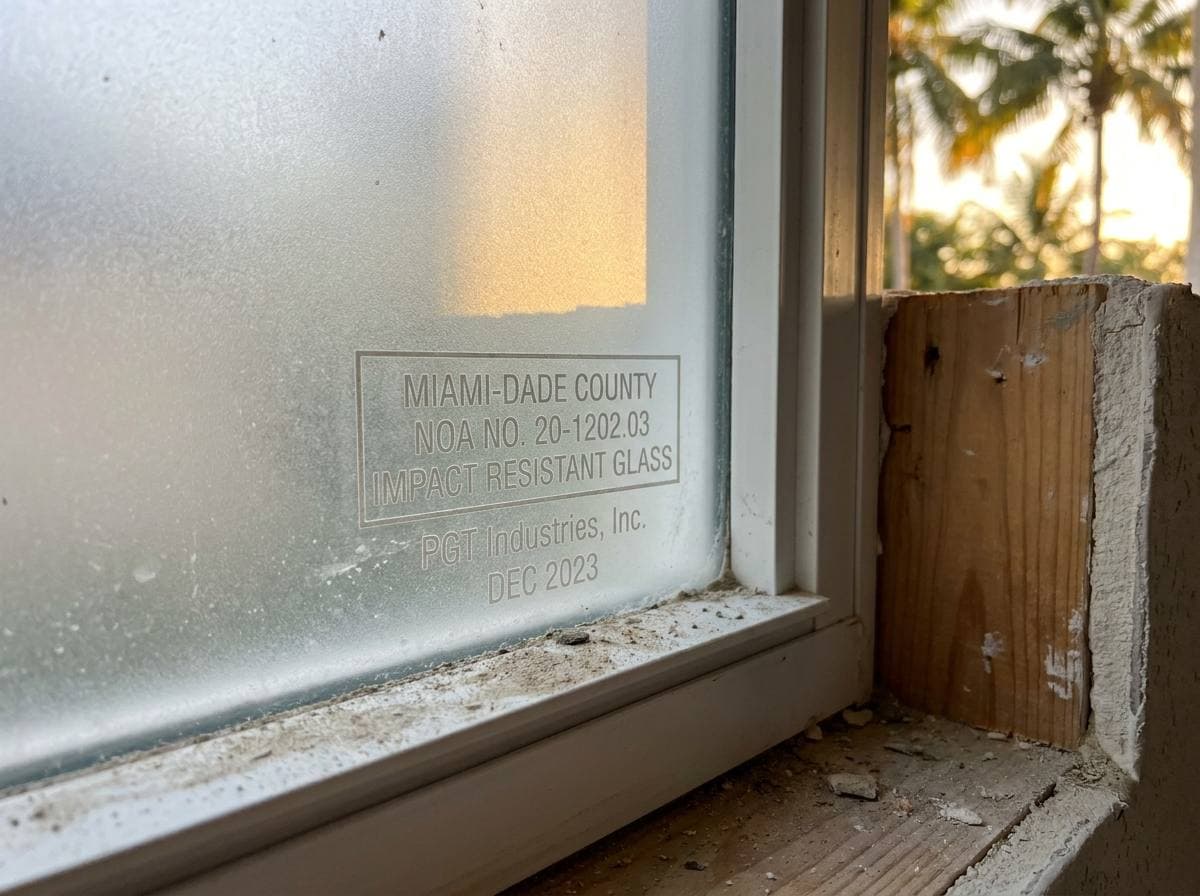
Miami-Dade and Broward Counties sit inside the High-Velocity Hurricane Zone defined by FBC Part II Chapter 2. Palm Beach County is outside the HVHZ but inside the Wind-Borne Debris Region, where impact-rated glazing is still required. A purely interior bathroom renovation — no new or relocated exterior windows — does not trigger HVHZ glazing review. The moment a remodel adds, enlarges, or relocates an exterior window (common in primary-suite scope, where homeowners want light over a freestanding tub), the project crosses into impact-glazing territory. Inside HVHZ, the window product must carry a current Miami-Dade Notice of Acceptance (NOA), tested per ASTM E1886 and E1996. Outside HVHZ, the product uses Florida Product Approval. Either path adds typically $1,500–$5,000 per opening in product premium and 3–6 weeks of permit review.
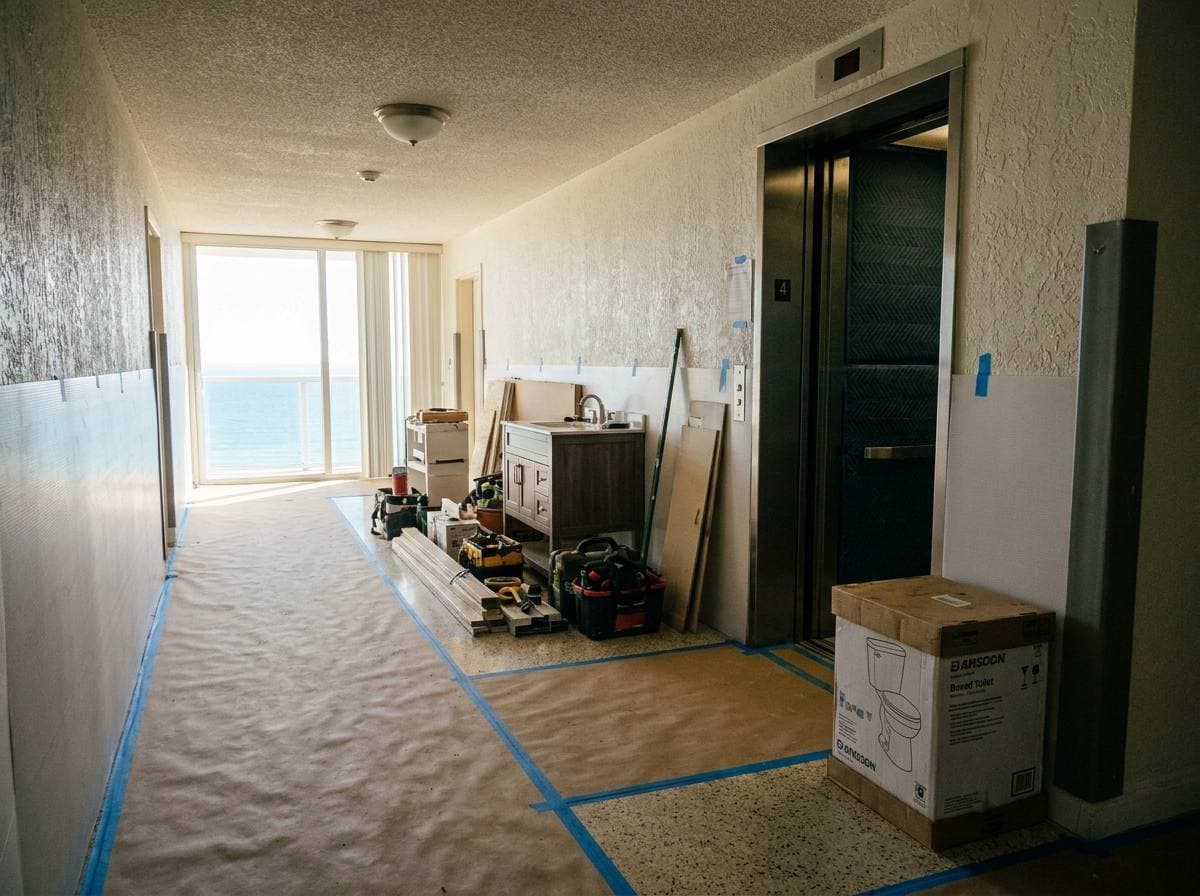
A high-rise condo bathroom remodel adds a regulatory layer that does not exist in single-family work. Florida Statutes Chapter 718 requires written board consent for unit alterations affecting common elements. Building approval typically runs 1 week to 1 month for routine bathroom scope, longer for buildings with quarterly board meetings. Water shutoffs are scheduled with 24 hours' notice and cost $200–$500 per request. Freight elevator slots require 24-hour reservation, with multi-week wait times in peak construction season. Most luxury buildings restrict construction to 8–9 AM through 5–6 PM weekdays, with no Sunday work. Sound isolation requirements often exceed the IBC floor of STC 50 / IIC 50 — luxury alteration agreements commonly impose IIC 60+, which makes thin-set tile over an uncoupling and sound-mat membrane standard practice rather than optional.
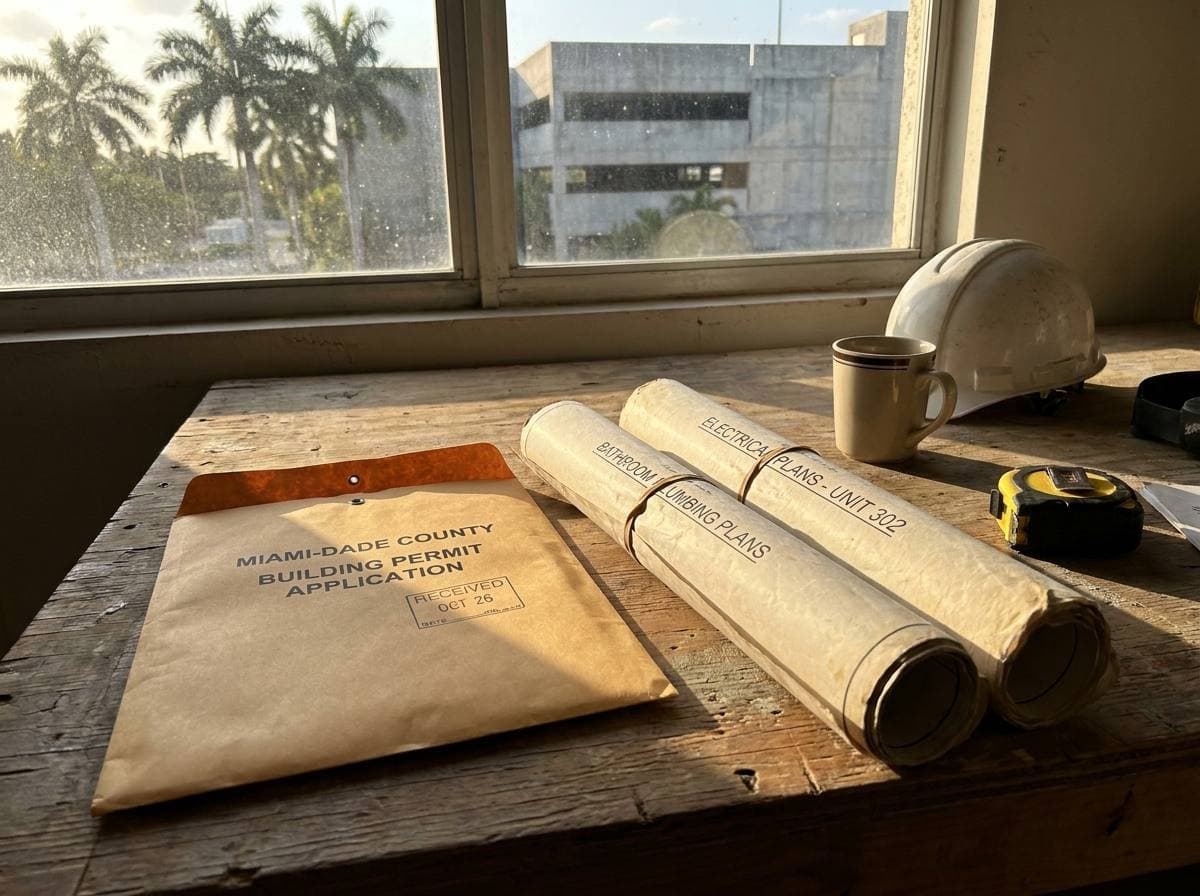
Florida residential bathroom remodels classify as cosmetic when they involve only finish replacement — paint, fixtures-in-place, floor tile within the existing footprint, vanity replacement at existing rough-in. They become multi-trade renovations the moment scope crosses into wall partition modification, plumbing rough-in changes, electrical circuit additions, or mechanical exhaust rework. Multi-trade permits cycle building, plumbing, electrical, and sometimes mechanical sub-permits independently — each reviewed separately, each subject to its own correction loop. Typical Miami-Dade approval for a small interior remodel runs 2–4 weeks; multifamily upgrades 6–12 weeks. We pull the permit and route the inspection schedule rather than asking the homeowner to navigate it.
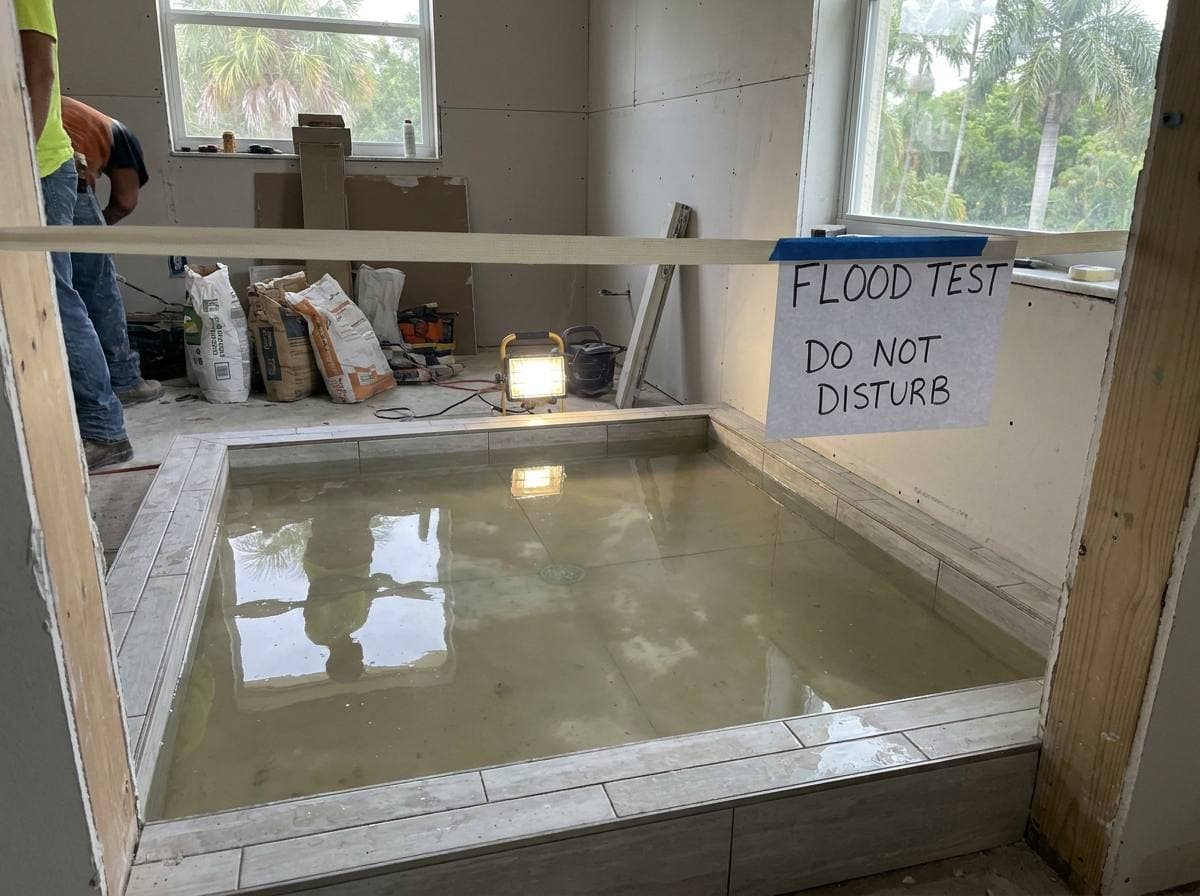
The most consequential inspection on a bathroom renovation is not the rough-in plumbing inspection or the final electrical. It is the waterproofing flood test on the shower pan after membrane installation and before tile setting. ANSI A118.10 governs the membrane standard. TCNA Method B421/B422 governs the assembly. The flood test verifies the system holds water for 24 hours before any tile, mortar bed, or finish goes down. We run this test on every shower we build — single-pan, curbless, wet-room, primary suite — regardless of whether the jurisdiction explicitly inspects it. The cost of a failed waterproofing system three years after installation is $15K–$40K to remediate. The cost of running the flood test is one day of schedule.
A full bathroom remodeling miami project runs $8K to $130K+ depending on scope, fixtures, layout, and whether the project crosses into plumbing rough-in or structural work. The four tiers below define the spectrum we build to. Tier 02 is the recommended landing zone for primary baths in single-family and condo work; Tier 03 is where primary-suite scope with custom geometry typically lands. Headline range applies to bathroom remodel Miami cost questions across all property types and scope categories — most first-time bathroom projects land inside the Tier 01 to Tier 02 range. Bathroom-only scope is the typical engagement.
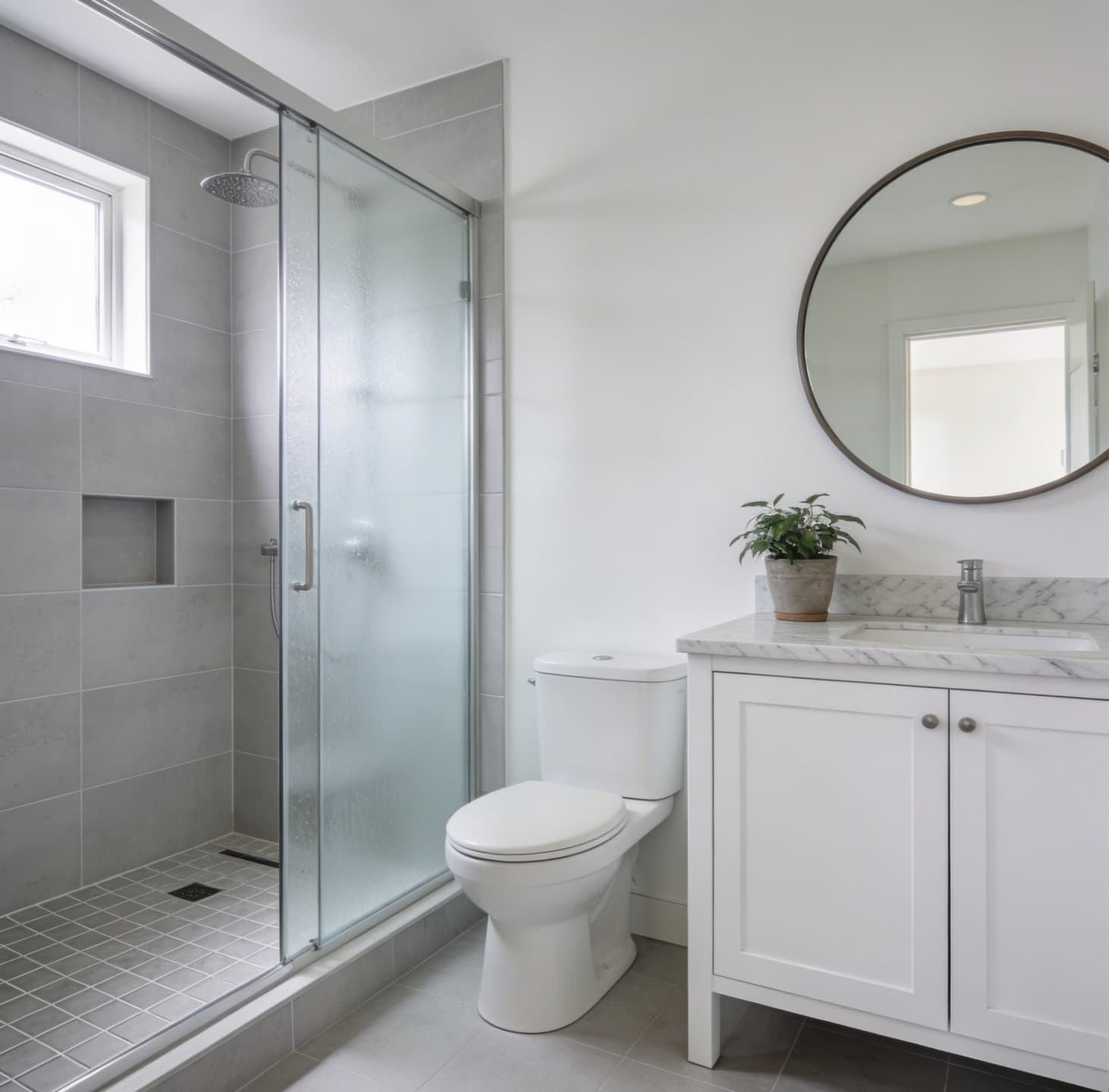
Cosmetic-grade remodel within the existing footprint. Stock or in-stock vanity. Stock porcelain floor and wall tile. Standard tub-surround tile or fiberglass insert replacement. Stock fixtures from domestic mid-premium category. Guest bath remodeling Miami homeowners typically scope at this tier. Secondary baths, powder rooms, and rental-property primary baths where the goal is durability and clean finish without scope expansion. Permit profile generally cosmetic — no plumbing rough-in changes, no electrical additions beyond fixture replacement.
On-site · 3–6 weeks
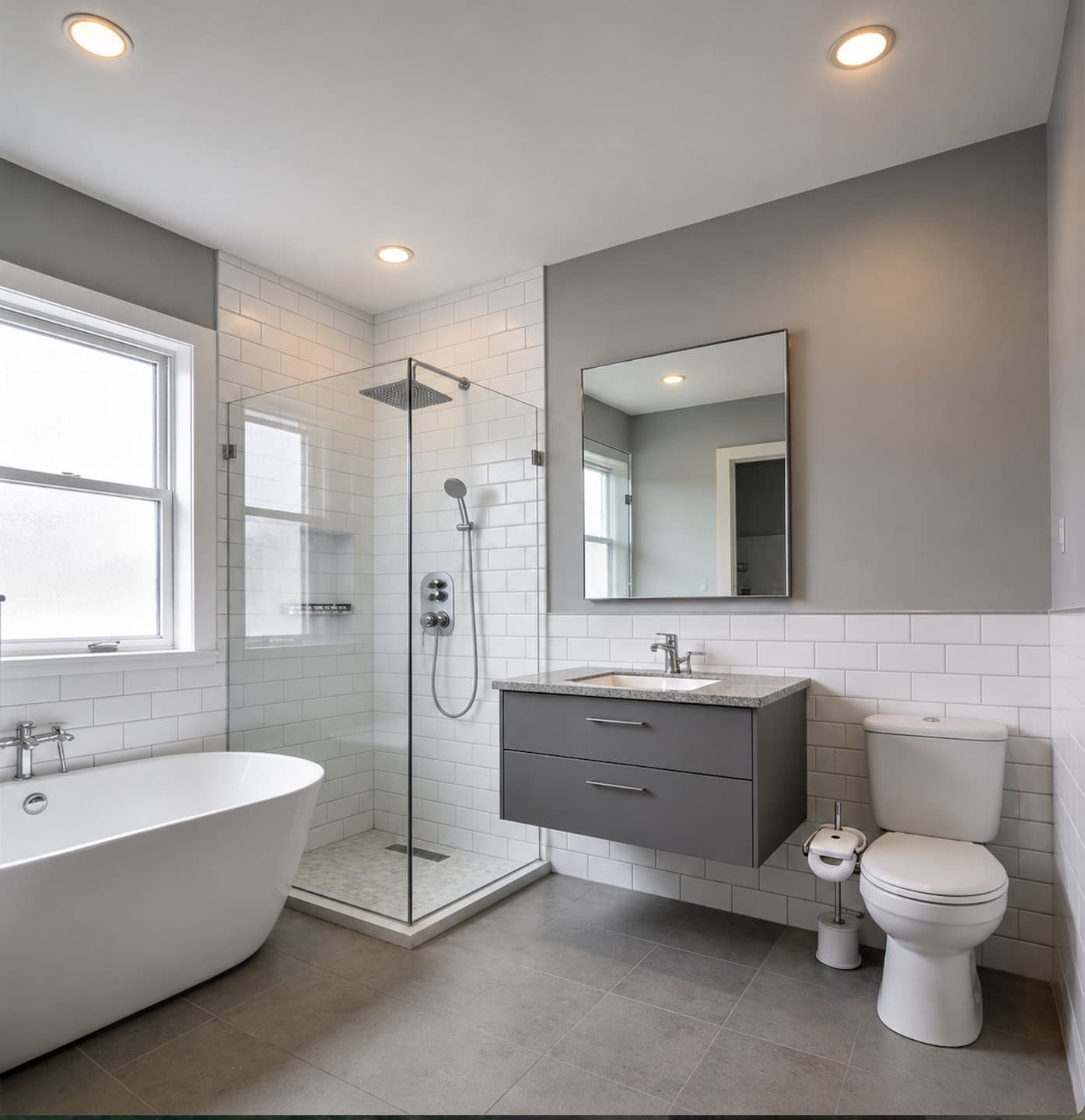
Full remodel with semi-custom vanity in catalyzed-finish premium construction. Large-format porcelain wall and floor tile (60×120 cm or similar). Frameless 3/8" glass shower enclosure with 316 stainless or premium PVD hinge hardware. Mid-premium fixture tier — manufacturers in this category include Kohler, Hansgrohe, and Brizo for fixtures; Schluter Kerdi, Laticrete Hydro Ban, and Wedi for waterproofing systems. ANSI A118.10-compliant waterproofing throughout. Mechanical exhaust sized for the bathroom volume rather than the code floor. Primary baths in single-family and high-rise condo work. Most of our bathroom volume lands here. Multi-trade permit — plumbing, electrical, mechanical sub-permits typical.
On-site · 3–6 weeks · total window longer when fixtures/glass are special-order
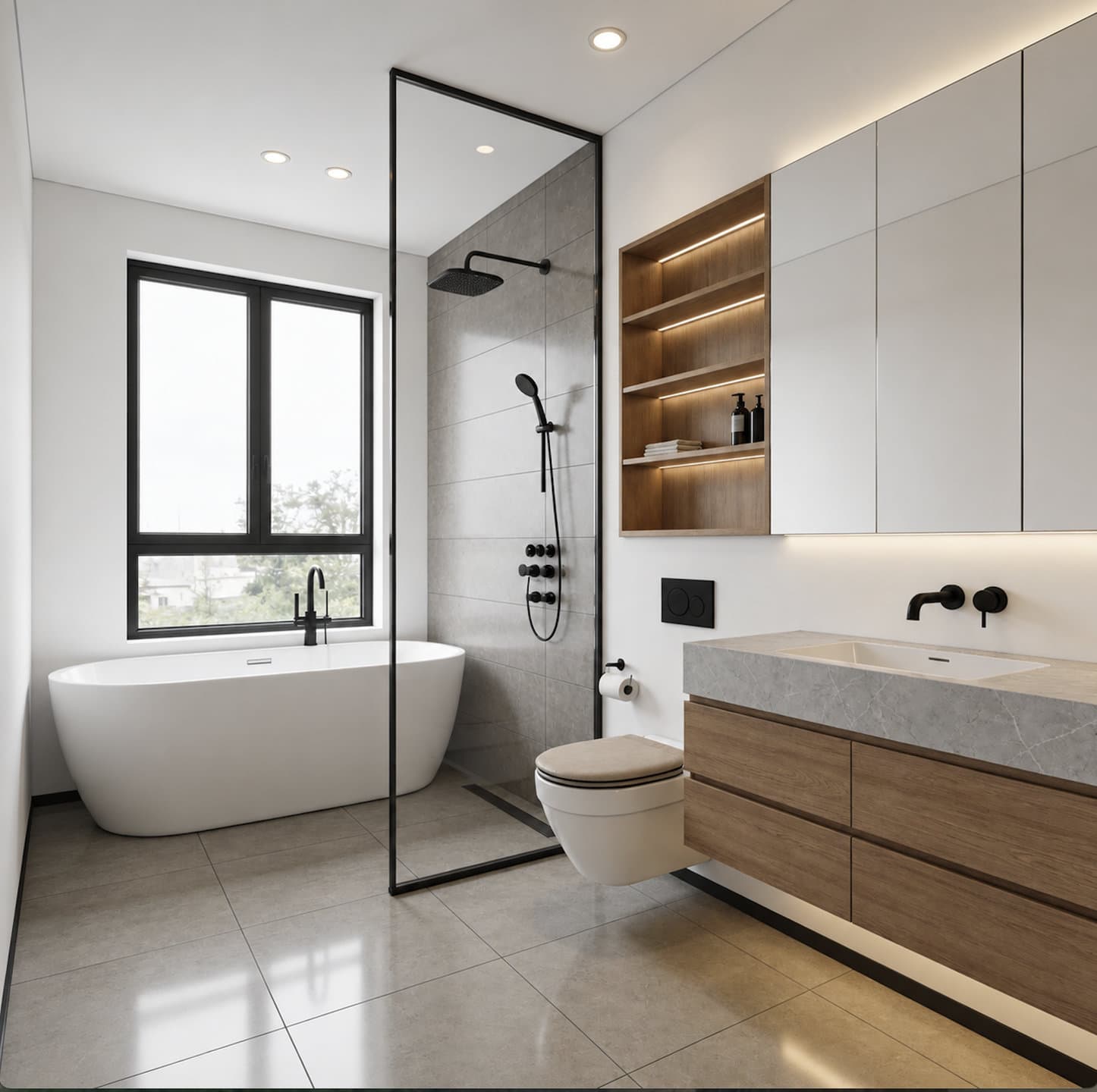
Custom or imported semi-custom vanity. Custom-cut natural stone or designer large-format porcelain slab walls. Frameless 1/2" glass enclosure with engineered hinge for taller doors and unsupported spans. Layout changes typical — relocating fixtures, expanding the footprint, adding a freestanding tub, integrating a steam generator. Premium designer fixture tier with imported European or Japanese precision construction. Primary suite renovations in single-family homes, top-of-stack high-rise condos, and country-club communities. Long-term homeowner reinvestments after years in the same property. Master bathroom remodel Miami scope typically lands here when layout changes or footprint expansion is in play. Multi-trade permit with structural elements — slab penetration in single-family, demising-wall coordination in condo work.
On-site · 4–6 weeks · total window extends with custom stone, vanity & glass lead times
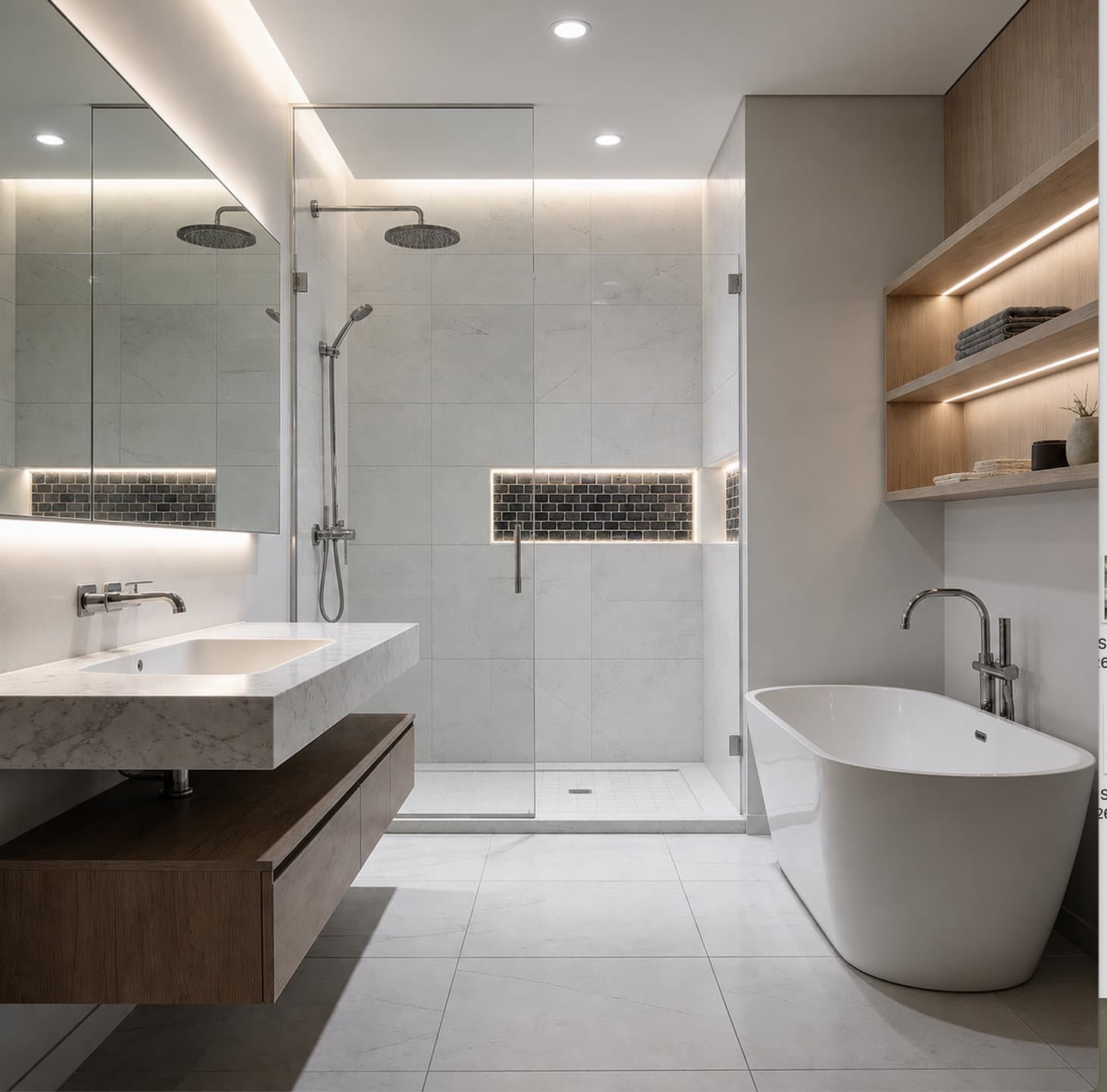
Custom-fabricated cabinetry, full-slab natural stone or sintered stone wet walls, custom frameless glass with specialty geometry (curved panels, oversized doors, custom channels), integrated steam and lighting systems, ultra-luxury hand-finished fixtures. Footprint expansion, structural reconfiguration, or merging adjacent spaces (closet-into-bath conversion, two-bath-into-one primary suite). Hand-finished fixtures from ultra-luxury category — manufacturers in this category include American luxury, German engineered, and Japanese precision lines. Coastal high-rise primary suites and country-club community primary baths where the renovation budget supports a 4–8 month execution window and the homeowner has held the property long enough to invest at this level. Multi-trade permit with structural review. ARB or condo board approval extends the front of the schedule.
On-site · 5–8 weeks · total project window 4–8 months including custom fabrication lead times
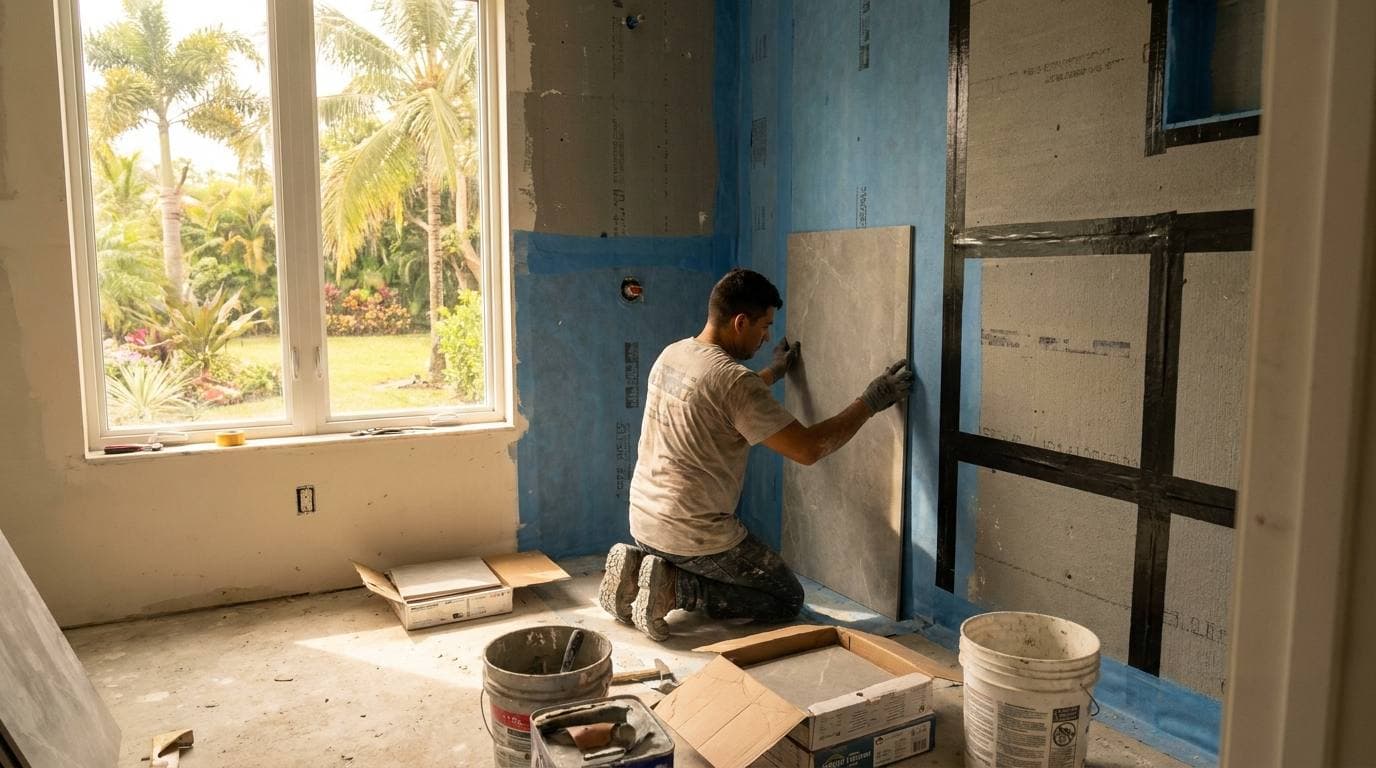
The waterproofing system is the highest-stakes line item on the bathroom. Everything else is finish. The membrane behind the wall and on the floor is the entire reason the bathroom holds up. The relevant standard is ANSI A118.10 — load-bearing, bonded, waterproof membranes for thin-set ceramic tile and dimension stone installation. Every category-leader system used in residential premium bathroom construction publishes A118.10 test data as a baseline. Bathroom tile installation covers the substrate prep, layout, and transition work that sits on top of that membrane.
Three system categories meet that standard, each with a different installation profile. Manufacturers in this category include Schluter Kerdi (sheet membrane applied to substrate with thin-set, bonded with all-Schluter assembly), Laticrete Hydro Ban (liquid-applied, rolled or troweled, conforms to slope and drain geometry), and Wedi (lightweight foam-core panels with cement coating that function as substrate and waterproofing in one). Each system carries a system warranty when installed per its own technical literature using compatible components throughout. Mixing systems — a Schluter drain with a non-Schluter membrane, for example — voids the system warranty and reduces the assembly to a generic A118.10 install. Where that assembly becomes a curbless entry, walk-in shower installation covers the slope, the drain geometry, and the glass the system has to accommodate.
Substrate flatness governs the rest. ANSI tile-trade tolerances require substrate flatness no greater than 1/8" in 10 feet with no more than 1/16" variation in 24" for tiles 15" or larger on any side. Existing concrete slabs in South Florida routinely run 1/4" or more out of flat in 10 feet. Large-format porcelain installation — the dominant choice in premium bathroom design 2024–2026 — therefore requires self-leveling underlayment as a line item before tile setting.
Slip resistance is the floor specification. ANSI A137.1 (referenced through ANSI A326.3 wet DCOF measurement) requires bathroom floor tile to meet a minimum dynamic coefficient of friction of 0.42 wet. Polished marble, polished travertine, and high-gloss porcelain often come in below 0.42 wet DCOF and require either restriction to dry zones, specification of a textured or honed alternative for wet areas, or written acceptance of the slip trade-off. The withdrawn ASTM C1028 static-coefficient test no longer applies.
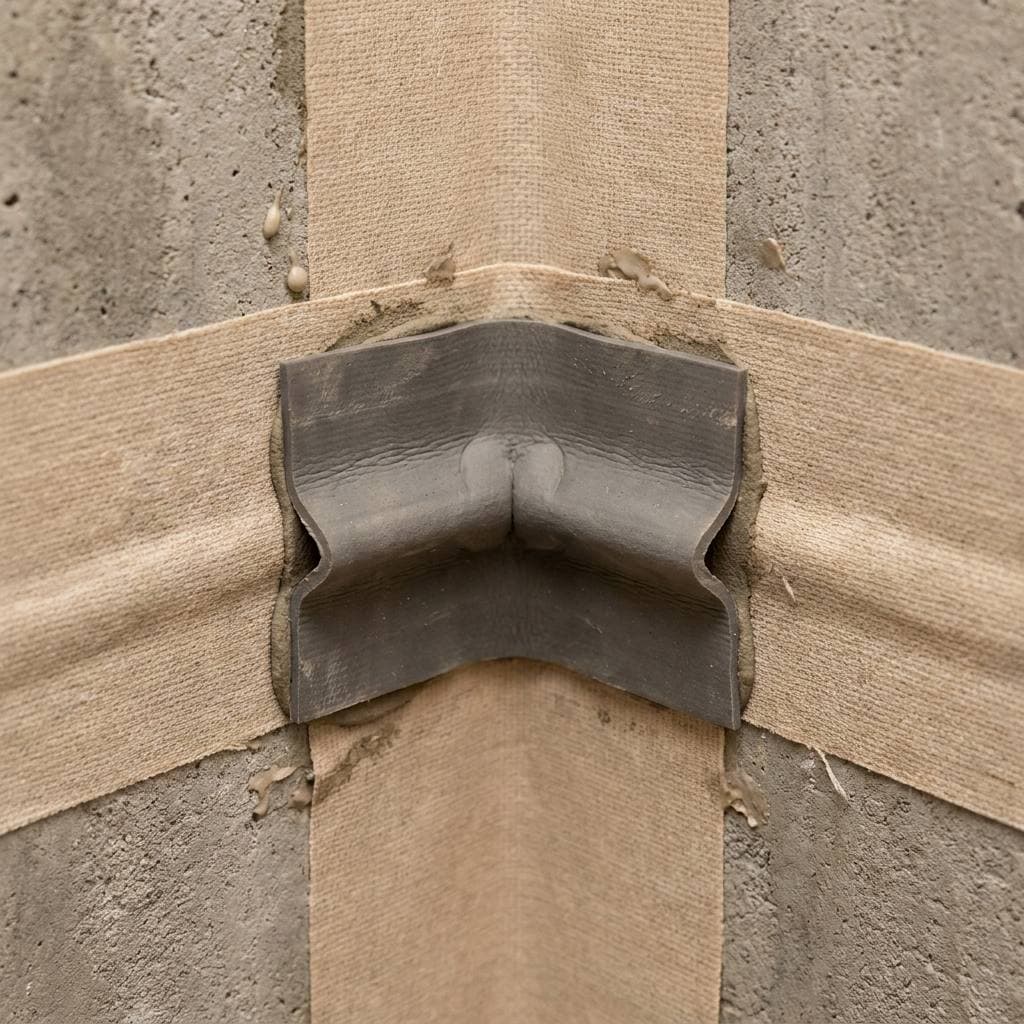
Failures occur at predictable points: unflashed corners, unbonded or improperly lapped seams, liquid systems applied below the manufacturer's minimum mil thickness, and substrate that flexes beyond the system's rated deflection limit. We treat the membrane install as the inspection that matters most on the project, regardless of whether the jurisdiction explicitly inspects it. The flood test runs after membrane and before tile.
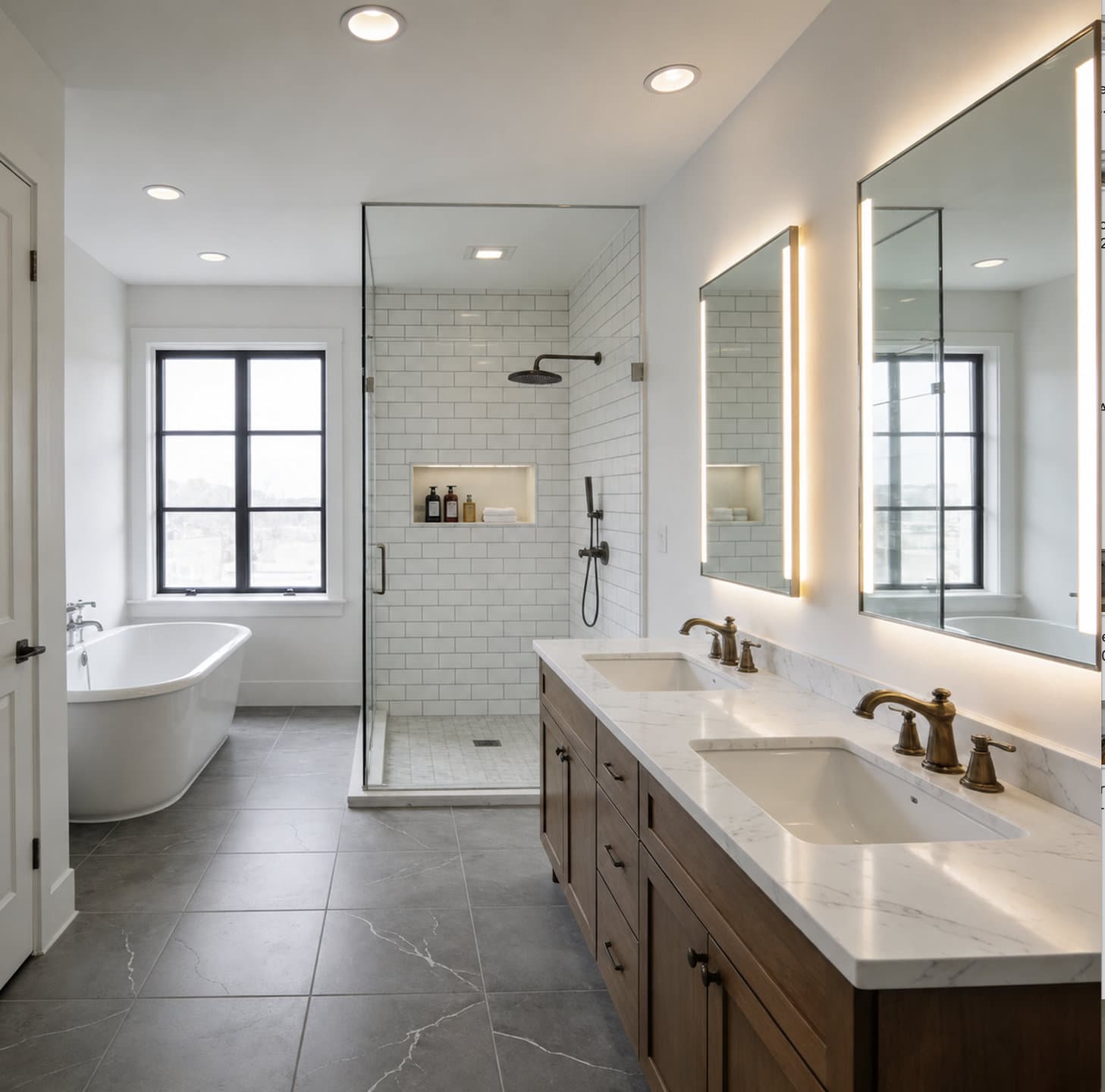
A bathroom vanity in coastal South Florida faces a humidity load no kitchen cabinet contends with. Sustained 70–90% indoor RH is the operating environment for the life of the install. The vanities that survive this load look different from the ones that work in dry climates. Once the spec is settled, bathroom vanity installation covers the mounting, the plumbing tolerance, and the clearances that go with it.
The substrate matters. Plywood with marine-grade adhesive — the BS 1088 phenolic-bonded standard or equivalent — is the premium-tier baseline for coastal vanity bodies. MDF fails first under sustained high-RH conditions: edge swelling within 18–36 months at the bottom of doors and drawer fronts where mop and floor moisture accumulate, finish bubbling, then progressive substrate failure on plumbing-side surfaces. Standard MDF with edge-banding instead of full-edge sealing is the most common failure mode we see when removing a 5-year-old vanity that came in with the previous renovation.
The finish system matters. Catalyzed conversion varnish or catalyzed lacquer is the industry standard for premium custom cabinetry — chemically cured, hard, water-resistant. UV-cured finishes on imported European lines are also excellent. Pre-catalyzed lacquer trails both. Nitrocellulose lacquer, common on lower-tier cabinetry, softens and yellows in coastal humidity and is not appropriate for bathroom service.
The hardware matters. Coastal bathrooms eat plated-brass and chrome-over-zinc-die-cast hinges within 3–5 years. The corrosion-resistant standard is 316 stainless steel — marine grade, with molybdenum content to resist chloride pitting — or solid brass with PVD finish rated for marine application. Soft-close mechanisms remain functional in coastal service only when the metal substrate does not pit; a hinge with a corroded pivot pin loses soft-close action within 2–4 years.
A small detail with disproportionate weight: coastal-spec premium vanities often include a vented toe kick that allows airflow through the cabinet body, preventing condensation accumulation against an uninsulated exterior wall. In older coastal high-rises with minimal exterior-wall insulation, this single detail is the difference between a vanity that lasts 20 years and one that develops mold colonization on its back surfaces by year 7.
Vanity tier pricing in our work: stock vanities in 4-week lead time at the $8K–$25K Tier 01 level; semi-custom in 8–12 week lead time at Tier 02; custom-fabricated in 12–20+ week lead time at Tier 03 and Tier 04. Imported European semi-custom currently runs at a 15% tariff premium under the bilateral framework that took effect in 2025; domestic semi-custom programs are the natural beneficiary on the cost side. When durability over the next 20 years is the question, the order that matters is substrate, finish, hardware, and ventilation.
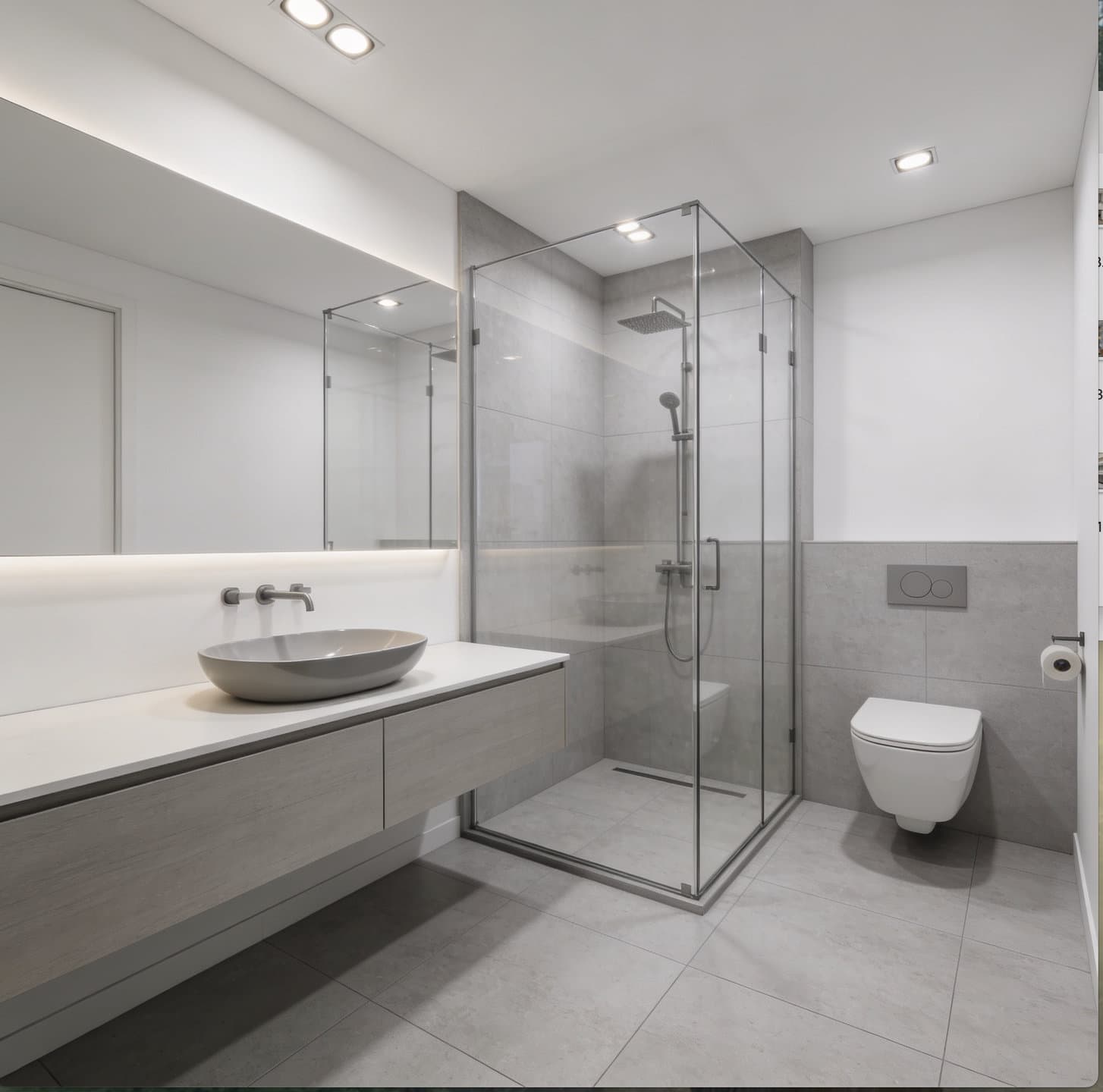
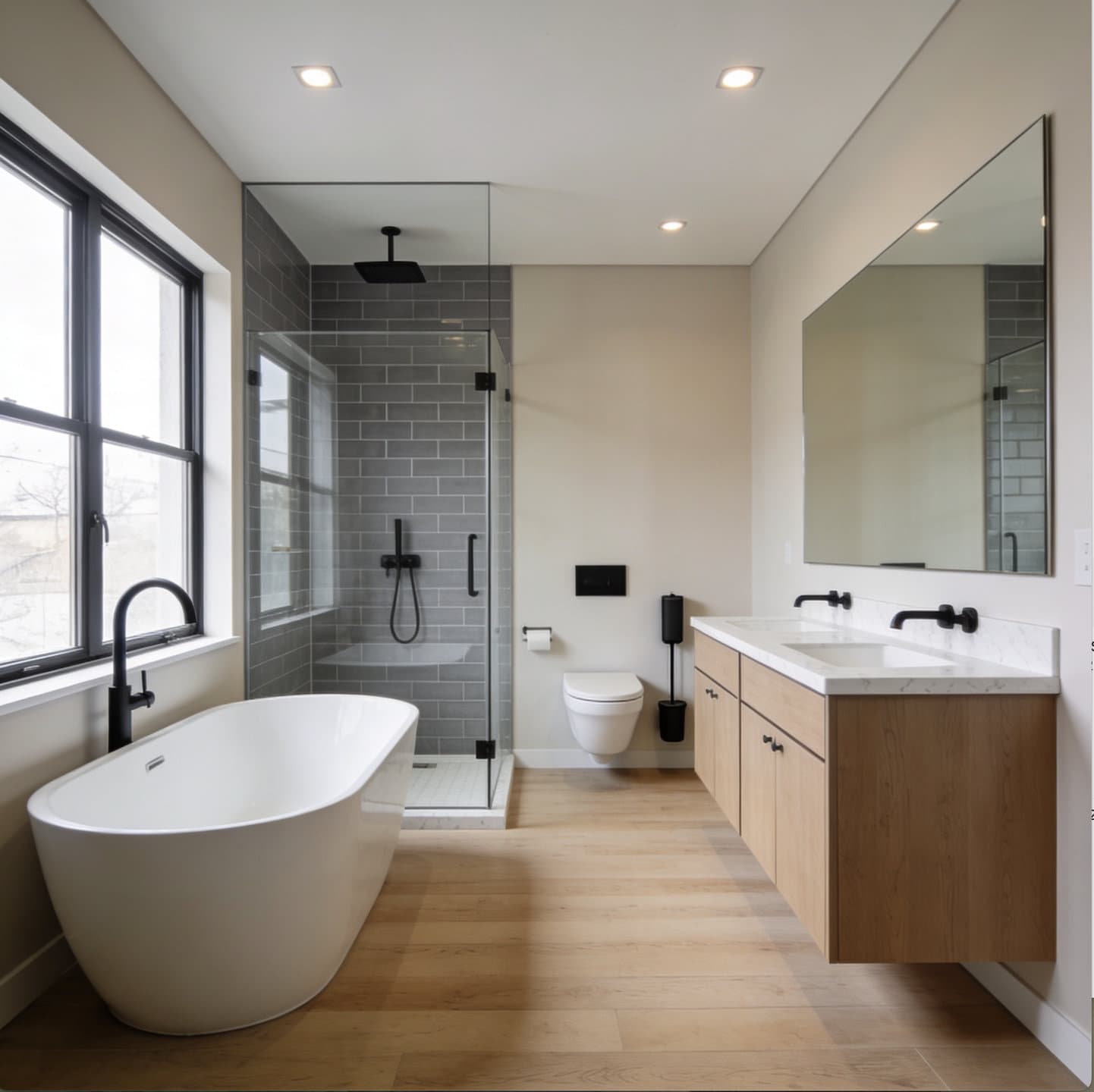
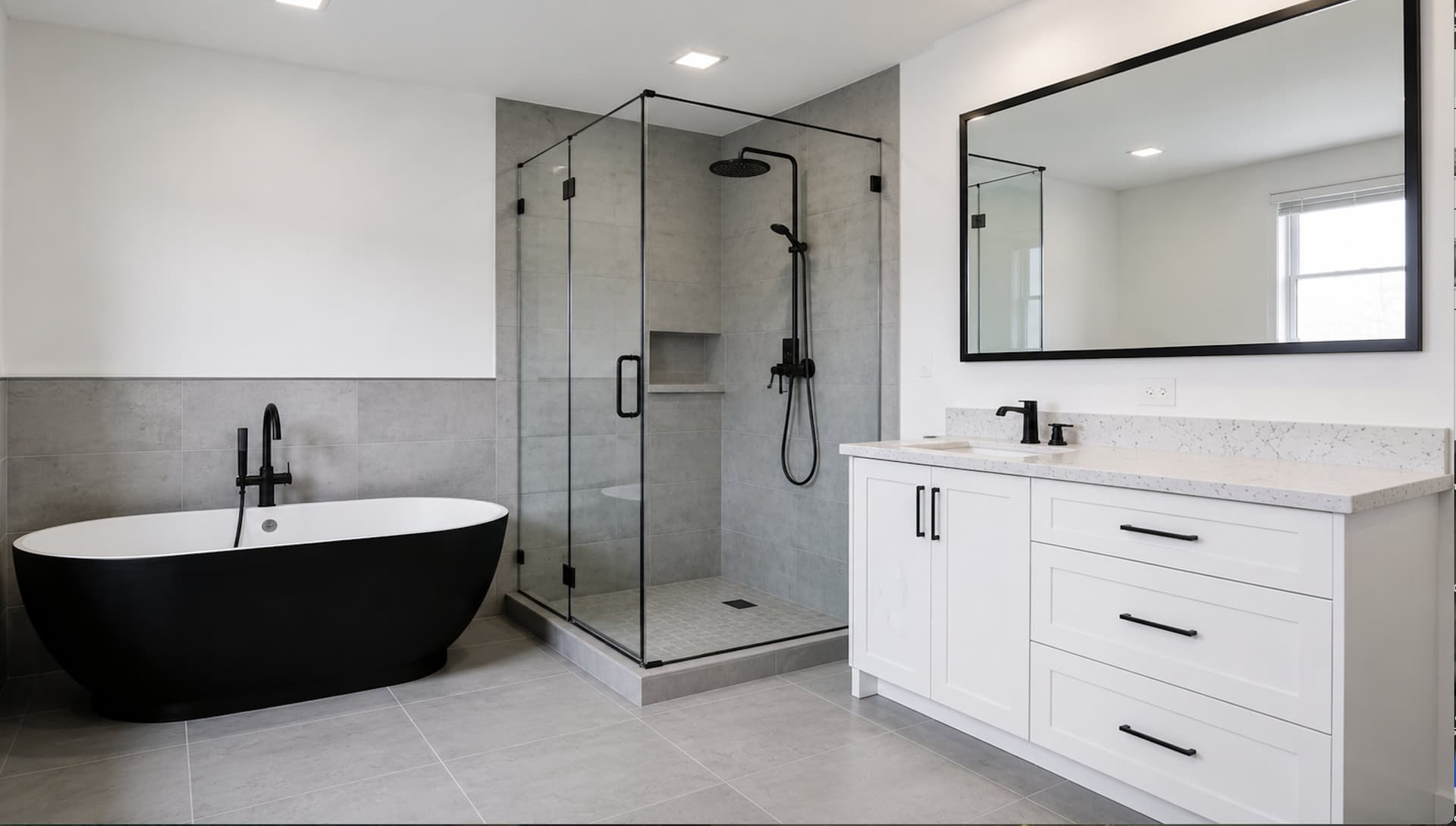
A premium bathroom fixture earns its price through valve cartridge serviceability and finish durability over decades, not through aesthetics alone. The category-leader pricing tiers for a single-handle widespread lavatory faucet break cleanly into three bands. The American luxury / mid-premium category runs $400–$1,200 list — solid-brass body, ceramic disc cartridge, lifetime mechanical warranty, in-stock domestic distribution. The European designer / Japanese precision category runs $1,200–$2,400 — designer authorship, imported precision machining, premium PVD finish programs, 2–4 week lead time. The German-engineered / hand-finished American luxury category runs $2,400–$6,000+ — hand-finishing, low-volume production, custom finish programs, 8–16+ week lead times. Manufacturers in these categories include Kohler, Hansgrohe, Brizo at the mid-premium tier; Toto, Duravit at premium imported; Dornbracht, Waterworks at the ultra-luxury end. The tub is the one fixture whose rough-in has to be right before anything else lands — bathtub installation covers the framing, the drain and overflow, and the waterproofing tie-in.
The diagnostic for fixture quality is the valve cartridge. Premium brands publish cartridge part numbers and stock cartridges for fixtures 20+ years old. Mid-tier and commodity fixtures often go out of cartridge production within 7–10 years, forcing replacement of the entire fixture rather than a $40 cartridge swap. The lifetime mechanical warranty on a $1,400 designer faucet is the warranty depth that justifies the spend. The same logic runs on the tub: where the body is sound and only the surface has failed, bathtub reglazing covers when refinishing holds and when it does not.
Frameless glass shower enclosures in coastal service follow their own specification logic. Glass thickness in residential premium tier breaks at 3/8" (10mm) and 1/2" (12mm) tempered, conforming to 16 CFR 1201 Category II safety glazing required by IBC for shower and tub enclosures. 3/8" supports door spans up to 30–32" with conventional hinge engineering; 1/2" is required for taller doors over 80", wider doors over 32", and longer unsupported header spans. Hardware finish is where coastal service shows its teeth. 316 stainless steel — marine grade, with molybdenum to resist chloride pitting — is the corrosion-resistant standard. Solid brass with marine-rated PVD finish is the second-best option. Plated brass and chromed zinc die-cast hardware fails within 3–5 years on coastal installations, with green-blue oxidation at the hinge pin as the diagnostic. The hardware-finish premium between marine-grade and commodity hardware on a 36" door is $300–$800 — and the marine-grade hardware outlasts the cheaper version by a factor of 3–5x in coastal service. Custom-fabricated frameless enclosures run 4–12 weeks lead time after tile is finished and field measurement is taken; they cannot be ordered before tile sets because they require ±1/16" verified dimensions.
A walk in shower Miami homeowners specify well almost always lands in this fixture and glass category — not because of the faucet alone, but because of the integration of substrate, waterproofing, large-format tile, frameless glass, and hardware finish working as a system.
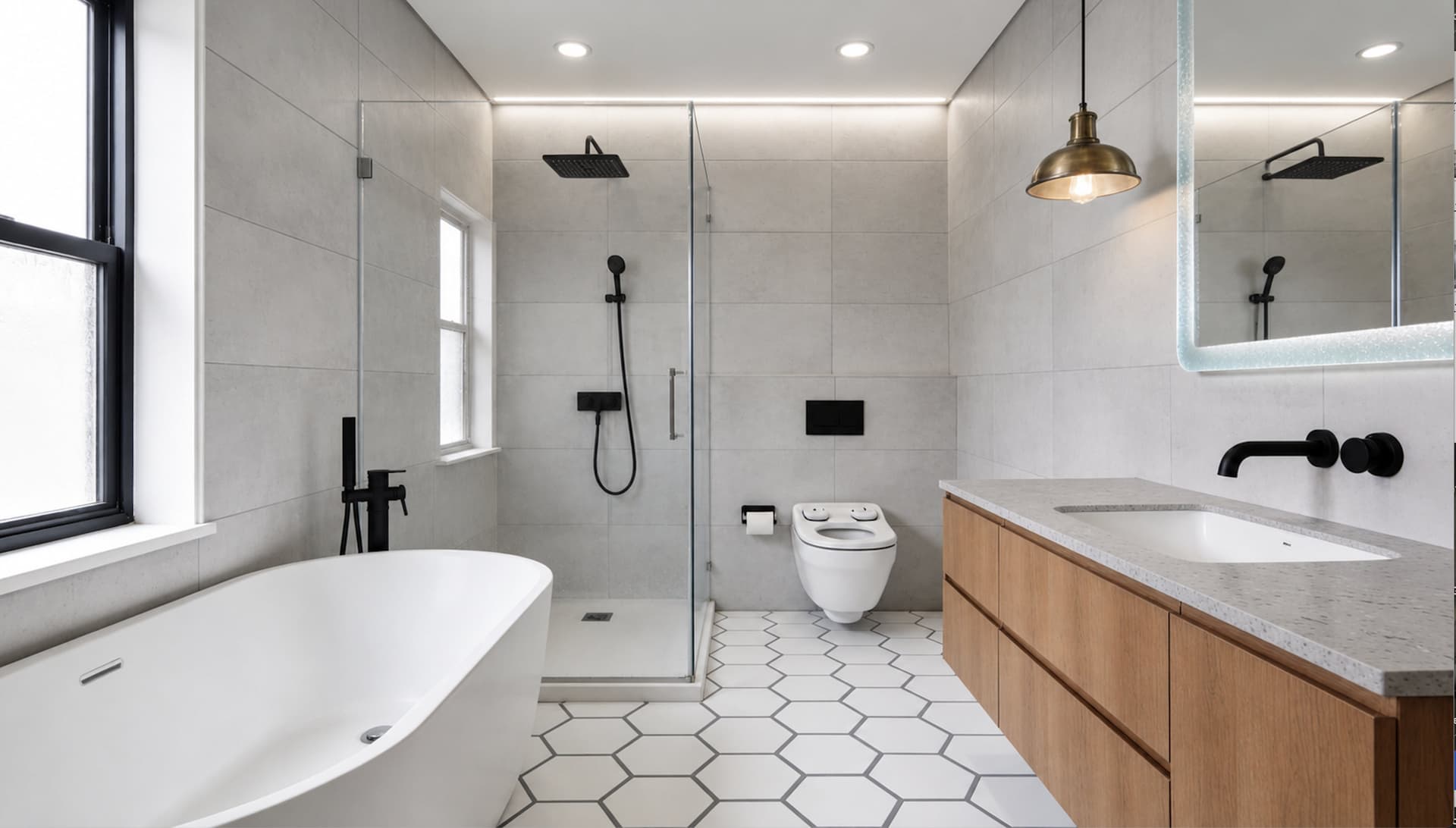
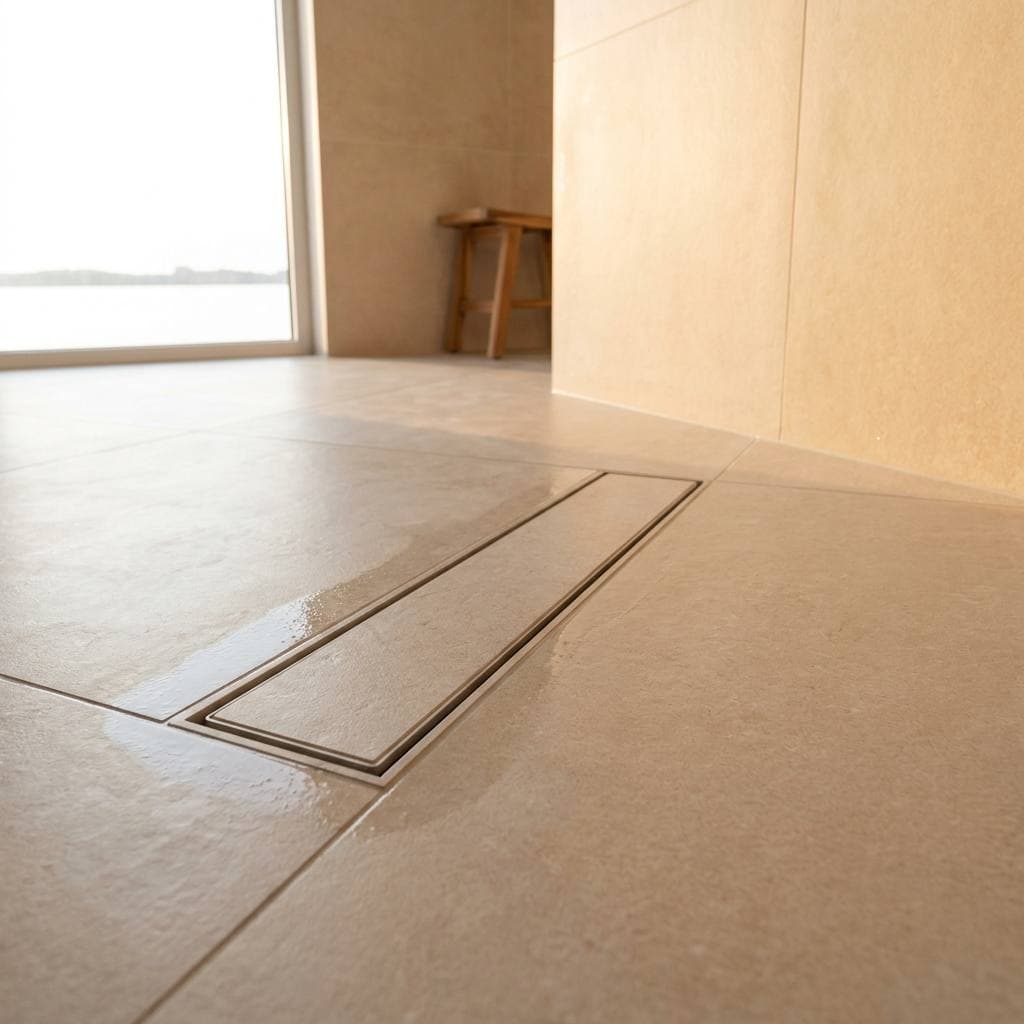
A full bathroom remodel runs through six phases. The duration ranges below are active-construction windows by tier. Add 2–6 weeks at the front for permit review in a small interior remodel scope; add 4–12 weeks for multifamily and condo board approval at higher tiers. Bathroom remodeling miami homeowners who plan to the full window — discovery through warranty handoff — tend to land projects on time and on budget. Phase 04 is where the two rough-in trades decide the schedule: the supply and drain-waste-vent work in bathroom plumbing installation, and the circuit additions and GFCI work in bathroom electrical installation.
We walk the existing bathroom with you, measure the rough-in conditions, identify the load-bearing constraints (slab penetrations, demising walls, fixture vent distances), and define scope against the four-tier model. Discovery output is a written scope of work, a tier band, and a preliminary timeline. We do not quote a price at this stage — accurate pricing requires Phase 2.
We coordinate with your designer or work to your direct specification. Material selections — vanity, tile, stone, glass enclosure, fixtures — get priced against current 2026 manufacturer lead times. The estimate breaks down by trade: demolition, plumbing rough-in, electrical, mechanical, waterproofing, tile, cabinetry, glass, fixtures, finish. We do not bid against a competitor's number; we quote what we can build to spec.
We pull the permit. Multi-trade scope means building, plumbing, electrical, and sometimes mechanical sub-permits cycle independently. Miami-Dade typical review is 2–4 weeks for a small interior remodel; impact-window review adds 3–6 weeks where scope includes new exterior glazing. High-rise condo work adds building-level approval — typically 1 week to 1 month for routine bathroom scope, with documented insurance certificates, contractor license, and detailed scope plans submitted to the association. ARB review in country-club communities is generally not triggered by interior bathroom work unless the scope includes exterior fenestration changes.
Demolition first. Rough-in second — plumbing relocation, electrical circuit additions, mechanical exhaust ducting. Inspections at rough-in completion before any cover work begins. Substrate prep — self-leveling underlayment where flatness requires it. Waterproofing membrane install — Schluter Kerdi sheet, Laticrete Hydro Ban liquid, Wedi panel, or hybrid by spec. Flood test on the shower pan. Tile setting. Cabinetry install. Stone fabrication and install. Glass enclosure field measurement and order. Fixture rough-in to finish. Final electrical and mechanical trim. Most miami bathroom remodel projects clear this phase in the active-construction window targeted at the start of design. Standard bathrooms clear active construction in 3–6 weeks. Custom material lead times — natural stone, custom vanity fabrication, custom frameless glass — and multi-trade permit review extend the total project window beyond the on-site window; we schedule around the long-lead items so crew time in the home stays tight.
Building, plumbing, electrical, and mechanical final inspections. Punch list with the homeowner. Glass enclosure install (this lands at the end because the field measurement window is post-tile). Final cleaning.
Walkthrough on every fixture, finish, and system. Documentation handoff: warranty registrations, manufacturer manuals, system warranty paperwork from the waterproofing manufacturer, fixture cartridge identification for service over time. We register the warranties for you — most homeowners never see the registration cards otherwise.
A bathroom renovation Miami homeowners undertake reads differently across the three city groupings we serve. The construction realities, the regulatory layer, and the material logic shift with the housing stock. The list below runs across Miami-Dade, Broward, and Palm Beach County.
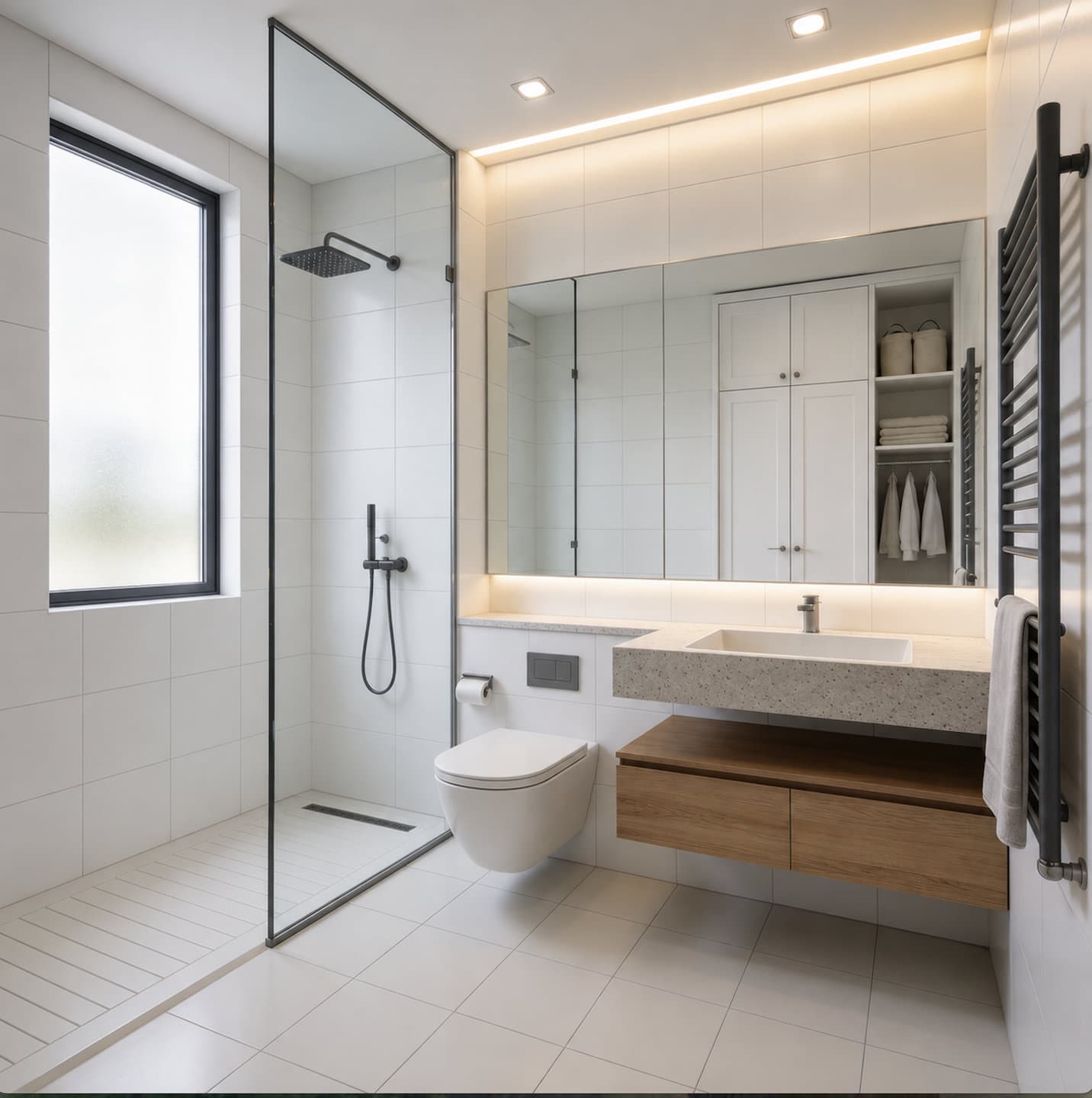
High-rise bathroom remodels share one constraint set: post-tensioned concrete floor slabs that limit drain re-routing, demising walls that limit plumbing relocation, building-level approval timelines that frontload the schedule, and freight elevator scheduling that paces material delivery. Primary-suite work in these towers typically lands at Tier 02 or Tier 03 — high-rise floor plans rarely allow footprint expansion, so the budget goes into material spec, frameless glass complexity, and fixture tier rather than square footage. Board-approval calendars run tighter here than inland, and sound-isolation requirements in luxury alteration agreements often exceed code (IIC 60+ is common), which makes thin-set tile over an uncoupling and sound-mat membrane standard practice rather than optional. Plan for board approval and freight coordination to sit at the front of the schedule.
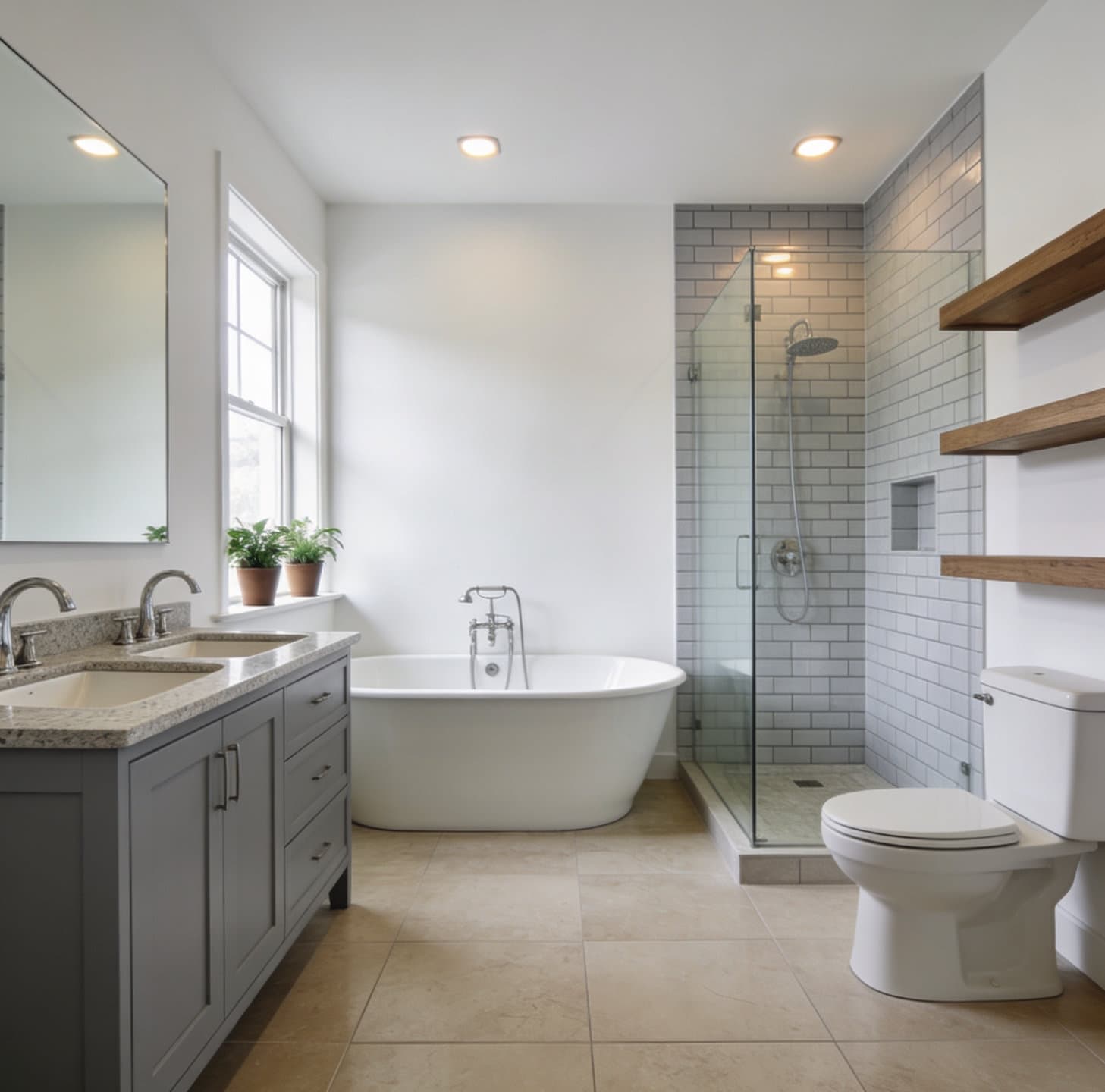
Suburban bathroom remodels across inland Miami-Dade share a different constraint profile from coastal high-rise work. Slab-on-grade construction means slab penetration is feasible when fixture relocation requires it — but breaking and re-pouring slab adds $4,000–$12,000+ to scope. The housing stock varies widely, from mid-century ranches to 1980s split-levels to post-2000 builds with engineered floor systems, and the substrate condition under the existing tile decides whether the job runs as a tile-removal or a full demo-to-studs. Single-family work generally permits cleaner than condo work because the regulatory layer stops at the jurisdiction — no board approval, no freight elevator. Where a bathroom expansion absorbs an adjacent closet or hallway, scope can edge into home additions territory; the line is whether the footprint stays inside the existing exterior walls or pushes outward.
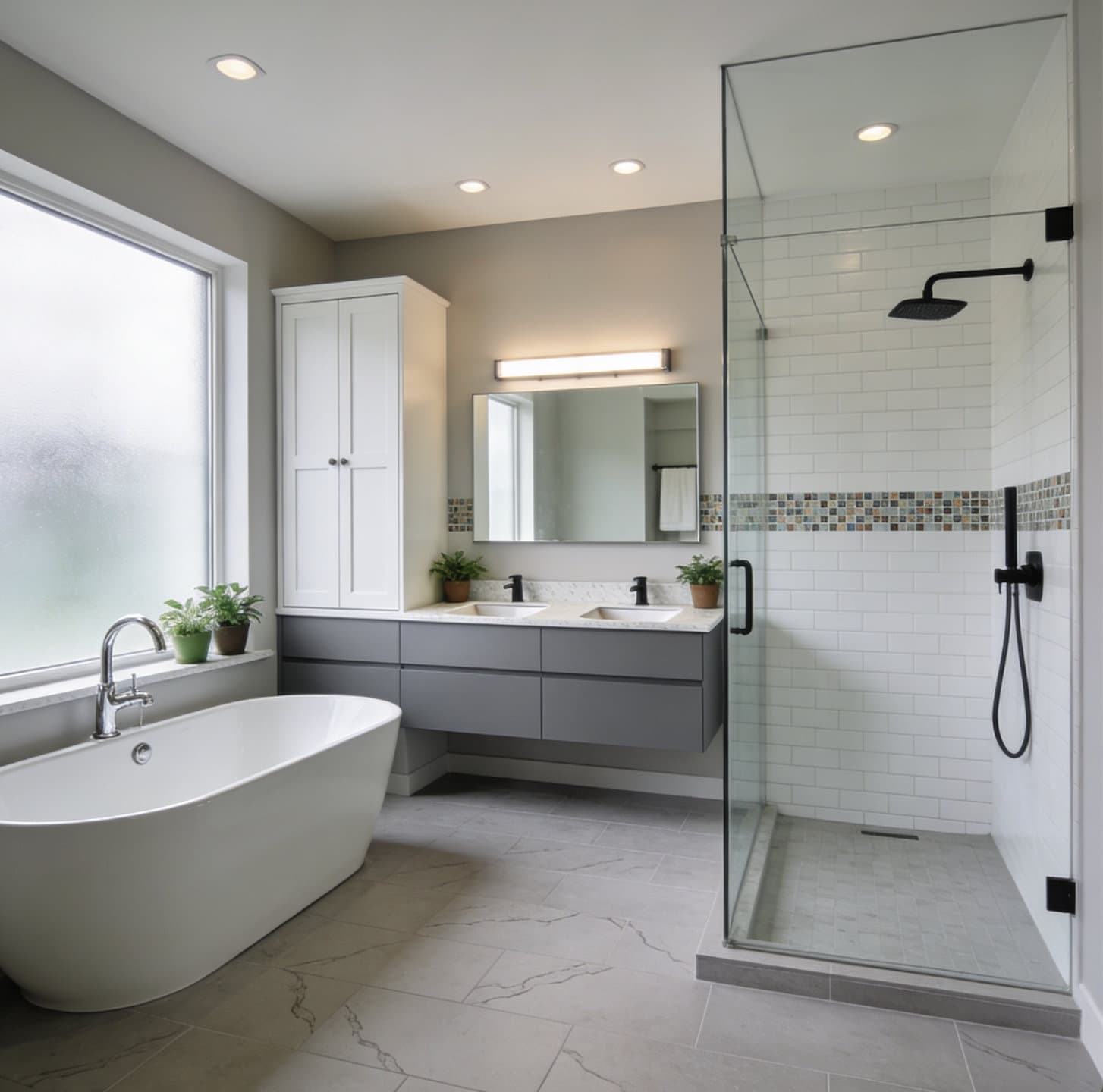
Boca West, St Andrews, Woodfield, and similar country-club community bathroom remodels add the ARB layer when scope includes any exterior modification — a new bathroom window, an exterior wall vent, a roof penetration for upgraded exhaust ducting. Pure interior bathroom scope generally does not trigger ARB review, which is a useful planning advantage for primary-suite renovations where the scope stays within existing exterior fenestration. ARB cycles in luxury communities run 30–60 days where triggered, with detailed plans, materials samples, and contractor licensing required in submission. Palm Beach County jurisdictions, including the Boca Raton Building Department, are known among local trades for slower permit review than Miami-Dade — we plan permit duration accordingly..
When you reach out, we respond right away during our Monday–Friday hours and set up the consultation as soon as your schedule allows. The first conversation is a short scope call — the bathroom, the home, the timeline, and the tier band you're working against.
The site visit runs 45–75 minutes. We measure the existing bathroom, document the plumbing supply and drain configuration, photograph waterproofing conditions where visible, flag any structural or load-bearing implications for layout changes, and walk the eight scope categories behind every Gaven proposal. In most cases you get your estimate at the visit — or within 24 hours.
Once you move forward, on-site construction on a standard bathroom runs 3–6 weeks. Custom scope or heavier permit review (slab penetration, new exterior glazing, condo board approval) extends the total window — but that stretch is material lead time and jurisdictional review, not crew time in your home. We tell you which clock your project is on before contract, never as a surprise mid-demo.
We are a Florida Certified General Contractor — License CGC1524886 — issued by the Florida Department of Business and Professional Regulation. The CGC license carries the broadest commercial-residential scope authority of the GC license categories and authorizes the construction, repair, and improvement of residential and commercial structures of any size. Bathroom contractors Miami homeowners hire under the CGC classification can pull the full multi-trade permit set required by FBC and IPC for bathroom rough-in scope without subcontracting the permit pull to another firm. Bathroom remodeling miami florida residents get from a CGC-classified GC carries the multi-trade authority that finish-only contractors don't have.
500+ projects since 2015. 37+ BuildZoom-verified permits in the public record. 5.0 stars across 60+ Google reviews. Operating since 2015. The license, the permit history, and the review density are independent verification anchors — each can be checked independently. License lookup is at MyFloridaLicense.com; permit history is at BuildZoom.com; reviews are on the Google Business Profile.
A bathroom remodelers Miami residents can verify before signing is a different category than a contractor who relies on the marketing claim alone. Bathroom remodeling contractor Miami homeowners hire under verifiable credentials carries a different risk profile than the unverifiable alternative. Verifiable credentials are what earn trust over time. Bathroom-specific pricing is in S03 above.
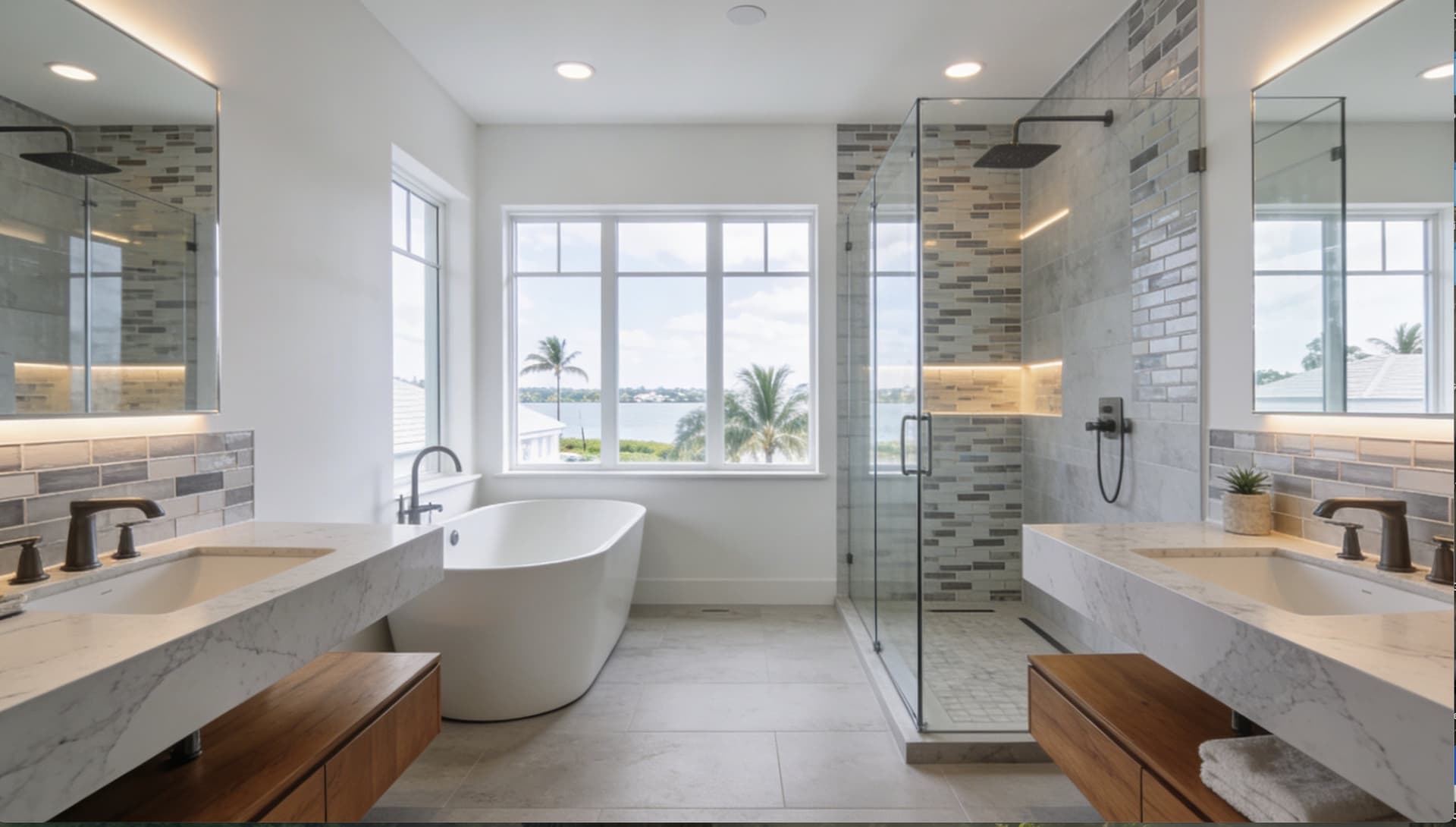
Tier 03 scope. Existing primary bath at approximately 110 square feet, single-vanity, separate tub and shower, dated finishes from original 2008 build-out. Scope: full demo to studs, plumbing rough-in re-routed within the demising wall to relocate the toilet, new mechanical exhaust sized at 110 CFM with humidistat control and exterior soffit termination, large-format porcelain wall and floor tile (60×120 cm slabs), frameless 1/2" glass walk-in shower with linear drain and 316 stainless hardware, semi-custom floating vanity in catalyzed-lacquer finish with stone top, mid-premium fixture tier throughout. Building approval ran 3 weeks. Active construction 12 weeks against the building's quiet-trade restrictions and freight elevator schedule. ANSI A118.10 system warranty registered on the waterproofing assembly.
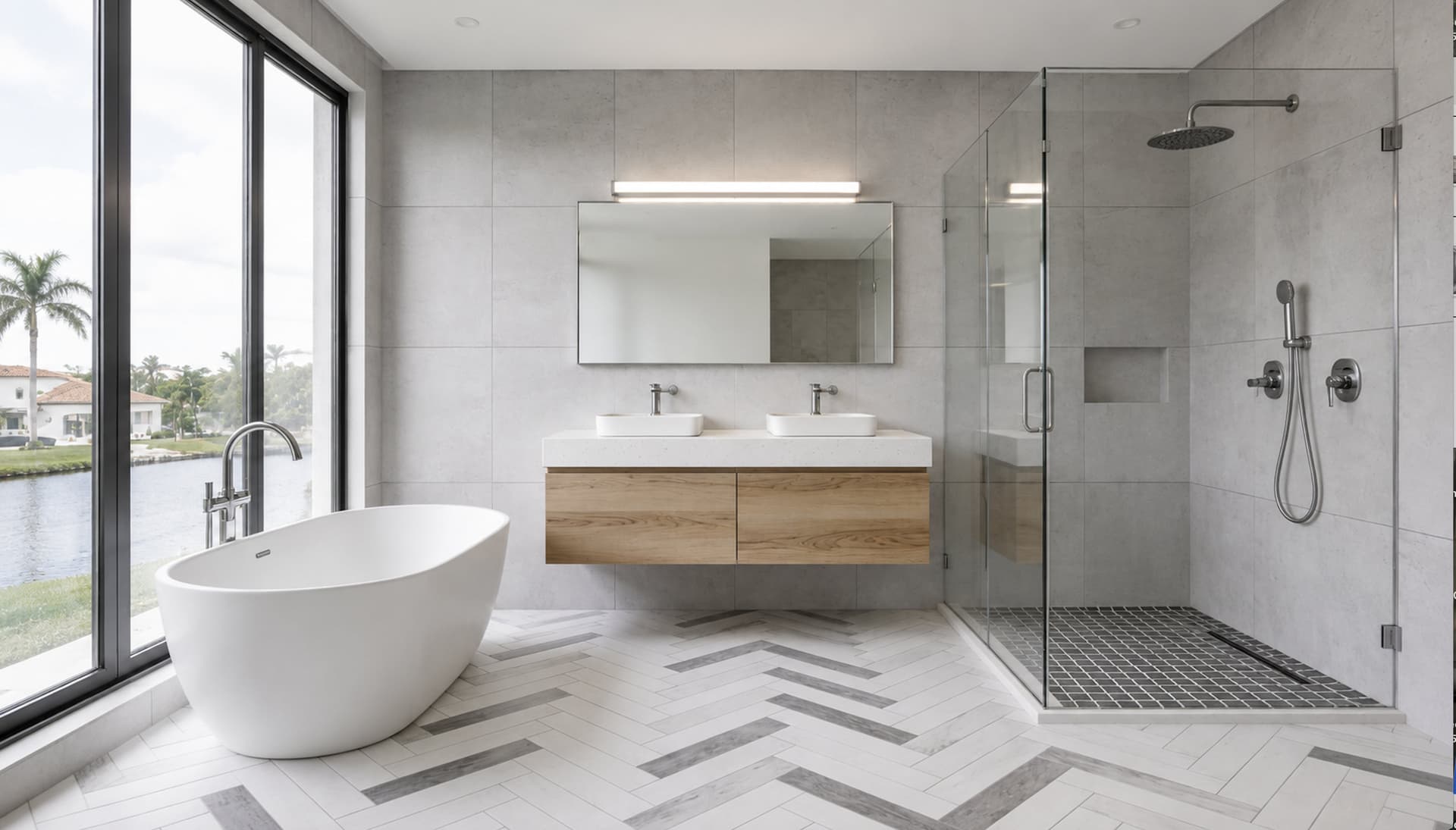
Tier 03 scope. Existing primary bath at 90 square feet with a tub-shower combination; expanded to 140 square feet by absorbing an adjacent closet and reframing the demising wall. Scope: full demo, layout reconfiguration with toilet and shower relocation triggering slab penetration and new wet-vent, freestanding tub on a relocated drain, large frameless walk-in shower with curbless entry and linear drain, large-format wall tile, custom vanity with stone top, premium imported fixture tier. Slab work added $7,500 to base scope. Permit cycle ran 5 weeks against multi-trade review. Active construction 14 weeks. Built for long-term homeowner reinvestment after 18 years in the property.
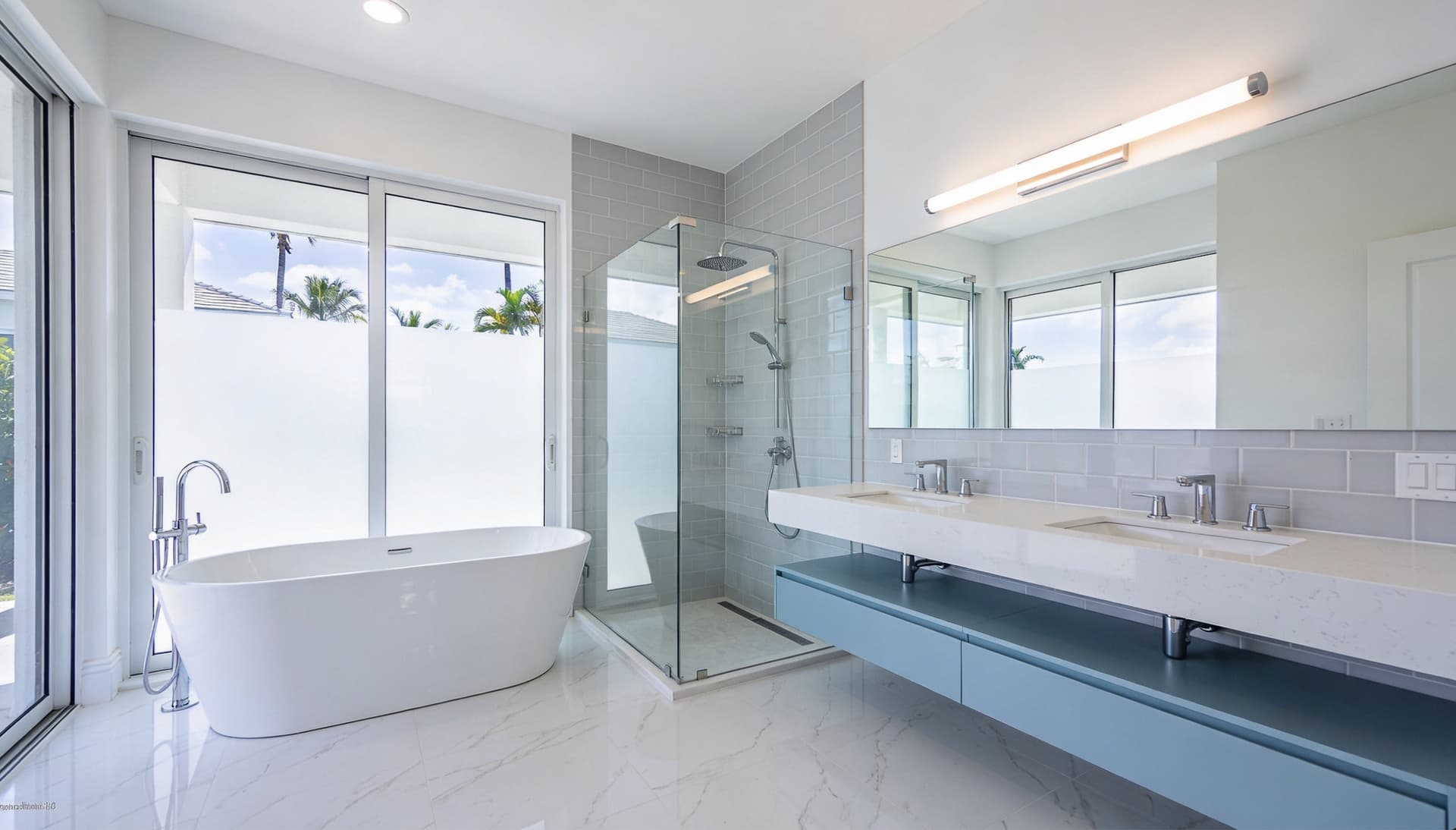
Tier 04 scope. Existing primary bath at 160 square feet, dual-vanity layout retained, no exterior fenestration changes (ARB review not triggered). Scope: full demo, plumbing rough-in upgraded with new fixture rough-in for steam generator equipment circuit, custom-fabricated dual vanity in catalyzed finish with full-slab stone tops, full-slab natural stone shower wall with book-matched seam, custom frameless glass enclosure with curved channel for the entry geometry, ultra-luxury hand-finished fixture program, integrated mood lighting and steam controls. Permit cycle 4 weeks. Active construction 16 weeks against custom material lead times — the stone slabs ran 9 weeks, the vanity fabrication ran 14 weeks, the frameless glass ran 8 weeks after tile completion. Total project window 6 months from contract signature to walkthrough.
No. The site visit, scope conversation, and written quote are free. We never charge a trip fee. You only pay when work begins, and the price — tier band, scope, timeline — is in the contract before signing.
Most calls and form requests get a response the same business day during our 7:00 AM – 10:00 PM Monday–Friday hours. Site visits are typically scheduled within 3–5 business days. For an active Tier 02 bathroom the discovery and design phase then runs 1–2 weeks before any work begins, so the realistic call-to-construction-start runway is 4–8 weeks once permitting and selections are factored in.
Every project carries a written 1–2 year labor warranty, spelled out in the contract before signing. Fixtures, stone, and waterproofing systems carry their respective manufacturer warranties on top of our installation warranty. We register the system warranty for the homeowner under the manufacturer's installer-acceptance program when the install meets the manufacturer's technical literature. If something fails inside the warranty window because of installation, we come back and fix it.
Three checks before you sign anything with us — or with anyone else. One: verify license CGC1524886 at MyFloridaLicense.com. Two: pull our permit history at BuildZoom — 37+ verified permits on the public registry. Three: read the 60+ Google reviews linked from the footer, where reviewers name their neighborhood and project type. Bathroom remodeling miami florida homeowners typically run all three checks before signing a multi-trade contract; we'd rather you do all three than skip them. We operate from Doral, FL and serve Miami-Dade, Broward, and Palm Beach County.
A full bathroom remodel Miami cost runs $8K–$130K+ depending on scope, fixtures, and whether the project crosses into plumbing rough-in or structural work. Tier 01 ($8K–$25K) covers cosmetic-grade remodels within the existing footprint with stock vanity and fixtures. Tier 02 ($25K–$55K) is the recommended landing zone for primary baths — full remodel with semi-custom vanity, large-format porcelain tile, frameless glass enclosure, and mid-premium fixtures. Tier 03 ($55K–$100K) covers primary-suite scope with custom vanity, layout changes, and designer fixtures. Tier 04 ($100K–$130K+) covers ultra-luxury custom-fabricated work with hand-finished fixtures and structural reconfiguration. Most of our bathroom volume lands at Tier 02. For first-time bathroom renovation buyers, the best bathroom remodeling services for new homeowners miami offers typically land at Tier 01 or Tier 02.
Active construction runs 3–6 weeks for Tier 01, 6–10 weeks for Tier 02, 10–16 weeks for Tier 03, and 16+ weeks for Tier 04. Add 2–6 weeks at the front for Miami-Dade permit review on a small interior remodel; add 3–6 weeks if the scope includes new impact-rated exterior windows; add 1 week to 1 month for high-rise condo board approval; add 30–60 days where ARB review is triggered in country-club communities. Total bathroom remodel miami project windows from contract signature to final walkthrough run 8–14 weeks at Tier 02 and up to 6–9 months at Tier 04 with custom material lead times.
Yes. We offer 0% down options for qualified homeowners on bathroom renovation Miami fl projects. Bathroom remodeling Miami fl financing is processed through a third-party lender; qualification depends on credit profile and project scope. We can introduce you to the financing partner during the Phase 2 design and estimate window once project pricing is firm.
We specify ANSI A118.10-compliant waterproofing on every bathroom. The three category-leader systems we work with are Schluter Kerdi (sheet membrane), Laticrete Hydro Ban (liquid-applied), and Wedi (lightweight foam-core panels). System selection depends on the project — sheet membrane is common on walls in standard rectangular shower geometries, liquid waterproofing is preferred on shower floors and complex pan geometry, foam-core panels excel where weight reduction matters in high-rise condo work or where curved walls and benches require shaping. Each system carries a system warranty when installed per the manufacturer's technical literature using compatible components throughout. We do not mix systems within a single shower assembly because mixing voids the system warranty and reduces the install to a generic A118.10 specification.
The IRC code minimum is 50 CFM intermittent or 20 CFM continuous per Table M1505.4.4.1. That is the national floor designed for moderate-climate bathrooms. Coastal South Florida primary baths require design-grade ventilation: 80–110 CFM at 0.25" w.g. static pressure, sized at roughly 1 CFM per square foot of bathroom area for shower-equipped baths and doubled for primary suites with multi-head showers, steam generators, and freestanding tubs. Vent termination must run to the exterior — never to attic, soffit, or enclosed cavity per IRC M1506. Premium installations specify 0.3–1.0 sone fans rather than the 1.5–3.0 sone commodity range, because quieter fans are the ones homeowners actually leave running. Humidistat control is increasingly standard.
Yes — and the rule is broader than just receptacles inside the bathroom. NEC 210.8(A)(1) requires GFCI protection for all 125-volt, 15- and 20-ampere receptacles in dwelling-unit bathrooms. NEC 210.8(A)(9), added in the 2017 cycle, extends GFCI to all 125-volt receptacles within 6 feet of the outside edge of a bathtub or shower stall — including hallway receptacles where the bathroom shares a wall. NEC 210.11(C)(3) requires a dedicated 20-ampere branch circuit serving bathroom receptacles. Whirlpool, hydromassage, and steam generator equipment circuits are governed by NEC 680 and require GFCI/GFPE protection on the equipment side, typically a 240-volt dedicated circuit for steam generators. Florida currently adopts the 2020 NEC by reference through the FBC; the FBC 9th Edition taking effect December 31, 2026 will likely reference the 2023 NEC and expand GFCI scope further.
In a high-rise condo, yes — Florida Statutes Chapter 718 requires written board consent for unit alterations. Routine bathroom remodel approval cycles run 1 week to 1 month in well-managed buildings, longer in buildings with quarterly board meetings. The required documentation typically includes detailed scope and plans, contractor license, certificate of general liability insurance ($1M–$2M depending on the building), workers' compensation evidence, additional insured endorsement naming the association and management company, asbestos and lead-paint disclosure where applicable to building age, schedule with start and end dates, and freight elevator and trash removal coordination plans. Water shutoffs are scheduled separately with 24 hours' notice and run $200–$500 per request. Most luxury buildings restrict construction noise to 8–9 AM through 5–6 PM weekdays. We pull the building submission and coordinate with the property manager rather than asking the homeowner to navigate this independently.
Generally no, when the scope is purely interior. Architectural Review Boards in country-club and HOA-managed communities review modifications affecting "the appearance or function of the neighborhood" — exterior fenestration changes, roof penetrations, exterior wall vents, and plumbing modifications affecting common-area or shared infrastructure. Pure interior bathroom remodels — finish replacement, fixture replacement, layout changes within the unit, plumbing rough-in changes that do not affect adjacent units — are typically exempt under most CC&R declarations. Where ARB review is triggered (a new exterior bathroom window, a new exhaust duct through the roof or exterior wall), submission timelines run 30–60 days in luxury country-club communities with monthly committee meetings; the statutory ARB response cap in many declarations is 30 days from complete submission. Contractor license, scope description, plans and elevations, materials and color samples, and sometimes neighbor notification are typical submission contents.
Yes, but the cost depends on how far. Per IPC Chapter 9, the maximum trap arm distance from a fixture to its vent is 5 feet for a 1-1/2" trap arm at standard 1/4"-per-foot slope (longer for larger pipe diameters). Move a fixture beyond that distance and the project requires new wet-vent or vent-stack work, often penetrating a slab in single-family construction. Slab penetration adds $4,000–$12,000+ to scope in slab-on-grade Florida homes. In a high-rise condo, fixture relocation is constrained to within-unit routing because the unit cannot tap a shared stack outside the demising wall. Layout changes that trigger plumbing rough-in rework are the single largest variance driver in condo bathroom remodels.
Shower drains are typically 2" minimum diameter per IPC, with 1-1/2" minimum trap arm pipe. Premium installations now commonly default to 2" drains, with 3" linear drains in primary suites with multi-head showers and rain-shower flow rates that exceed standard 1-1/2" capacity. The shower pan slope is 1/4" per foot minimum to the drain, measured at the substrate level rather than the finish surface. Curbless and wet-room installations require the same pan slope but extended across a larger footprint, requiring careful coordination with the floor framing or topping slab — and in high-rise condo work, with the floor-assembly depth available for slope.
Either 3/8" (10mm) or 1/2" (12mm) tempered, conforming to 16 CFR 1201 Category II safety glazing. 3/8" supports door spans up to 30–32" with conventional hinge engineering. 1/2" is required for taller doors over 80" in height, wider doors over 32", longer unsupported header spans, and enclosures with frameless inline panels exceeding standard load limits. The thickness choice cascades to hardware: 1/2" requires hinges rated for the higher panel weight (a 36"×80" 1/2" door is roughly 30 lb heavier at the hinge than a 3/8" version), and the host wall requires structural backing at the hinge anchor points.
316 stainless steel — marine grade, with molybdenum content to resist chloride pitting — is the corrosion-resistant standard for residential bathrooms in coastal South Florida. Solid brass with PVD finish rated for marine application is the second-best option, and in some designer programs is preferred for finish range. Plated brass and chromed zinc die-cast hardware fails within 3–5 years on coastal installations, with green-blue oxidation at the hinge pin as the diagnostic. Powder-coated steel performs comparably to PVD when the coating is intact, but a single chip exposes the substrate to chloride attack. The hardware-finish premium between marine-grade and commodity hardware on a 36" frameless door is $300–$800 — and the marine-grade hardware outlasts the cheaper version by a factor of 3–5x in service.
We work to ANSI A118.10 system specifications using these manufacturers' systems, but we do not currently hold formal certified-installer status with any single waterproofing manufacturer. This means we register the system warranty for the homeowner under the manufacturer's installer-acceptance program when the install meets the manufacturer's technical literature, but we do not claim the higher-tier "certified installer" warranty programs that some manufacturers offer to dealer-network installers. The best bathroom remodeling services for long-term homeowners miami offers ask this question because warranty depth over a 20-year horizon is the difference between a 10-year and a 30-year shower assembly. The honest answer is that the system warranty registration we run carries the same A118.10-compliant terms as the certified-installer program for the homeowner; the dealer-network certification is a contractor business-side benefit rather than a homeowner-benefit difference in most residential cases.
The Section 232 tariff on imported kitchen cabinets, bathroom vanities, and component parts took effect October 14, 2025 at a 25% rate. The proclamation included an automatic step-up to 50% on January 1, 2026, but on December 31, 2025 a new Presidential Proclamation delayed the 50% increase to January 1, 2027. The 25% rate remains active through 2026. Imported European semi-custom programs absorb a 15% rate under the bilateral framework rather than the headline 25%. The net effect on a Tier 02 or Tier 03 imported European vanity is typically a 10–15% landed-cost increase versus October 2024 pricing. Domestic semi-custom programs are the natural beneficiary on cost; we lead with domestic semi-custom in first-cost options for Tier 02 unless the specification calls for an imported program specifically.
Cosmetic-grade work — paint, fixtures-in-place, floor tile within the existing footprint, vanity replacement at existing rough-in — typically does not require a permit in most South Florida jurisdictions. The moment scope crosses into wall partition modification, plumbing rough-in changes, electrical circuit additions, or mechanical exhaust rework, the project becomes a multi-trade renovation requiring building, plumbing, electrical, and sometimes mechanical sub-permits. We pull the permits and coordinate the inspection schedule. Operating without a permit on multi-trade scope creates resale-disclosure liability for the homeowner and exposes the contractor to license discipline through the Florida DBPR.
Layout, materials, fixtures, and complexity. A $30,000 bathroom is a Tier 02 full remodel within the existing footprint — semi-custom vanity, large-format porcelain tile, frameless glass enclosure, mid-premium fixtures, ANSI A118.10 waterproofing, properly sized exhaust. A $90,000 bathroom is a Tier 03 primary-suite renovation with layout changes — relocated fixtures, slab penetration or vent-stack rework, custom vanity, designer or imported fixtures, custom-cut natural stone or full-slab porcelain wet walls, 1/2" frameless glass with engineered hinge, and integration of features like a freestanding tub or steam generator. The cost difference is roughly half in materials and half in labor and structural work — and the durability and serviceability difference over 20 years is meaningful but not 3x meaningful. Most homeowners get the highest livability return at Tier 02; Tier 03 earns its premium when layout changes or footprint expansion are part of the scope, or when long-term homeowner reinvestment justifies the materials uplift.
Yes. A walk in shower Miami conversion typically replaces a tub-shower combination with a frameless glass walk-in shower at the same footprint (Tier 01–02) or expands the shower footprint by absorbing tub or vanity space (Tier 02–03). Curbless walk-in showers with linear drains require coordination with the floor-assembly depth — feasible in slab-on-grade single-family work and in some high-rise condo configurations, but the floor framing or topping slab depth has to support the slope without raising the bathroom floor relative to adjacent rooms. We assess feasibility during Phase 1 discovery before quoting.
Shower pan and slope-to-drain, enclosure waterproofing, curbless and ADA entry, linear drain, and frameless glass — built in sequence inside a full remodel.
Read more →Single and double vanity sizing, floating-vanity wall blocking, sink and faucet integration, and the plumbing reconnection — installed as a phase of a full remodel.
Read more →Floor and wall tile as the finished surface — selection, substrate prep, large-format flatness, grout, and slip-rated floors — set as a phase of a full remodel.
Read more →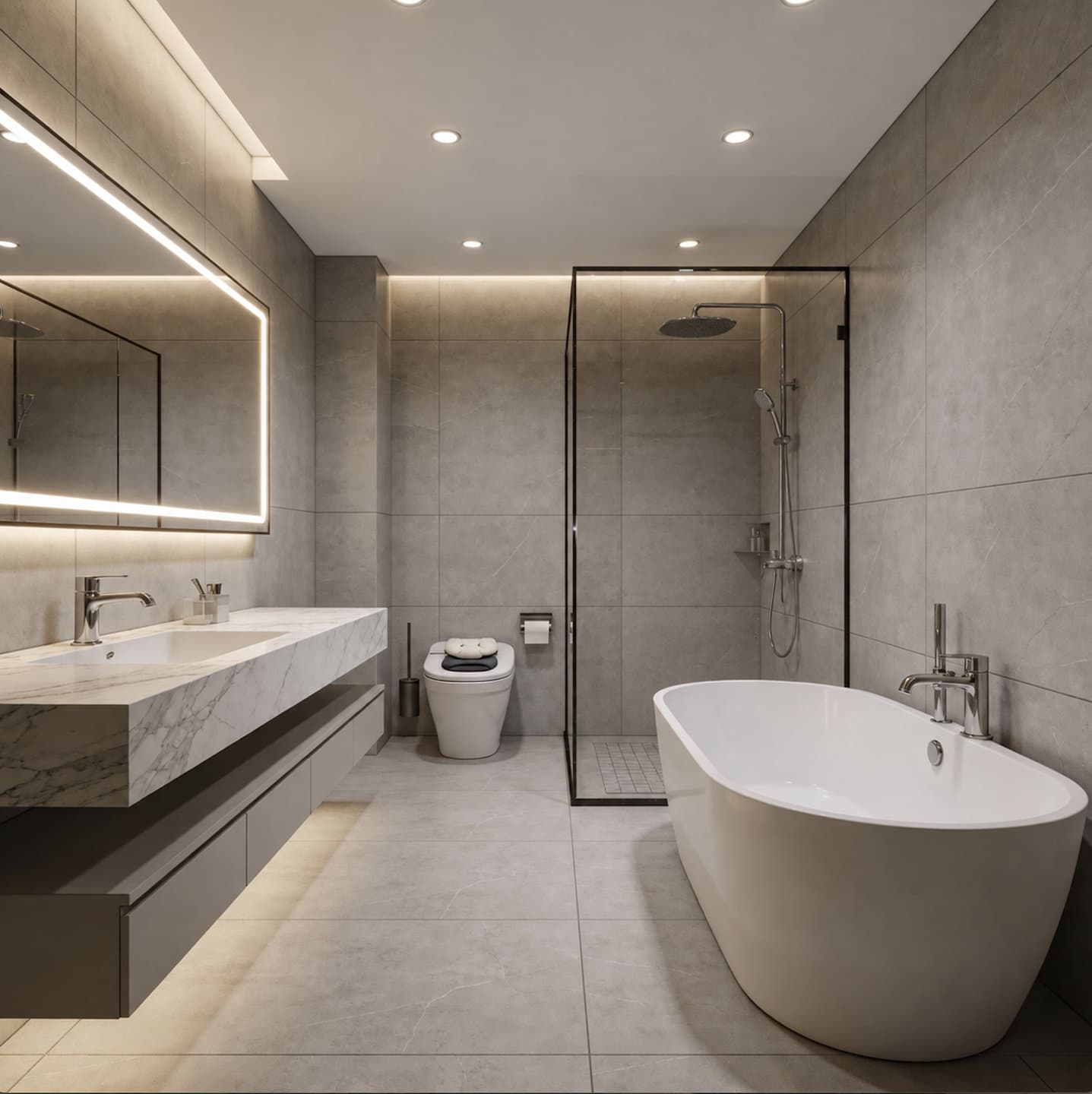
Tub type selection, structural floor support for a filled cast-iron tub, setting and leveling, and the drain and overflow tie-in — installed inside a full remodel.
Read more →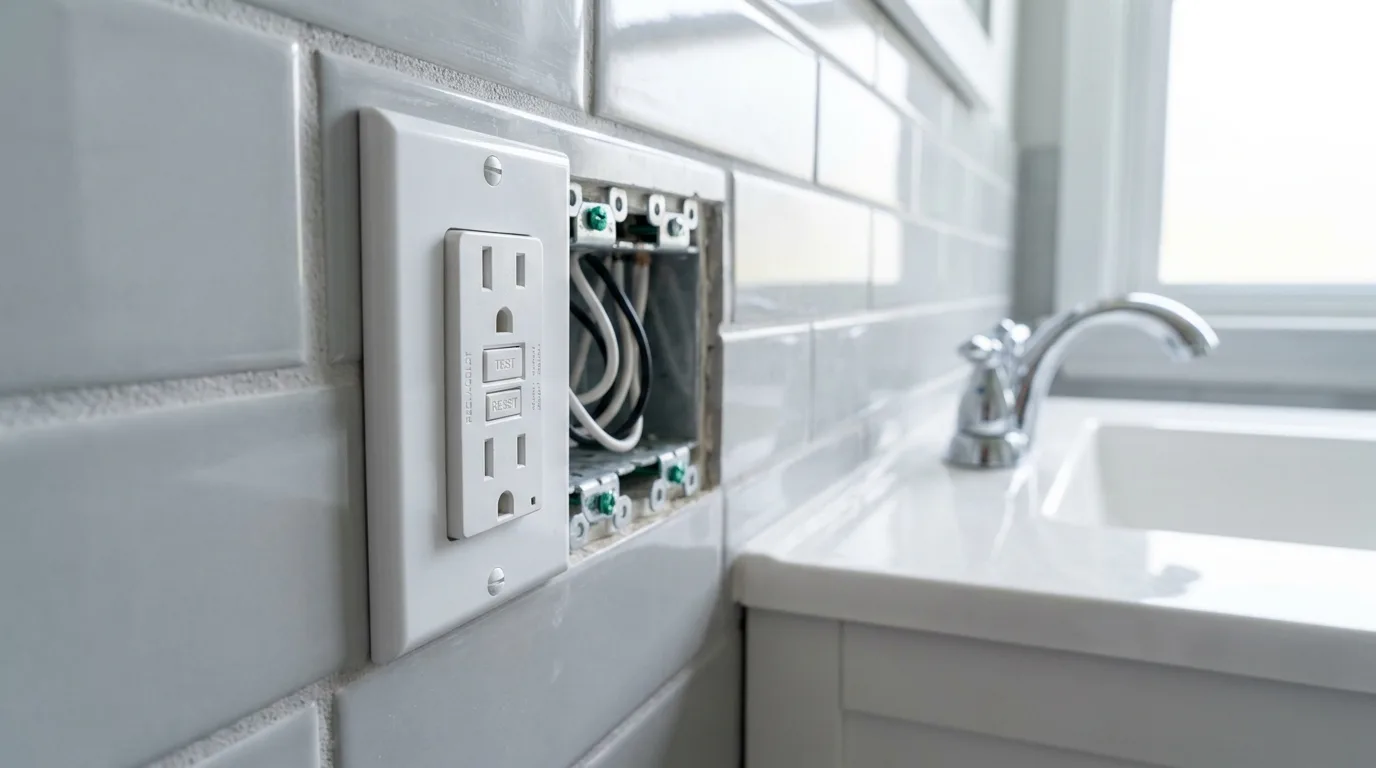
GFCI protection, a dedicated 20-amp branch circuit, fan and heater wiring, and wet-location fixtures — the bathroom's electrical, handled to NEC and Florida code inside a full remodel.
Read more →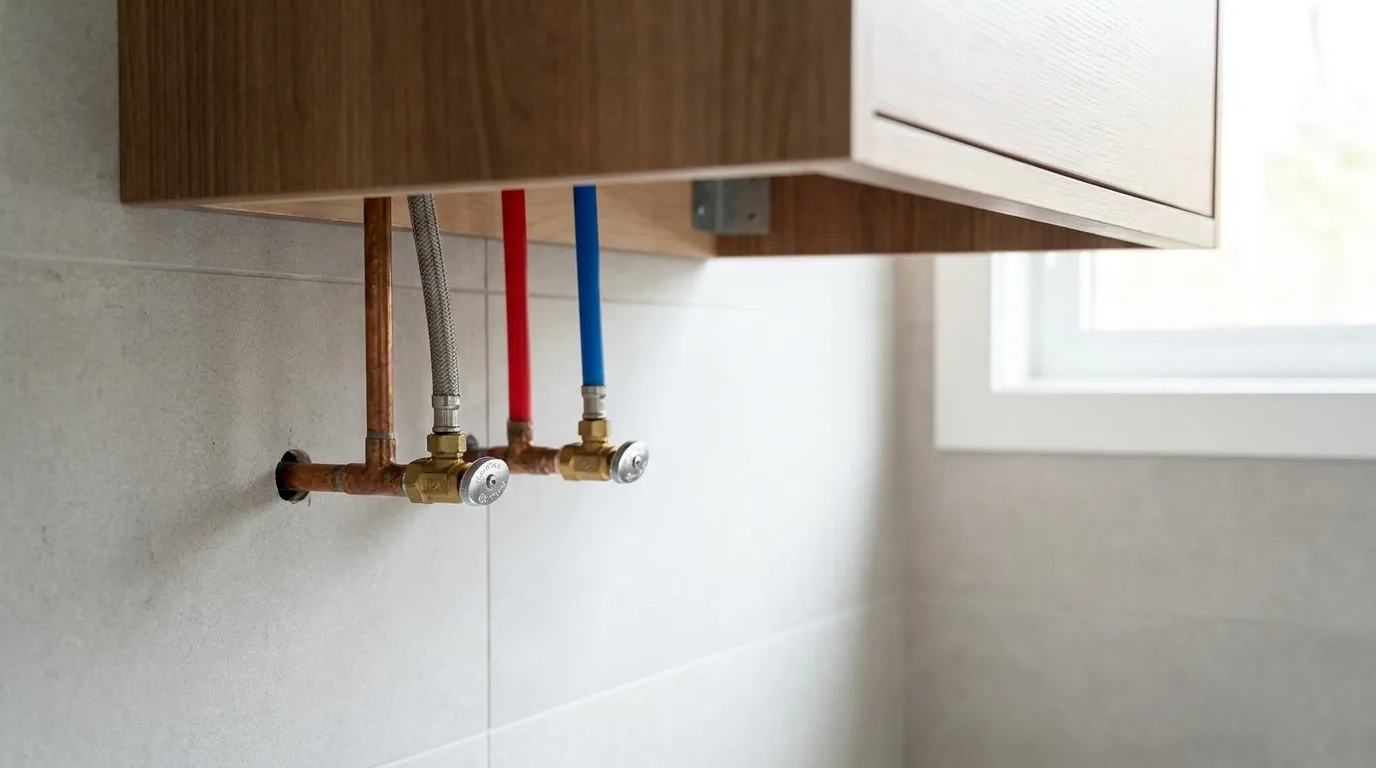
Water supply lines, drain-waste-vent, and fixture rough-in — the whole bathroom's plumbing, handled to FBC-P and Florida code inside a full remodel.
Read more →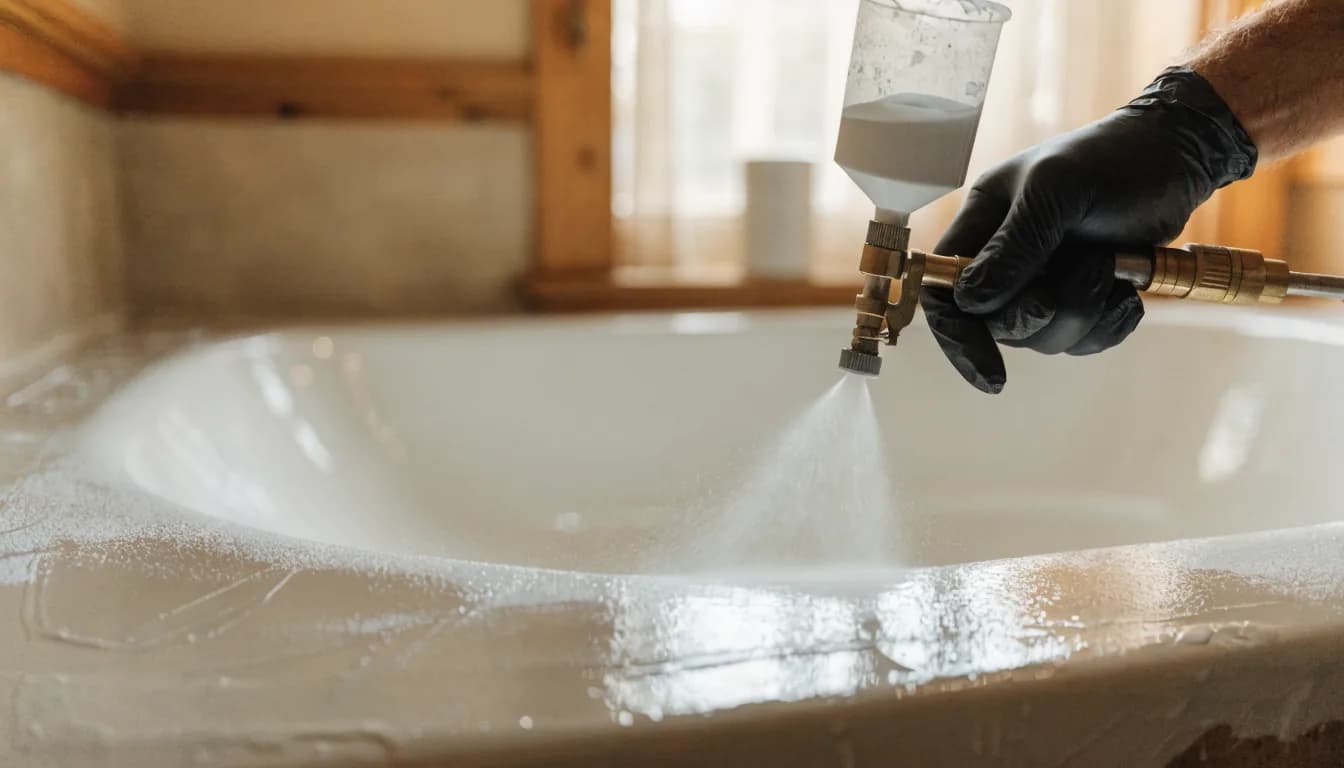
Reglazing vs. replacement, explained honestly — when a fresh coating on the tub you have is the right call, and when a full replacement inside a remodel is the better one.
Read more →Call us, or send the form. We'll schedule a site visit, walk the scope and tier band with you, and put a written proposal in your hands — at no charge. From there, you decide. Bathroom contractors Miami homeowners hire under the CGC license classification handle the permit pull, the inspection schedule, and the building approval coordination — we run all three. A bathroom renovation Miami project starts with a free site visit and ends with a written 1–2 year labor warranty. For our full GC scope beyond bathrooms visit the homepage or contact us directly.
Last updated August 2026.