

Bathroom Electrical Installation
Bathroom electrical installation to the code Florida has adopted — GFCI protection, a dedicated 20-amp circuit, and fan, heater, and fixture wiring, all handled inside one permitted full bathroom remodel. Free quote, no trip fee, same-day appointment scheduling.
Electrical as one phase of a full bathroom remodel
A bathroom mixes water and power in a few square feet, which is exactly why its wiring is governed by more rules than any room but the kitchen. Gaven handles that bathroom electrical installation as one phase of a full bathroom remodel — the GFCI protection, the dedicated circuit, the fan and heater wiring, and the fixture connections, pulled together with the tile, the vanity, and the plumbing in a single permitted project. A full bathroom remodel typically runs 6–12 weeks across four tiers, roughly $8K–$130K+.
Gaven does not take bathroom electrical on as a standalone scope. If you only need one outlet added or a fan swapped with nothing else changing, that is electrician work, not a remodel — hire a licensed electrician for it. We would rather point you to the right trade than bill you for a project that does not fit.
What are the electrical code requirements for a bathroom in Miami?
A bathroom remodel in Miami-Dade, Broward, or Palm Beach County follows the National Electrical Code that Florida adopts statewide. Three rules drive most of the work: every receptacle needs GFCI protection (NEC 210.8(A)(1)); the bathroom needs at least one dedicated 20-amp branch circuit for its receptacles (NEC 210.11(C)(3)); and any light or fan over a tub or shower must be rated for a wet or damp location (NEC 410.10(D)). Because the work is permitted and inspected, all of it comes up to current code as part of the remodel.
What bathroom electrical requires
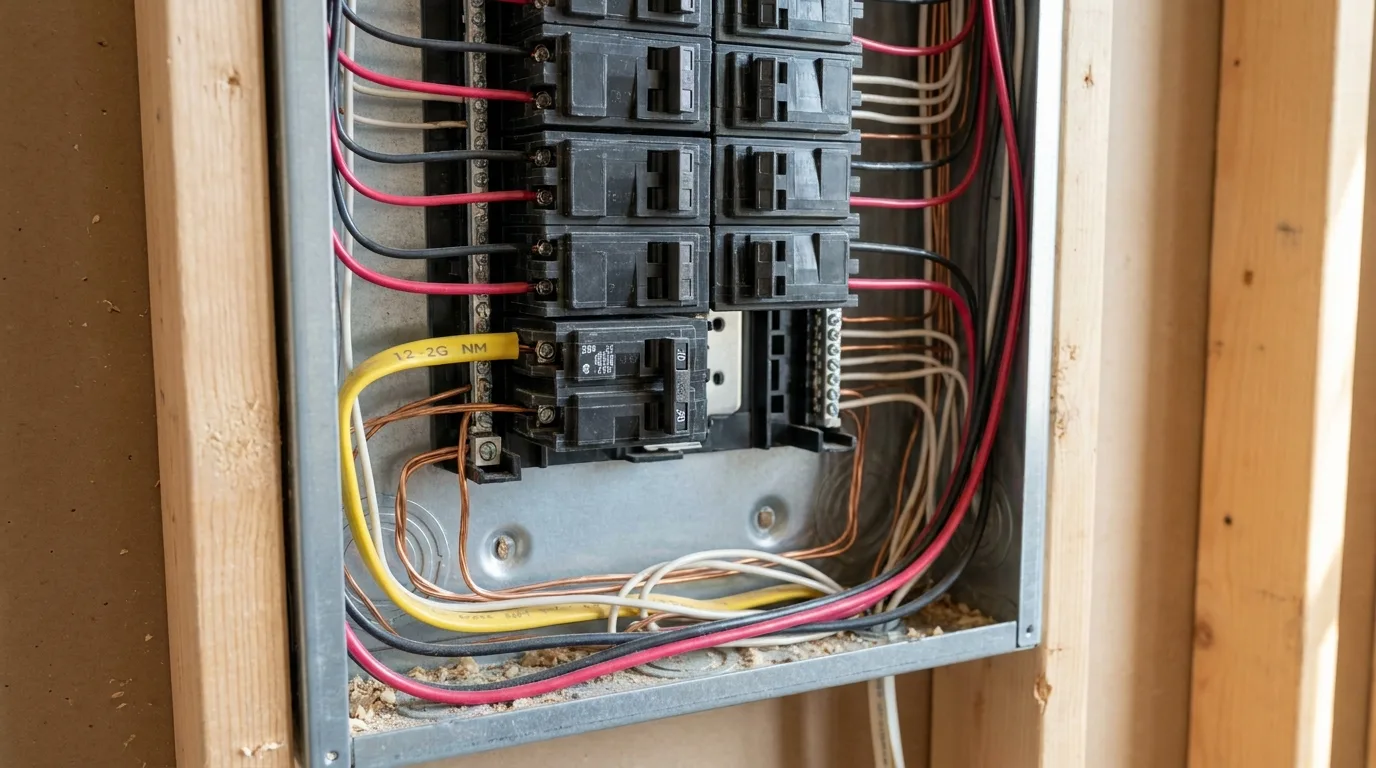
The dedicated 20-amp circuit a bathroom needs
Older Miami bathrooms were often wired on a single circuit shared with a bedroom or a hallway. Current code does not allow that for a remodeled bathroom. The rule — a dedicated 20 amp bathroom circuit — comes from NEC 210.11(C)(3): at least one 20-amp, 120-volt branch circuit has to serve the bathroom receptacles, and nothing outside the bathroom can share it, with narrow exceptions.
That matters the moment you add the load a modern bathroom carries — a hair dryer alone can draw most of a small circuit's capacity. Share that circuit with the lights and a heater and the breaker trips. The dedicated 20-amp circuit is what lets the room actually run. Where a remodel adds a heated floor, a towel warmer, or a powerful fan-heater, those get planned in during design, alongside the vanity layout, because the vanity and fixture placement decide where the circuits land.
GFCI protection: every receptacle, and the 6-foot rule
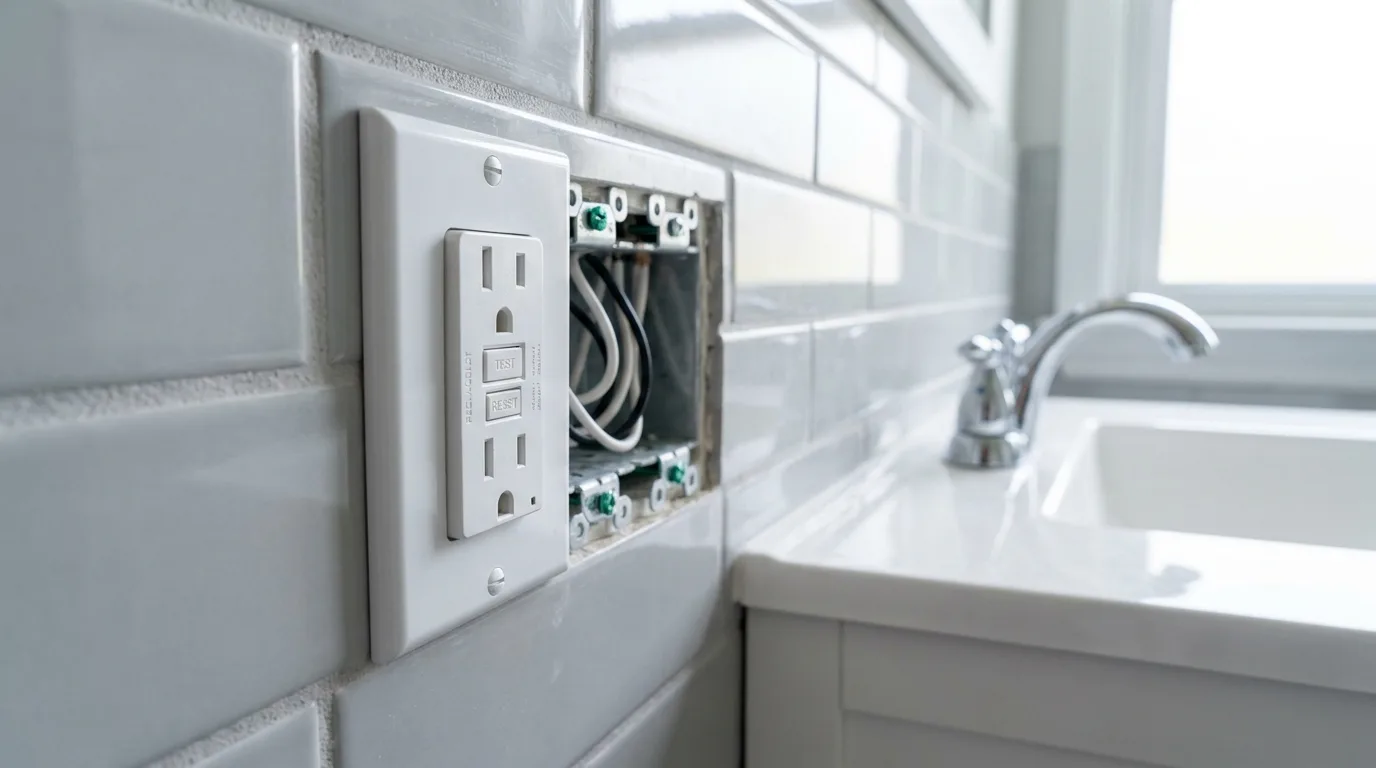
GFCI protection cuts power in a fraction of a second when current strays where it should not — through water, or a person. In a bathroom, that protection covers the whole room. Under NEC 210.8(A)(1), every125-volt, 15- and 20-amp receptacle in the room needs GFCI protection — no "only near the sink" exception. A separate rule adds any receptacle within 6 feet of a tub or shower stall. This is not new caution: GFCI protection was first required in bathrooms by the 1975 edition of the National Electrical Code, and it has only widened since.
Placement follows the same logic. At least one GFCI receptacle sits within 3 feet of each sink, to the side of the basin rather than directly behind it, so a cord never hangs into the bowl. The clean way to cover a whole bathroom is a single GFCI device at the start of the circuit protecting the outlets downstream, or a GFCI breaker at the panel — which is also where unpermitted DIY bathroom electrical wiring most often fails inspection.
Fans, heaters, and wet-location fixtures
A bathroom's electrical is not just outlets. A windowless bathroom needs mechanical ventilation under the Florida Building Code's residential provisions (FBC-R R303) — an exhaust fan that actually vents to the outside, not into the attic. The bathroom exhaust fan wiring is planned so the fan is on its own control, or a timer, rather than tied to the light, because a fan only clears humidity if it runs long enough after a shower. In our climate that humidity is the difference between a bathroom that stays sound and one that grows mold behind the walls.
Fixtures over a tub or shower have their own rule. Any luminaire inside the zone above and around a tub or shower has to be listed for a damp or wet location (NEC 410.10(D)) — a standard fixture is not rated for that steam and spray. The same holds for a fan-light combo mounted over a shower. None of this shows in the finished room, but it is the line between electrical that lasts the life of the remodel and electrical that gives trouble in a couple of humid years.

Rough-in, and where it fits the sequence
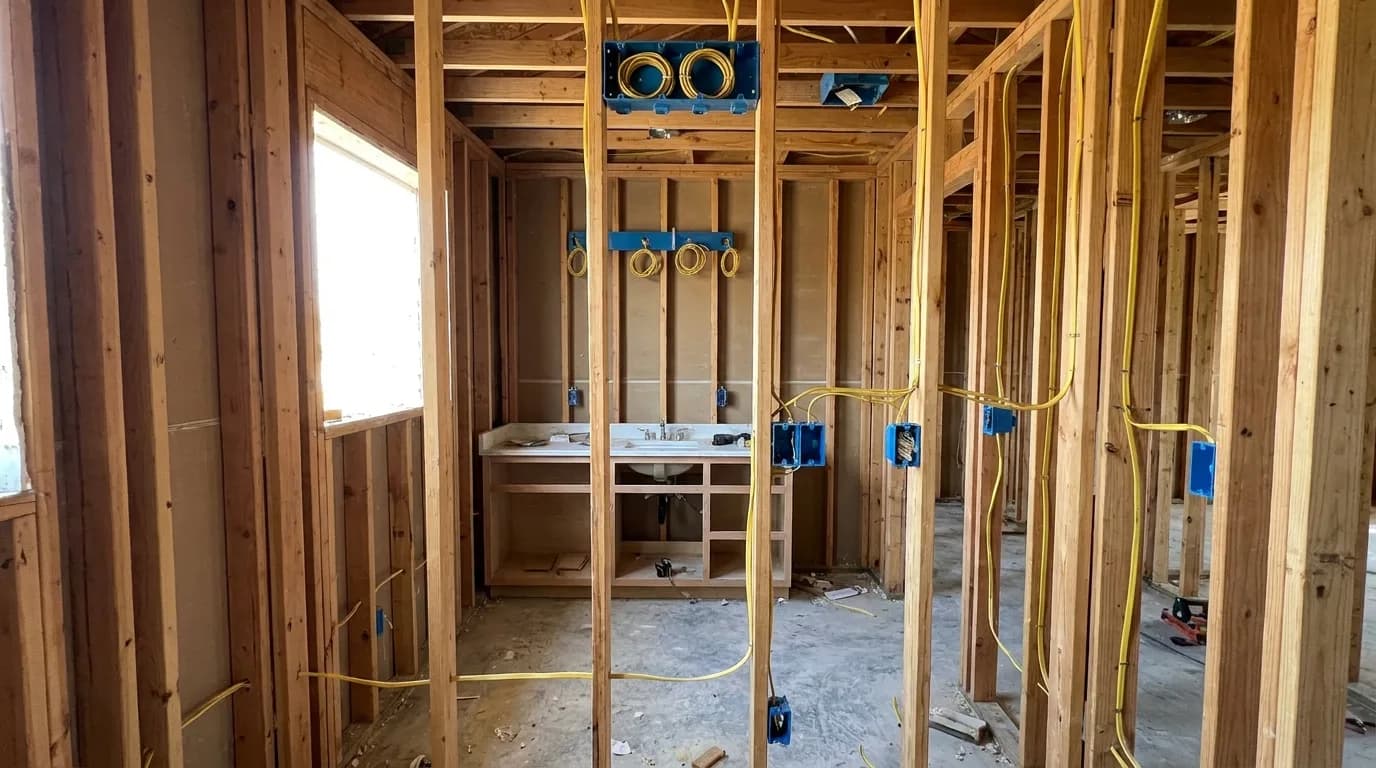
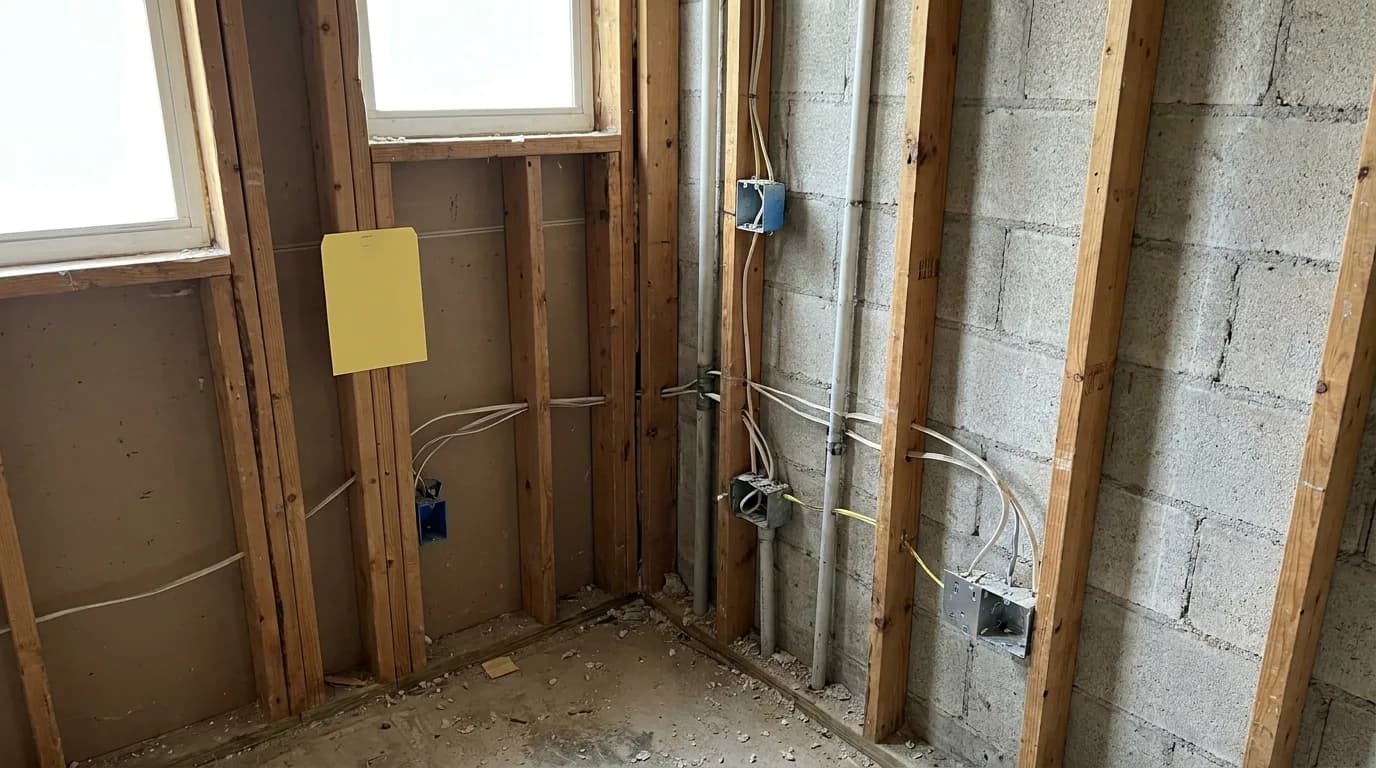
Electrical happens in two passes, each with a fixed spot in the remodel. The rough-in — running cable before the walls close — comes after demolition and framing but before the tile and its substrate go up. That is the only window when the wall cavities are open and wire can be pulled cleanly; add a circuit after the walls are tiled and the cost climbs, because the cable has to be fished through finished surfaces.
The trim-out comes near the end — GFCI receptacles, switches, the fan, the light fixtures, and final connections — right before the inspector signs off. Sequencing it with the walk-in shower and the vanity is what keeps the two passes from colliding, and it is why the electrical is priced inside the remodel rather than bolted on afterward.
Florida code, permits, and Miami-Dade
Florida adopts the National Electrical Code statewide through the Florida Building Code, so the GFCI and dedicated-circuit rules above are enforced here, not optional. In Miami-Dade, Broward, and Palm Beach County the coastal setting adds its own weight: salt air and year-round humidity corrode connections faster, so damp and exposed runs favor materials and details that hold up, and equipment in flood-prone zones has placement rules of its own.
The part homeowners feel most is the permit. Adding or extending bathroom circuits requires one, and Gaven pulls it as part of the overall remodel permit package — so the work is inspected, on record, and done under license. That paperwork is the difference between electrical you can prove at resale and electrical a buyer's inspector flags.
Questions homeowners ask
Is bathroom electrical available as a standalone project?
No. Gaven handles bathroom electrical only as part of a full bathroom remodel that also includes demolition, tile, the vanity, plumbing, and finishes. If you only need one outlet or a fan swapped, hire a licensed electrician for that scope.
Do bathroom outlets have to be GFCI?
Yes. Under NEC 210.8(A)(1), every receptacle in a bathroom needs GFCI protection, plus any receptacle within 6 feet of a tub or shower. It is one of the most-checked items at inspection.
Does a bathroom need its own circuit?
Yes. NEC 210.11(C)(3) requires at least one dedicated 20-amp branch circuit for the bathroom receptacles. It can serve more than one bathroom in some cases, but it cannot be shared with other rooms.
Should a bathroom outlet be 15 or 20 amp?
The circuit is 20 amp. A 15- or 20-amp GFCI receptacle can be used on it, but the branch circuit and breaker are 20 amp with 12-gauge wire.
Do you handle the permit for the electrical work?
Yes. In Florida, adding or extending bathroom circuits requires a permit, and we pull it inside the overall remodel permit package. Permitting and inspections are managed for you.
Where should the outlet go relative to the sink?
At least one GFCI receptacle within 3 feet of the basin, set to the side rather than directly behind it, so a cord never hangs into the bowl.
Are you licensed to do this in the three counties?
Yes. Gaven is a Florida Certified General Contractor, license CGC1524886, verifiable at MyFloridaLicense.com. We run the project and coordinate licensed electricians for the trade work, permitted under license.
How long does the electrical take?
Two short passes inside a bathroom remodel that runs 6–12 weeks total: the rough-in early, before tile, and the trim-out near the end, before final inspection.
Start a full bathroom remodel quote
Bathroom electrical installation is part of the full bathroom remodel work Gaven handles across Miami-Dade, Broward, and Palm Beach County. Licensed Florida general contractor, verifiable at MyFloridaLicense.com. Free quote, no trip fee, same-day appointment scheduling.
Last updated August 2026.