
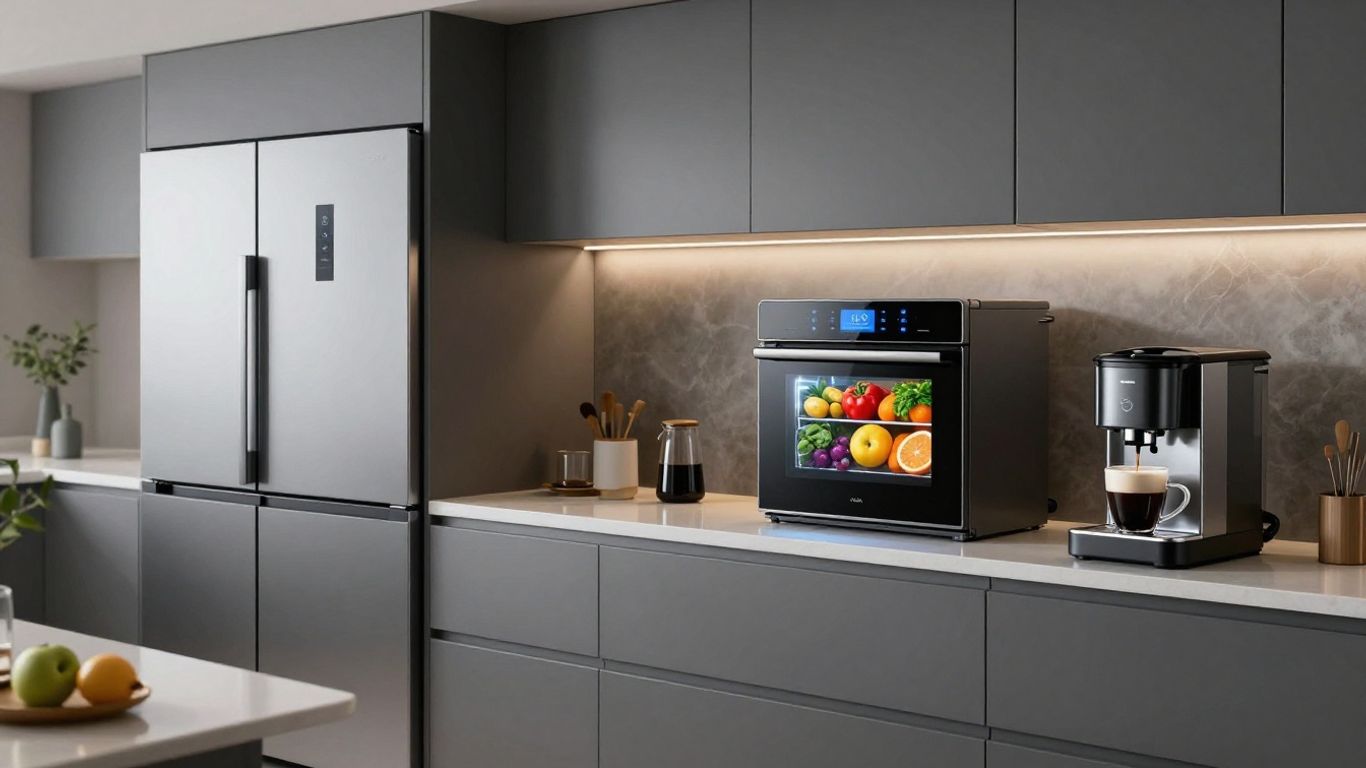
The kitchen is getting smarter in 2026, with a wave of innovative appliances designed to streamline cooking, enhance efficiency, and bring a new level of convenience to home chefs. From AI-powered ovens that recognize food to smart refrigerators that manage inventory, these gadgets are transforming meal preparation into a seamless experience.
Key Takeaways
- AI and connectivity are central to the latest smart kitchen innovations.
- Appliances offer features like automatic food recognition, remote control, and personalized recipe suggestions.
- Smart devices aim to simplify cooking, reduce food waste, and improve overall kitchen efficiency.
Smart Ovens Lead the Charge
Smart ovens are at the forefront of kitchen technology in 2026. The June Smart Oven, for instance, features an internal HD camera that automatically identifies food items and selects the appropriate cooking mode, functioning as an air fryer, slow cooker, and toaster all in one. Samsung’s Bespoke AI Oven integrates into the SmartThings ecosystem, using its AI camera to analyze dishes and suggest optimal settings, while also learning user preferences over time. For ultimate convenience, the Tovala Smart Oven works seamlessly with its subscription meal service, allowing users to simply scan a barcode and let the oven handle the rest.
Beyond the Oven: A Smarter Kitchen Ecosystem
The smart kitchen extends far beyond ovens. The GE Profile Smart 4-Door French-Door Refrigerator boasts “Kitchen Assistant” technology that scans barcodes to add items to shopping lists, monitors food freshness via internal cameras, and suggests recipes based on available ingredients. For those seeking compact solutions, the HiSense PureFit Refrigerator Series offers advanced food preservation and smart-home integration in a slim profile.
Other notable smart gadgets include:
- Ninja DT251 Foodi 10-in-1 Air Fryer: Offers versatile cooking functions and a smart thermometer for perfect doneness.
- GoveeLife Smart Ice Maker: Provides Wi-Fi connectivity, voice control, and a self-cleaning feature for convenient ice production.
- Instant Pot Pro Plus: Features Wi-Fi connectivity and an app for remote control of its 10 cooking functions.
- Ember Mug 2: Keeps beverages at a precise temperature for extended periods.
- Moen Smart Kitchen Faucet: Offers hands-free operation via voice commands and customizable presets.
- Airdeer L2 Automatic Trash Can: Seals and replaces garbage bags automatically, with touchless operation.
The Rise of AI and Connectivity
Artificial intelligence and seamless connectivity are the driving forces behind these advancements. AI cooking assistants in ovens and refrigerators eliminate guesswork, ensuring consistent results and reducing food waste. Voice control integration with assistants like Alexa and Google Home further enhances convenience, allowing for hands-free operation of various kitchen tasks. These smart appliances are not just luxury gadgets but practical tools that make cooking more efficient, enjoyable, and accessible for everyone.
Are Smart Kitchen Appliances Worth It?
In 2026, smart kitchen appliances are proving their value by offering tangible benefits such as time savings, improved cooking precision, and reduced energy consumption. While the initial investment may be higher than traditional appliances, the long-term advantages in convenience, efficiency, and culinary quality make them a worthwhile consideration for modern households. As the technology matures, prices are expected to become more accessible, further solidifying their place in the connected home.