
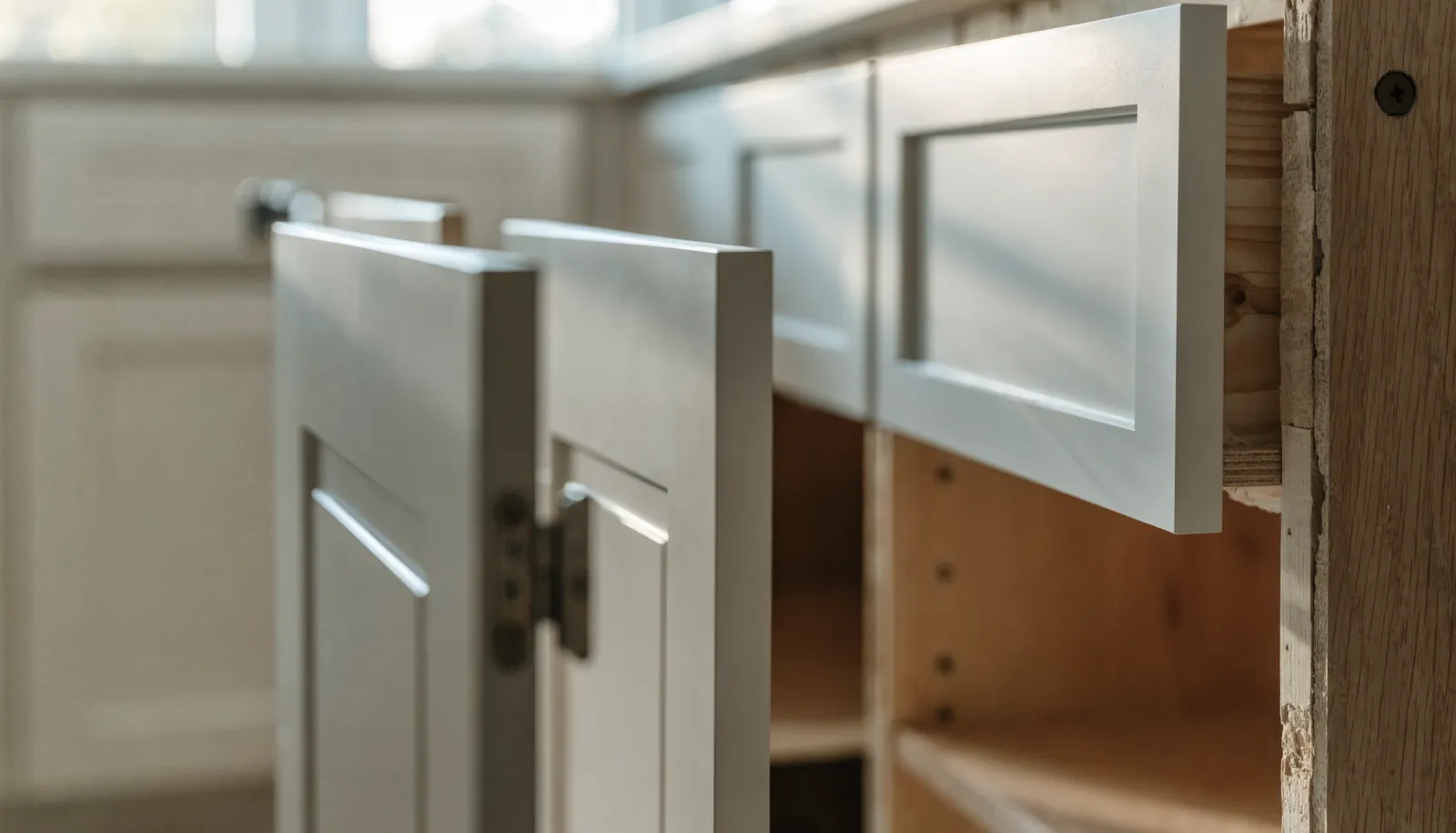
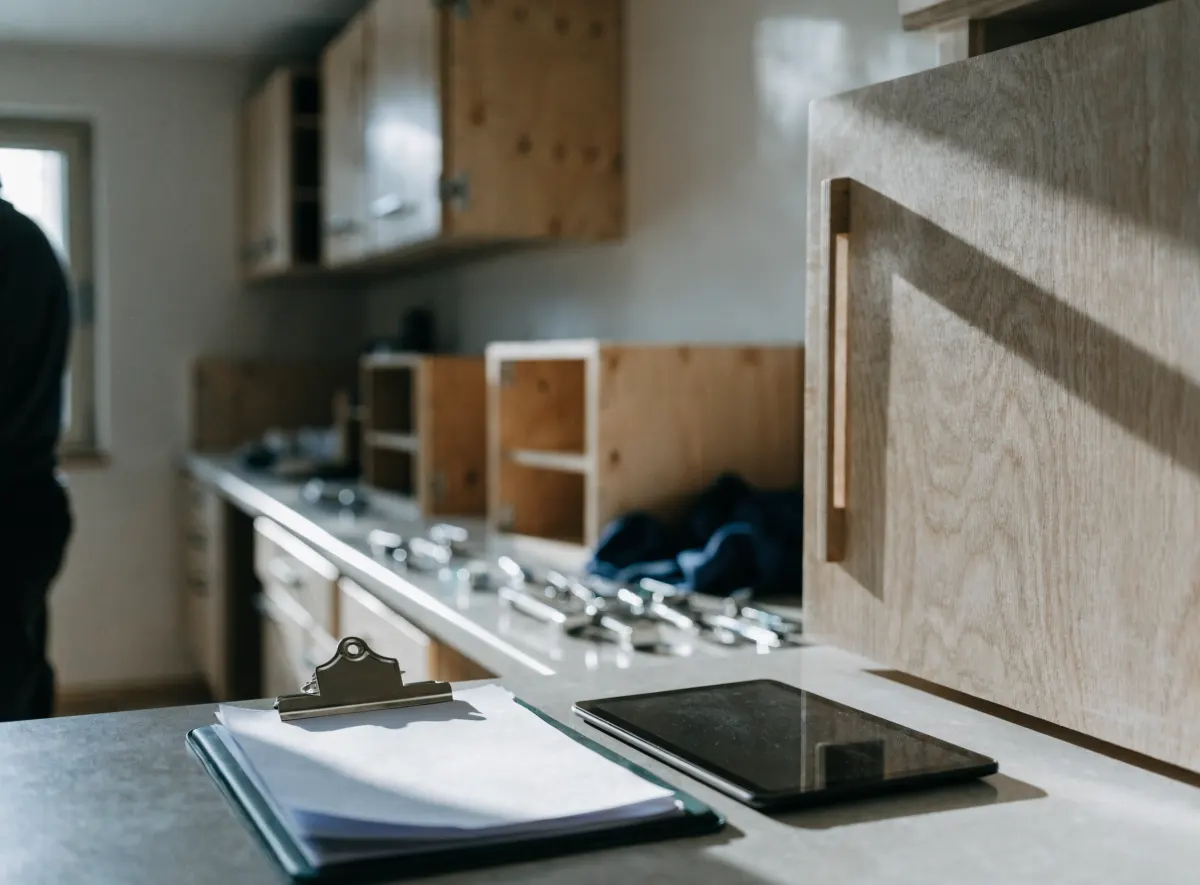
 Boxes stay. Every visible surface is new.
Cabinet Refacing
New doors, drawer fronts, and a fresh veneer or laminate finish over the cabinet boxes you already have — paired with a countertop, backsplash, or hardware update, or as a phase toward a fuller remodel. Free written quote, no trip fee, same-day appointment scheduling.
Cabinet refacing as part of a kitchen update
Gaven takes on cabinet refacing when the existing boxes are sound and the job is paired with other kitchen work — a new countertop, a backsplash, updated hardware and lighting, or as a first phase toward a fuller kitchen remodel down the line. We evaluate the boxes first: square corners, solid material, no water damage. If they pass, refacing swaps every visible surface. The cost and the downtime are a fraction of a full teardown.
Gaven does not take on cabinet refacing as a bare, standalone job with nothing else touched — the same limit we apply to full cabinet installation. Nor do we reface boxes that are warped, water-damaged, or built from particleboard that has started to swell. At that point, full replacement is the honest answer, not a fresh skin over a failing box.
Cabinet refacing vs. replacement — which is right for your kitchen?
Refacing keeps your existing cabinet boxes in place and replaces only what shows — doors, drawer fronts, end panels, veneer — so there is no demolition or new rough-in, and the kitchen is back in use within days. Replacement tears the boxes out. That opens up the layout, but it adds the cost and timeline of a full cabinet installation inside a kitchen remodel.
Everything you touch is new; the box stays
Refacing keeps the cabinet box — the carcass bolted to your walls — exactly where it is. The box stays. What changes is everything you touch: new doors and drawer fronts, new end panels on exposed cabinet sides, and a new veneer or laminate skin over the box faces that stay visible. Hardware gets swapped too, usually in the same pass, since old hinge bores rarely line up with new door styles.
That is a different act from refinishing, which repaints or re-stains the doors you already have without replacing any material — a lighter, cheaper job, and not what this page covers. It is also different from a door-only refresh, the lighter version of refacing where just the doors and drawer fronts change and the end panels stay put; that sub-scope works when the box and visible panels are already in acceptable shape and only the doors look dated.
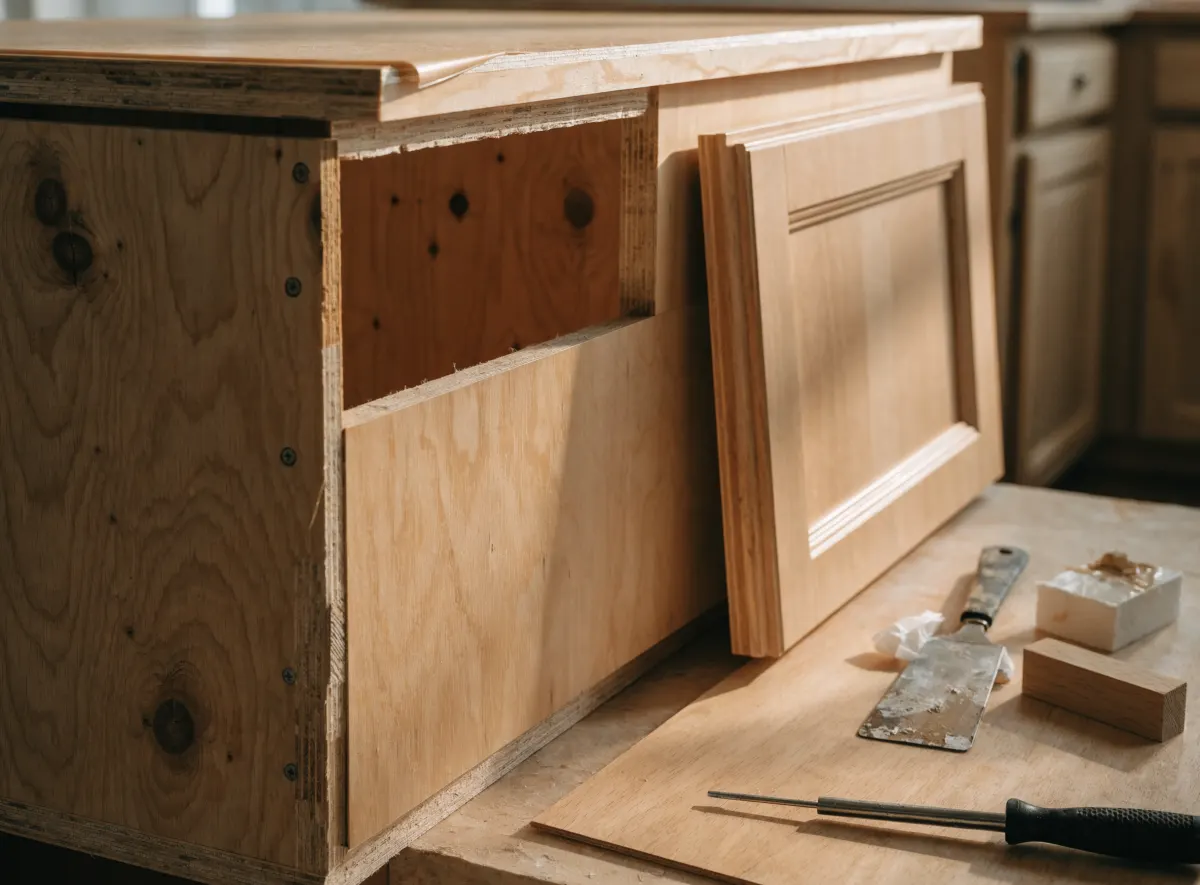
A fraction of a full remodel, measured in days
Refacing typically runs a fraction of the $20K–$300K+ full kitchen remodel range, since the scope is limited to what shows — no demolition, no new plumbing or electrical rough-in, no countertop re-template unless you update the counters too. Timeline follows the same logic: a full remodel runs 8 to 16 weeks; a refacing pass paired with a few other updates is usually measured in days, because the boxes never come out and the kitchen stays largely usable throughout.
Pairing refacing with a countertop swap or a new backsplash is common — a new door finish reads as dated fast next to old counters or tile, and that mismatch is usually what pushes a "just the doors" job into a small bundled update.
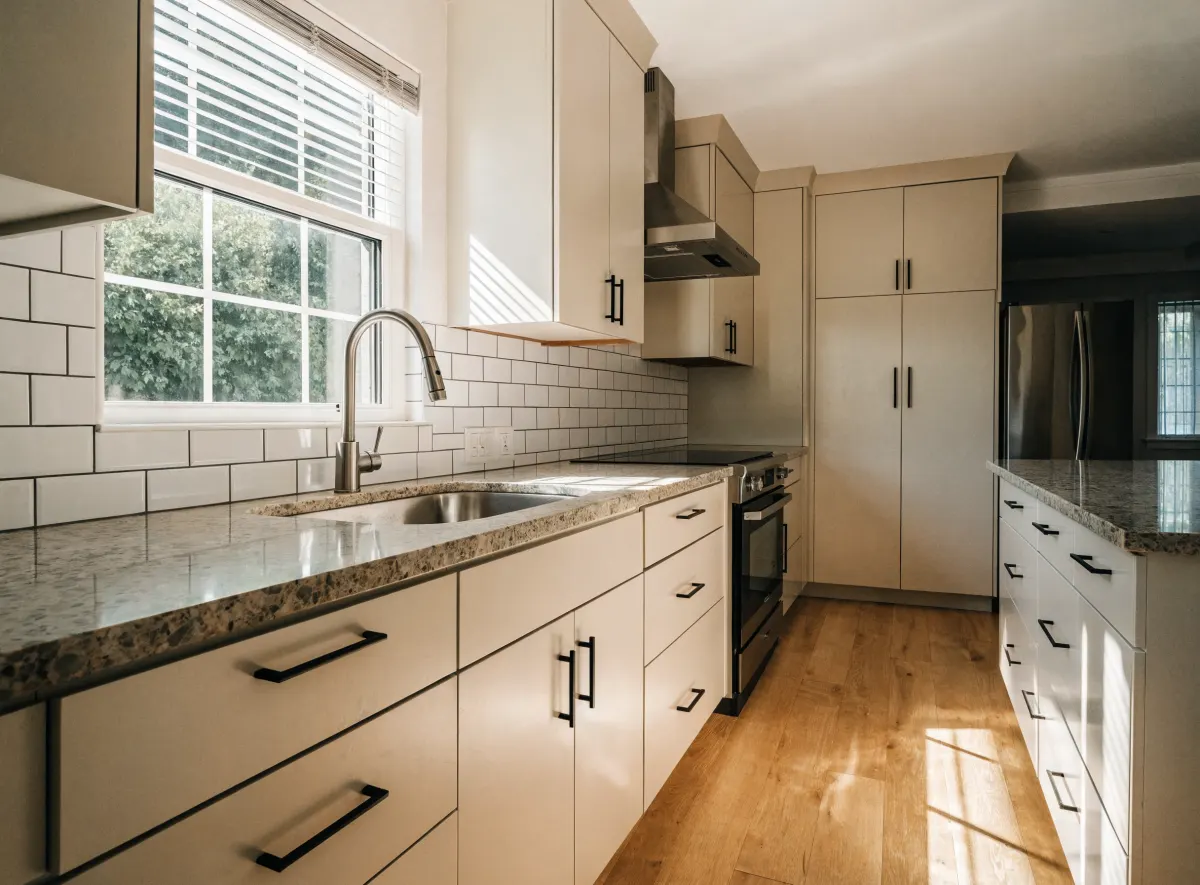
Veneer or laminate, matched doors, honest tradeoffs
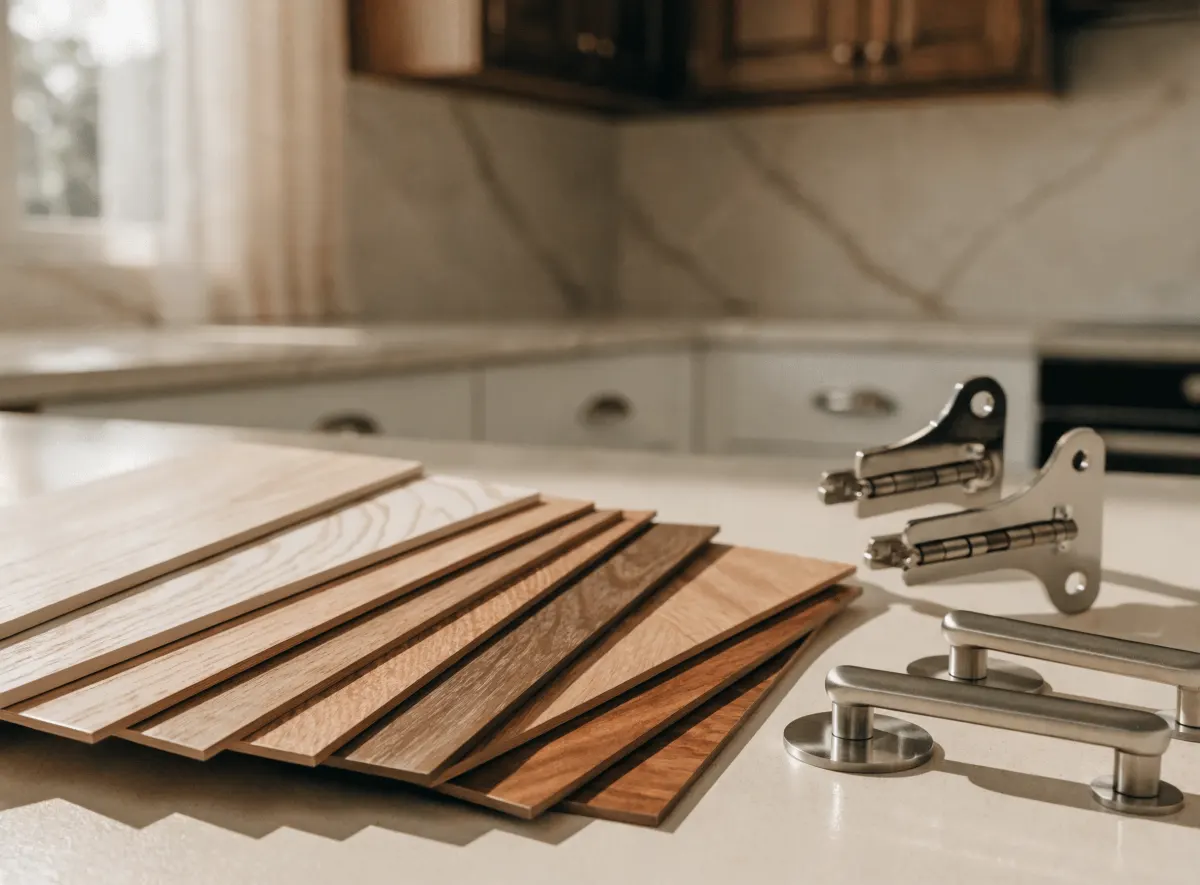
The exposed box faces get a new veneer or laminate skin — real wood veneer for a natural grain look, or high-pressure laminate for a harder, more moisture-resistant surface near the sink and range. New doors and drawer fronts are ordered to match, typically solid-wood or engineered-core construction, in whatever style and finish the kitchen calls for.
None of this is brand-specific — Gaven walks through the tradeoffs (grain-matched veneer versus painted laminate, soft-close hinges versus standard) as part of the same evaluation that checks box condition.
Exempt by configuration — until systems move
Miami-Dade County groups kitchen cabinet replacement done in the same configuration under items not regulated by the Florida Building Code — no permit needed. Refacing, which by definition keeps the existing footprint, falls inside that exemption. It stops the moment associated plumbing, ventilation, or electrical work gets relocated — common when refacing is paired with a countertop or backsplash update that shifts a sink or an outlet. Gaven flags that at the initial evaluation, before any work is scheduled.
Refacing also means sanding and prepping the existing cabinet boxes, which matters if the home was built before 1978. Under the EPA's Renovation, Repair and Painting (RRP) rule, disturbing painted surfaces in a pre-1978 home has to be done by a lead-safe certified firm, since those surfaces are more likely to carry lead-based paint. Gaven checks the home's age as part of the refacing evaluation, not just the condition of the boxes.
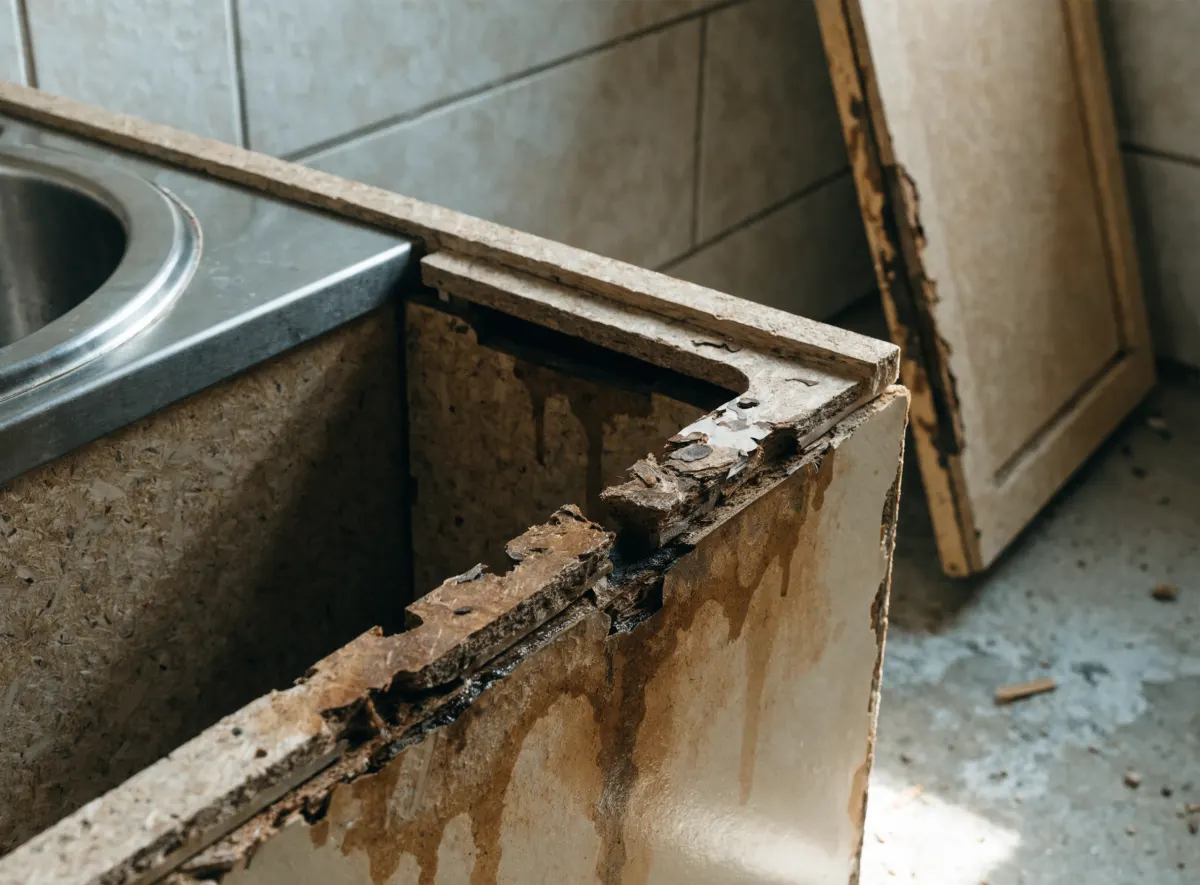
A fresh skin can't fix a failing box
Refacing cannot fix a box that is already failing. Water damage at the sink base, swelling particleboard, or a carcass racked out of square are structural problems refacing hides for a season and then re-exposes — the new veneer and doors telegraph the damage underneath once the box moves again. In those cases, full cabinet replacement is the right scope, not refacing.
Refacing also cannot change the layout. The footprint, cabinet heights, and opening sizes for the range, refrigerator, and dishwasher stay put, because the boxes never move. If the kitchen needs a different layout, more storage, or a new island, that calls for a full remodel — and Gaven will say so at the evaluation rather than reface a kitchen that needs rebuilding.
Explore the other phases
Cabinet refacing questions
Is cabinet refacing available as a standalone project?
No. We pair refacing with other kitchen work — a countertop, a backsplash, or a hardware and lighting update, or as a phase toward a fuller kitchen remodel later. If you only want the doors swapped with nothing else touched, a specialist who focuses on that one trade is a better fit.
What is the difference between cabinet refacing and cabinet refinishing?
Refacing replaces the doors, drawer fronts, and box veneer with new material. Refinishing repaints or re-stains the doors you already have, without replacing anything — it changes the color, refacing changes the look and the wear surface.
Is cabinet refacing worth it?
It depends on the box, not the budget. Sound, square, undamaged boxes make refacing a strong value. Boxes with water damage, swelling particleboard, or an out-of-square frame are not good candidates at any price — replacement is the honest call there.
Can I just replace my cabinet doors instead of the whole cabinet?
Yes, as a lighter door-only version of refacing. It works when the box and any exposed end panels are already in acceptable shape and only the doors look dated. If the box faces also need a new finish, that is the fuller refacing scope.
Does cabinet refacing require a permit in Miami-Dade?
Kitchen cabinet replacement in the same configuration is exempt from a building permit in Miami-Dade County, and refacing keeps that configuration by definition. The exemption ends if the job also relocates plumbing, ventilation, or electrical work — common when refacing is paired with a countertop or backsplash change.
Is refacing an older home's cabinets a lead-paint risk?
It can be. Under the EPA's Renovation, Repair and Painting rule, disturbing painted surfaces in a home built before 1978 has to be done by a lead-safe certified firm, since those surfaces are more likely to carry lead-based paint. We check the home's age as part of the evaluation.
Are you licensed to do this in Miami-Dade, Broward, and Palm Beach County?
Yes. Gaven is a Florida Certified General Contractor, license GCG1524886, verifiable at MyFloridaLicense.com.
How long does cabinet refacing take?
Days, when it's paired with a few other kitchen updates — versus the weeks a full cabinet replacement takes inside a full remodel, because the boxes never come out and the kitchen stays usable.
Start a kitchen update quote
Cabinet refacing helps you update a kitchen without a full teardown — paired with the countertop, backsplash, hardware, and lighting work that make it look complete. Licensed Florida general contractor, verifiable at MyFloridaLicense.com. Free quote, no trip fee, same-day appointment scheduling.