
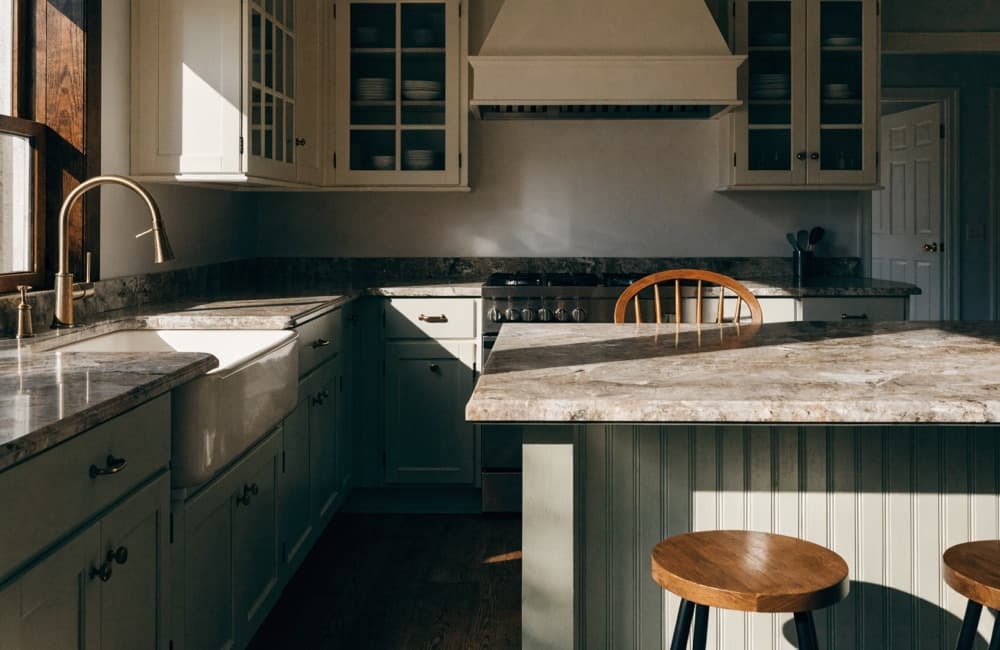
Kitchen Remodeling near Virginia Gardens
Kitchen remodeling near Virginia Gardens usually starts with a house from the 1950s. The census puts the village's median build year at 1960, and Miami-Dade County lists 510 of its properties as possibly served by a septic tank. We plan the kitchen around both.
A 1947 village on the airport's north edge
Virginia Gardens, FL, is a village of about 2,300 people that describes itself as a small municipality between Miami Springs and Miami International Airport. It was founded in 1947 on what had been farms, barns and horse stables, and it still keeps its own Village Hall, at 6498 NW 38th Terrace, and its own building department. Two things follow for anyone planning kitchen remodeling there. The permit is filed with the village rather than the county, and the house very likely belongs to the same generation as the ones beside it: nine in ten homes in the village went up between 1950 and 1979. The same questions come up from street to street, about what the drains connect to, what the wiring can carry, and how the original layout used the room.
Nearly half the houses are from the 1950s
Are homes in Virginia Gardens on septic?
Many may be. Miami-Dade County lists 510 properties in Virginia Gardens as potentially served by a septic tank or a private well, and the state health department's records show 228 septic permits inside the village line, 136 of them repairs. In a kitchen on septic, the sink drains to a tank in the yard.
The tanks are there because the houses are old. Nearly half of the village's 862 homes, 420 of them, were built in the 1950s, and fewer than one in ten went up after 1980. The median year built is 1960, while in Doral, about a mile to the west, it is 2005. Most are detached single-family houses, and a little more than half are lived in by their owners. The median owner moved in around 2002.
Put those together and the typical kitchen here sits in a house that was already about forty years old when its owner bought it. Kitchen remodeling here usually means opening a room that has been redone once, or not at all, and the first visit tells us which.
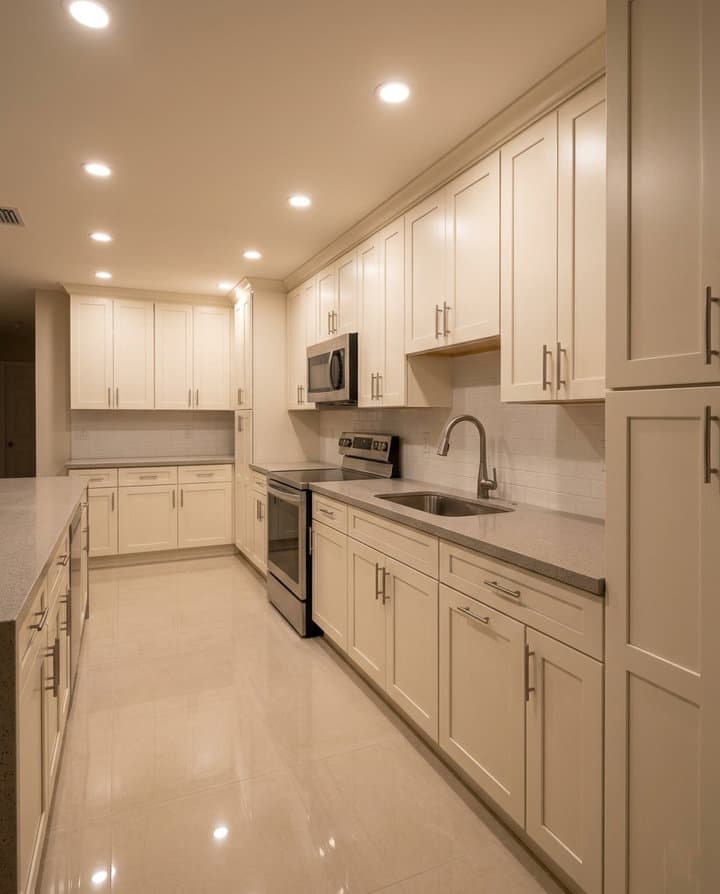
A kitchen remodel on septic changes three decisions. The first is where the sink goes, because a relocated sink still needs a drain that reaches the line to the tank, so we find the tank and the cleanout before anything is drawn. The second is the garbage disposal. The University of Florida's 2025 handbook of Florida water regulation says that if garbage grinders are discharging into a tank, the owner needs to have the system inspected by a licensed septic tank contractor or plumber once a year. The third is grease, since the same handbook notes that state law and rules prohibit using chemical solvents or petroleum products to degrease or unclog a system.
The septic numbers come from two county open-data sets: a list of properties potentially served by septic or well, updated with 2024 data, and the state health department's septic records, which we counted inside the village boundary ourselves. The census figures are five-year survey estimates, and in a village this size their margins are wide, plus or minus 88 homes on the 1950s count. All of it describes the village, not your house, and we confirm yours at the visit.
Remodeling a 1950s kitchen in six phases
Our prices and schedules are the same here as everywhere else we work. A Tier 01 full remodel runs $20K to $50K over 9 to 13 weeks and a Tier 02 runs $50K to $100K over 12 to 18 weeks. Those are the two most common scopes in the single-family houses of west Miami-Dade, and the other two tiers, with what each one includes, are laid out on our kitchen remodeling page for Miami. What a 1950s house changes is the order of the first questions.
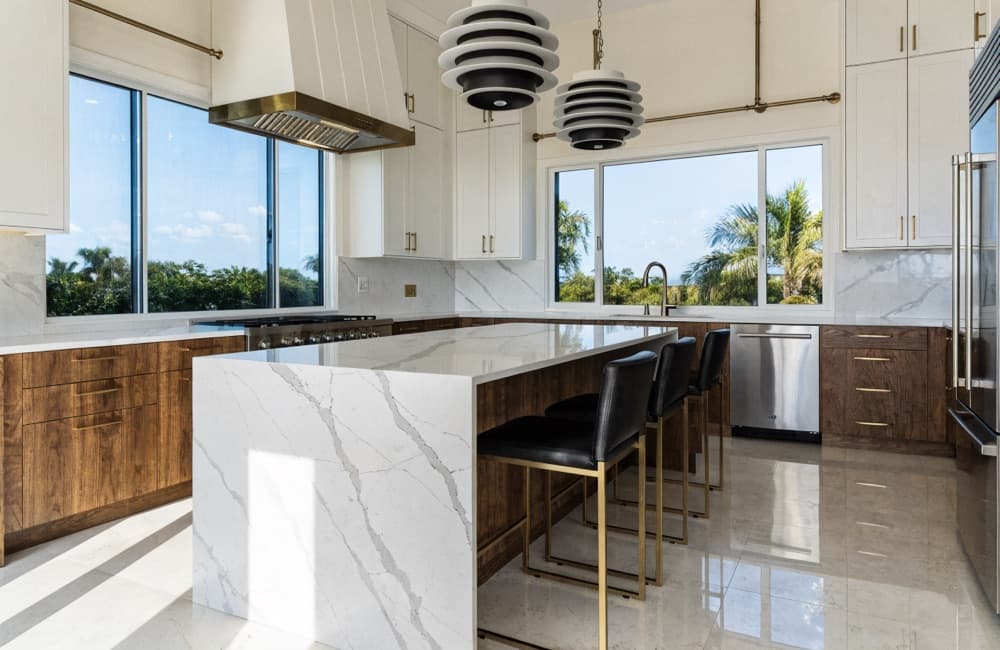
Discovery and design
We measure, photograph what is there, and find where the kitchen drains: to a septic tank in the yard or to a sewer line. The visit and the written quote are free, and the proposal follows within 5 to 10 business days.
Permitting and selections
The drawings go to the village building department, filed in person, while you choose cabinets, counters and tile. Whether a disposal goes on the plan is settled here, not at installation.
Demolition and rough-ins
The old cabinets come off and the walls open where the plan calls for it. In a house this age we expect older supply and drain lines behind them, and the plumbing and electrical rough-ins are inspected before any wall closes.
Primary installation
Cabinets go in first, the counters are templated from the installed boxes, and the appliances are set last. None of it starts until the rough-in inspections have passed.
Finishes and fixtures
Backsplash, hardware, lighting and trim come at the end, because each one depends on a surface or a circuit set before it.
Punch-out and walk-through
We walk the room with you, fix what you flag, and call for the village's final inspection, which is what closes the permit.
From Village Hall to our office
From Village Hall at 6498 NW 38th Terrace, follow NW 38th Terrace west and turn left on NW 66th Avenue. Turn right on NW 36th Street and stay on it west, across the Palmetto Expressway. Turn right on NW 82nd Avenue, then left on NW 41st Street. Our office is at 8200 NW 41st St, Suite 200-4, Doral, FL 33166, about two miles in all. The first visit happens at your house, not here. We answer the phone Monday through Friday, 7 AM to 10 PM.
The village signs the permit, in person
Kitchen remodeling in Virginia Gardens is permitted by the village, not by Miami-Dade County. Its building department handles the processing, plan review, issuance and inspections for every permit in the village, and applications are taken in person only. Plumbing, electrical and mechanical work all need a permit under the Florida Building Code, only a licensed contractor or an owner-builder can pull one, and the village tells owners to make sure their contractor pulls the permit in the contractor's own name.
For your calendar, first plan review takes about three to five business days on a regular permit and about 30 business days on a larger residential project, and a second round of review adds to that. Once issued, the permit stays alive only while an approved inspection happens at least every 180 days, so a job cannot sit idle for half a year. Inspections are booked by phone between 9 AM and 4 PM the day before, Monday through Friday.
A licensed contractor on the permit
Gaven Constructions holds a Florida Certified General Contractor license, CGC1524886, and that license is what lets us pull the village permit in our own name. You can look it up on the state's licensee search before you sign. We design, build and invoice the kitchen ourselves, so the company on the permit is the company you pay. If you want to compare the tiers before we visit, our page for Miami kitchen remodeling lays them out.
Questions about kitchen remodeling near Virginia Gardens
How do I know if my house in Virginia Gardens is on septic?
Start with the county. Miami-Dade's open-data list of properties potentially served by septic or well names properties by folio and address, and the state health department's septic records are mapped by location. Neither is proof for a single house. A plumber confirms it by finding the tank or the sewer connection, and we do that at the first visit, before anything is drawn.
Can I have a garbage disposal in a kitchen on septic?
Yes, and many houses do. The University of Florida's handbook of Florida water regulation says that when garbage grinders discharge into a tank, the owner needs to have the system inspected by a licensed septic tank contractor or plumber once a year. That is a recurring cost, so we raise it during design and leave the disposal off the plan if you would rather not take it on.
Who issues the permit for a kitchen remodel in Virginia Gardens?
The Village of Virginia Gardens. Its building department reviews, issues and inspects every permit inside the village, and the application has to be filed in person. A regular permit takes about three to five business days of plan review, and a larger residential project about 30 business days.
What does kitchen remodeling cost in Virginia Gardens?
The same as anywhere else we work, because our pricing does not change by neighborhood. A Tier 01 full kitchen remodel runs $20K to $50K and a Tier 02 runs $50K to $100K. What moves the number is the kitchen itself: its size, what stays where it is, the materials you choose, and in an older house, what the walls and the drain line turn out to hold.
We have owned the house since the early 2000s and never redid the kitchen. Where do we start?
With the house, not the catalog. You are not unusual here: the census puts the median owner's move-in year in the village around 2002. If the kitchen has not been touched since you arrived, it is at least twenty years old, and it could be much older if the owner before you never replaced it either. The visit tells us which: the cabinets, the supply and drain lines under the sink, the electrical panel, and whether the house drains to a tank. Then we draw.
Do you also work on the Doral and Miami Springs sides?
Yes. Our office is in Doral, about two miles west of Village Hall, and Miami Springs starts on the village's east edge. The prices and the six phases are the same. What changes is the permit, because each city runs its own building department.
Bring us the year and the folio
Two lookups tell us most of what we need before a visit: the year your house was built, from the Miami-Dade Property Appraiser's property search, and whether your property appears on the county's list of properties potentially on septic or well, linked above. Then call us or come by 8200 NW 41st St, Suite 200-4, Doral, FL 33166, Monday through Friday from 7 AM to 10 PM. We will tell you what the house means for the kitchen before anyone schedules demolition.
Last updated October 2026.