
How to Plan a Kitchen Remodel: A Step-by-Step Guide
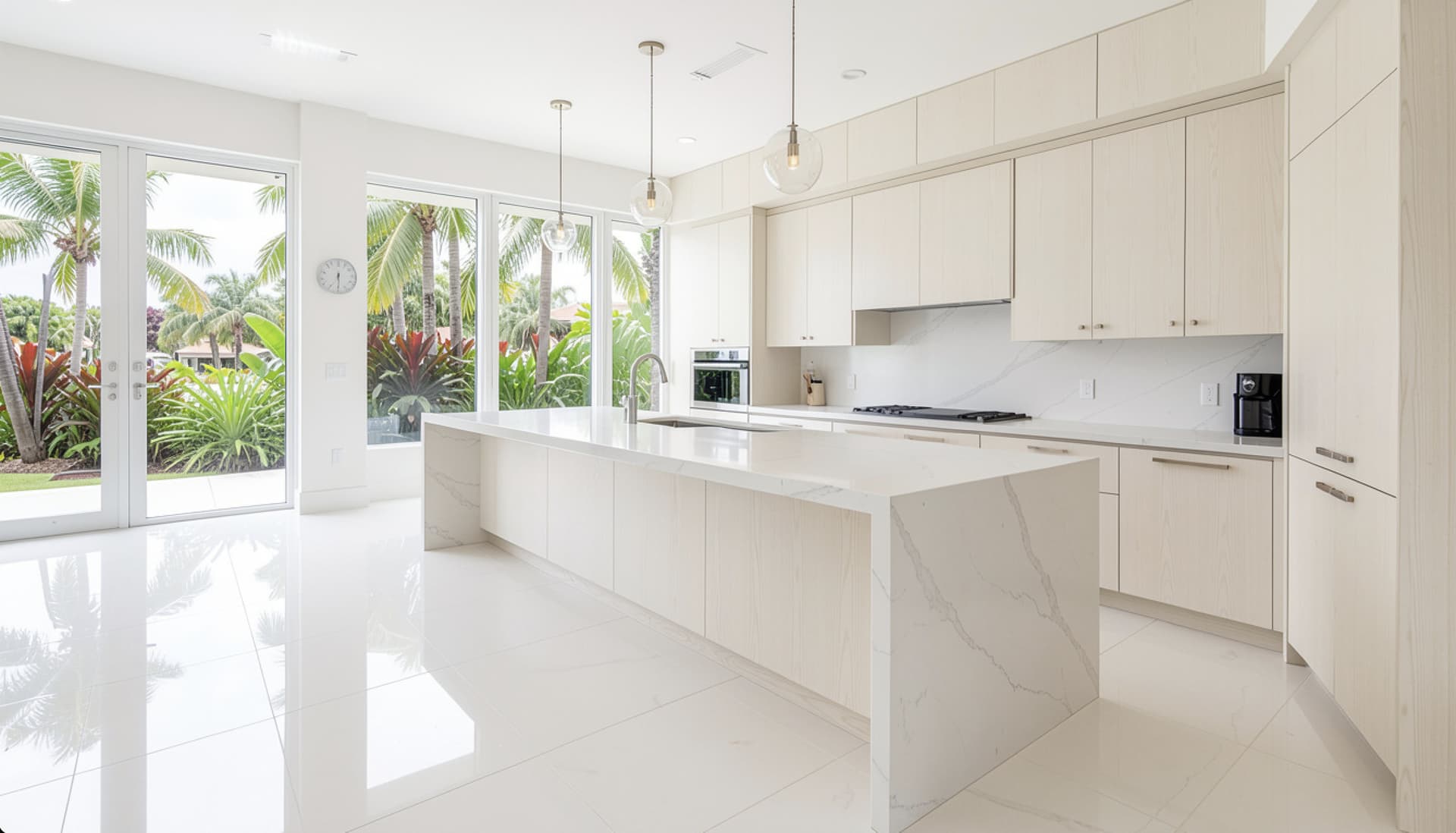
Knowing how to plan a kitchen remodel matters more than any single product choice, because most kitchen remodel mistakes happen before anyone swings a hammer. They happen in the planning. A homeowner near the Palmetto Expressway starts by saving backsplash photos, picks cabinets to match, and three weeks later finds out the layout does not work and the order has to change. That is expensive, and it is avoidable.
The fix is sequence. Planning a kitchen remodel works when you make decisions in the right order: what you need first, what it looks like last.
This guide walks through how to plan a kitchen remodel step by step. What to decide before you design, the right order the work happens in, how far ahead to start, and the things people forget until it is too late.
What is the first step in planning a kitchen remodel?
The first step in planning a kitchen remodel is to define how you use the kitchen and what is not working, before you choose any finishes. Most homeowners start with the fun part, cabinet colors and countertops, and that is the wrong order. Begin by listing your needs: storage, layout problems, how many people cook, and what you want to change. Set a realistic budget next. Then design the layout, choose products, hire a licensed contractor, and order long-lead items like cabinets before demo begins. Working needs-first and finishes-last prevents the most common and most expensive planning mistake: falling in love with a look that does not fit your space or your budget. The full step-by-step sequence is below.
Planning a kitchen remodel in the Miami area and want a professional eye on it early? Request a free quote — no trip fee.
Start with how you use the kitchen, not how it looks
Before a single finish gets chosen, answer one question: what does the current kitchen get wrong? This is the step people skip, and skipping it is what they regret most.
Spend real time in the kitchen you have. Where do you run out of counter space? Where does traffic jam up when two people cook? What never has a home and ends up on the island? Those answers shape the design far more than a paint color does.
The most common regret we see is a kitchen designed around a look instead of a workflow. A homeowner falls for an island photo, we build the layout to fit it, and six months later the sink is too far from the stove and the trash is in the wrong place. The pretty kitchen that cooks badly is the one people redo.
A few questions to answer before you design anything:
- What are the three things that frustrate you most about the current kitchen?
- How many people cook at once, and where do they get in each other's way?
- What do you need more of: counter space, cabinet storage, or seating?
- Are you keeping the layout, or is moving the sink or stove on the table?
There is a functional logic behind good layouts. The National Kitchen and Bath Association (NKBA), the industry body for kitchen and bath design, publishes kitchen planning guidelines covering things like the work triangle between sink, stove, and refrigerator, and minimum clearances around them. A good designer or design-build contractor works to these. You do not need to memorize them, but knowing they exist helps you tell a real plan from a pretty drawing.
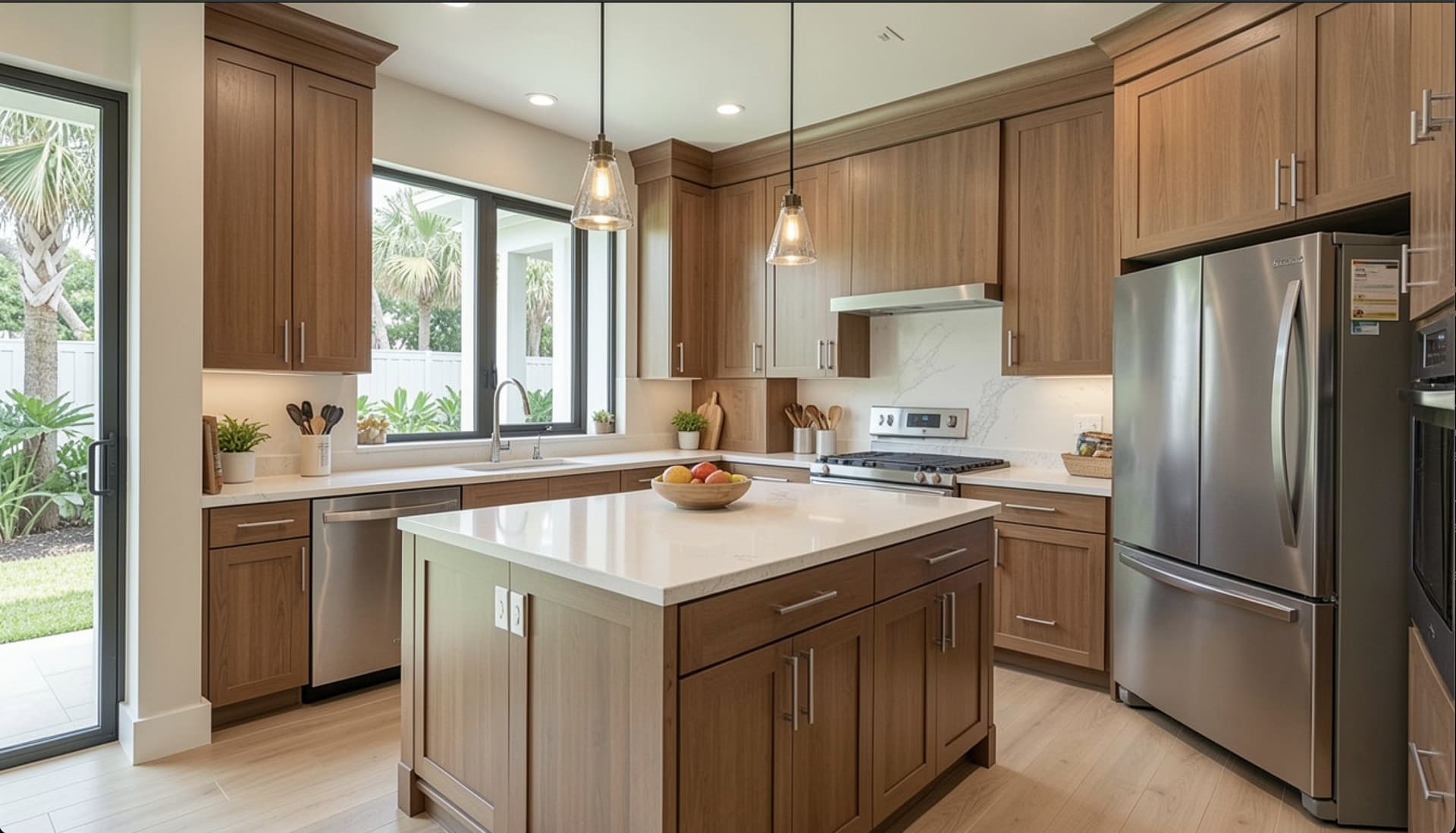
Once you know what you need, you can put a number on it. For the full scope of what a kitchen project involves, see our guide to kitchen remodel scope and pricing in Miami.
Set a realistic budget before you design
A budget set early keeps the design honest. Design first and price later, and you almost always have to cut things you already fell in love with.
A common benchmark from the NKBA is to budget around 15 to 20 percent of your home's value for a kitchen remodel. On a $600,000 home that points to roughly $90,000 to $120,000 for a full project. It is a starting frame, not a rule. Lower-value homes often run a higher percentage, and higher-value homes a lower one. The point is to anchor the budget to your home, not to a photo.
Then build in a cushion. The NKBA's own advice is to take your number and set aside a contingency on top of it, because older homes hide surprises behind the walls. In Miami that often means electrical that was never sized for a modern appliance suite, or plumbing at the end of its life.
Roughly speaking, cabinets are the biggest slice of a kitchen budget, followed by labor, countertops, and appliances. You do not need exact percentages at the planning stage. You need a total you are comfortable with and the discipline to design inside it.
This guide keeps budget at the planning level on purpose. For the real dollar ranges by tier, see how much a kitchen remodel costs in Miami, and if you are local, kitchen remodeling costs in Doral breaks it down for this market.
Design the layout and choose products (in that order)
With a budget set, design can stay inside it. Here the order of decisions still matters.
Rough-select appliances early. This surprises people. Appliances drive the layout, not the other way around. A 36-inch range, a counter-depth refrigerator, or a second wall oven each change the cabinet plan and the clearances around them. You do not have to buy them yet, but you should know the sizes before the layout is final.
Decide whether you need a separate designer. This is one of the most common questions homeowners ask. If your project is a straight swap in the same layout, a good design-build contractor usually covers the design in-house. If you are reconfiguring the space, moving walls, or chasing a specific high-end look, a dedicated kitchen designer earns their fee. Ask any contractor up front who handles the design and whether it is included.
Plan the lighting now, not later. Under-cabinet lighting, recessed cans, pendants over an island: all of it needs wiring decided before the walls close up. Lighting is the single most common "I wish we had" after the fact, because adding it later means opening finished walls.
The way we sequence it: we lock the layout and appliance sizes first, then finalize cabinets, because the cabinet order is the longest lead item and everything downstream depends on it. Counters cannot be measured until cabinets are set, and backsplash cannot go in until counters are in. Get the front of that chain wrong and the whole schedule slips.
If you are still choosing who will run the project, our guide on how to find the right general contractor in Miami covers what to look for.
In what order does the actual work happen?
Design decides what gets built. This is the order it gets built in. Knowing the sequence helps you spot a contractor who has a real plan, and it answers the question Reddit threads argue about constantly: flooring or cabinets first?
Here is the typical order for a full kitchen remodel:
- 01Demo.
Old cabinets, counters, appliances, and finishes come out.
- 02Rough-in.
Plumbing, electrical, and any framing changes happen now, while the walls are open. In Miami-Dade this is where permit inspections land.
- 03Walls and flooring.
Drywall closes up, then flooring usually goes in. Running flooring under the cabinets is the more common pro approach, because it avoids gaps and handles future appliance swaps, though some installers set cabinets first to save on flooring material. Either can be right; what matters is that your contractor has a reason for the choice.
- 04Cabinets.
Installed and leveled.
- 05Countertop template and fabrication.
Counters are measured only after cabinets are set, then fabricated. Expect roughly one to two weeks between template and install.
- 06Backsplash, then appliances and fixtures.
These go in once counters are in.
- 07Final inspection and punch list.
The permit closes out, and the small fixes get handled.
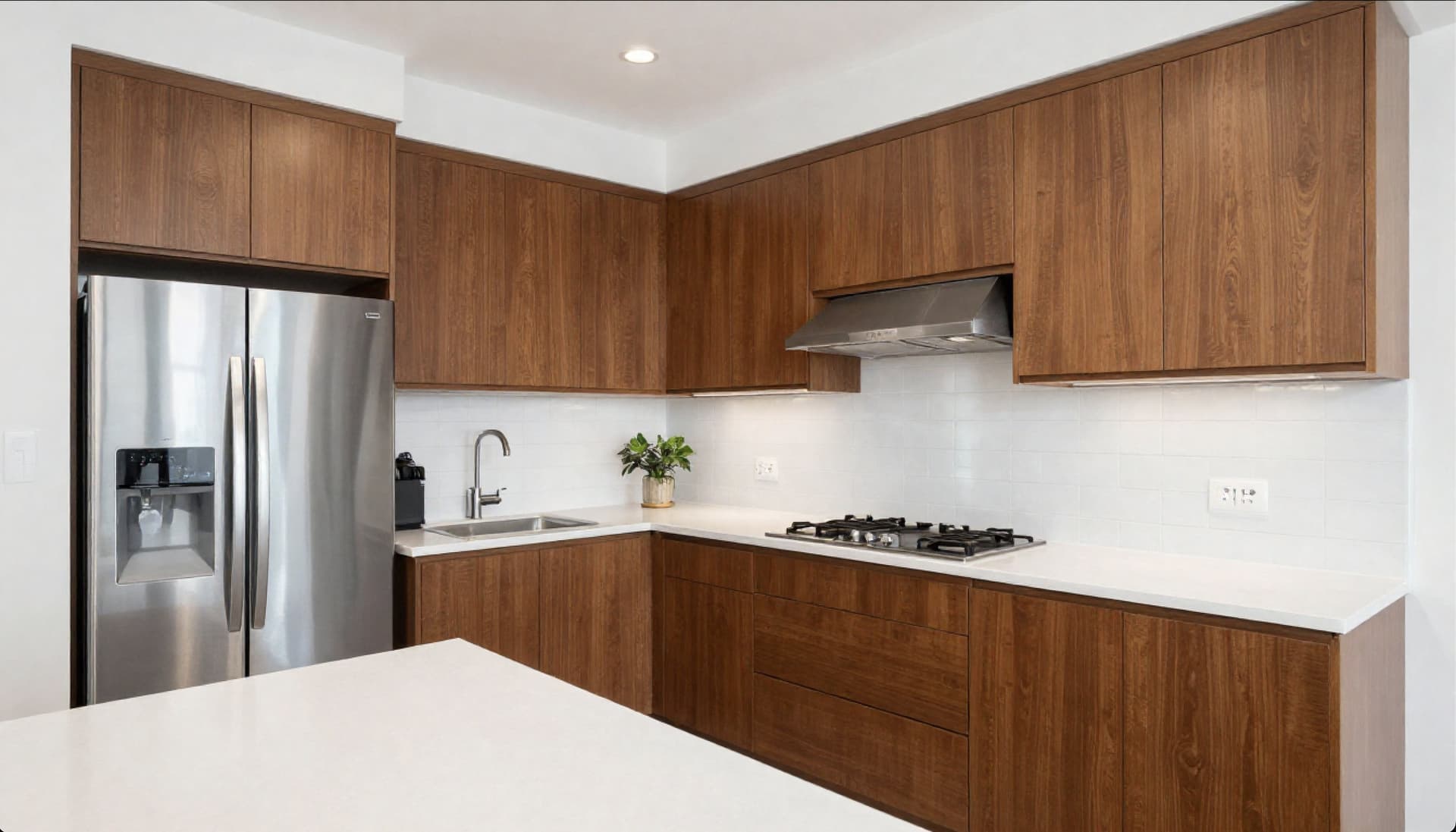
That gap between cabinets and countertops is the one that surprises people, because the kitchen sits unusable for a week or two while the counters are fabricated. It is normal. For a fuller picture of the schedule, see how long a kitchen remodel takes in Miami.
Two steps in that order carry the most schedule risk. Cabinets cannot be measured until the walls are real, and the floor has to be flat and at the right height before anything sits on it. Both are covered in depth: the cabinet install step by step and how kitchen flooring is levelled and sequenced.
How far in advance should you start planning?
Knowing the order tells you how early to start. The short answer: begin planning two to three months before you want demo to start.
The long pole is almost always the cabinets. Semi-custom and custom cabinets are ordered weeks ahead, and a remodel that "is taking forever" usually traces back to cabinets ordered too late, not slow work on site. Order long-lead items as soon as the design is locked.
Permits add calendar time too. Work in Miami-Dade goes through county permitting, and that review happens before work starts. Building it into the runway keeps the permit from becoming the thing everyone waits on.
In Doral specifically, a lot of homes sit in HOA or architecturally reviewed communities, places like Doral Isles. Those add a review step before any exterior-visible or structural work, and that approval runs on the association's calendar, not yours. We tell local homeowners in those communities to start the conversation earlier than they think they need to, because the HOA review can quietly add weeks.
A simple plan-ahead runway:
- 3 months out
finalize needs, budget, and rough layout
- 2 months out
lock design, order cabinets and appliances, submit permit
- 1 month out
confirm deliveries, schedule trades, plan your temporary kitchen
- Demo week
work begins
What people forget (and regret) in a kitchen remodel
Even a well-timed plan misses things. These are the ones homeowners wish they had handled earlier.
- A temporary kitchen
You will lose your kitchen for weeks. Set up a microwave, a coffee station, and a sink alternative somewhere else in the house before demo. The people who skip this are the ones counting takeout receipts by week three.
- Everything behind the walls
Outlets, USB points, under-cabinet lighting, a pot filler, the spot for the microwave. All of it has to be decided before drywall closes. Adding any of it later means reopening finished walls.
- Ventilation
A real range hood that vents outside, sized to the range. In Florida's climate and for serious cooking, recirculating hoods do not cut it. This gets value-engineered out and regretted later.
- Storage you will wish you had
Pull-outs, a deep drawer for pots, a pantry cabinet. Cheaper to design in now than to add later.
- Paperwork
Keep every receipt, contract, and warranty in one place. You will want them at resale, and a permitted job with records is an asset when you sell.
Plan for these now and the project runs the way it looked on paper. For the full scope of a professionally managed kitchen project, see our kitchen remodel scope and pricing in Miami.
Frequently asked questions
What is the first step in planning a kitchen remodel? Define how you use the kitchen and what is not working, before choosing any finishes. Needs first, looks last.
In what order should you remodel a kitchen? Demo, then rough-in plumbing and electrical, then walls and flooring, cabinets, countertop template and install, backsplash, appliances and fixtures, and finally inspection and punch list.
Should you install flooring or cabinets first? Running flooring under the cabinets is the more common professional approach, but both methods can be correct. What matters is that your contractor has a clear reason for the choice.
Should you pick appliances before designing the layout? Rough-select appliance sizes early. Appliances drive the layout and the clearances around them, so the design should be built around them.
How far in advance should you plan a kitchen remodel? Start two to three months before you want demo to begin. Cabinets are the longest lead item and should be ordered as soon as the design is locked.
What do people regret most about kitchen remodels? Designing around looks instead of workflow, forgetting under-cabinet lighting and outlets before drywall, skipping a real vented range hood, and not planning a temporary kitchen.
Start your plan with a free consult
Planning a kitchen remodel comes down to sequence: needs, budget, design, hire, order, build, in that order. Get the order right and the project runs the way it looked on paper.
Gaven Constructions works out of Doral, near the Palmetto and the NW 25th Street area, and we help local homeowners plan kitchen projects start to finish. The site visit and quote are free, with no trip fee. Request a free quote.
Guides this one cross-references
Start your plan with a free consult.
Gaven Constructions works out of Doral, near the Palmetto and the NW 25th Street area. The site visit and quote are free, with no trip fee — we walk the kitchen, talk through the sequence above, and put real numbers on what you are thinking about.
Florida Certified General Contractor — CGC1524886 · Mon–Fri 7am–10pm · (786) 397-8380 · Last updated August 2026