
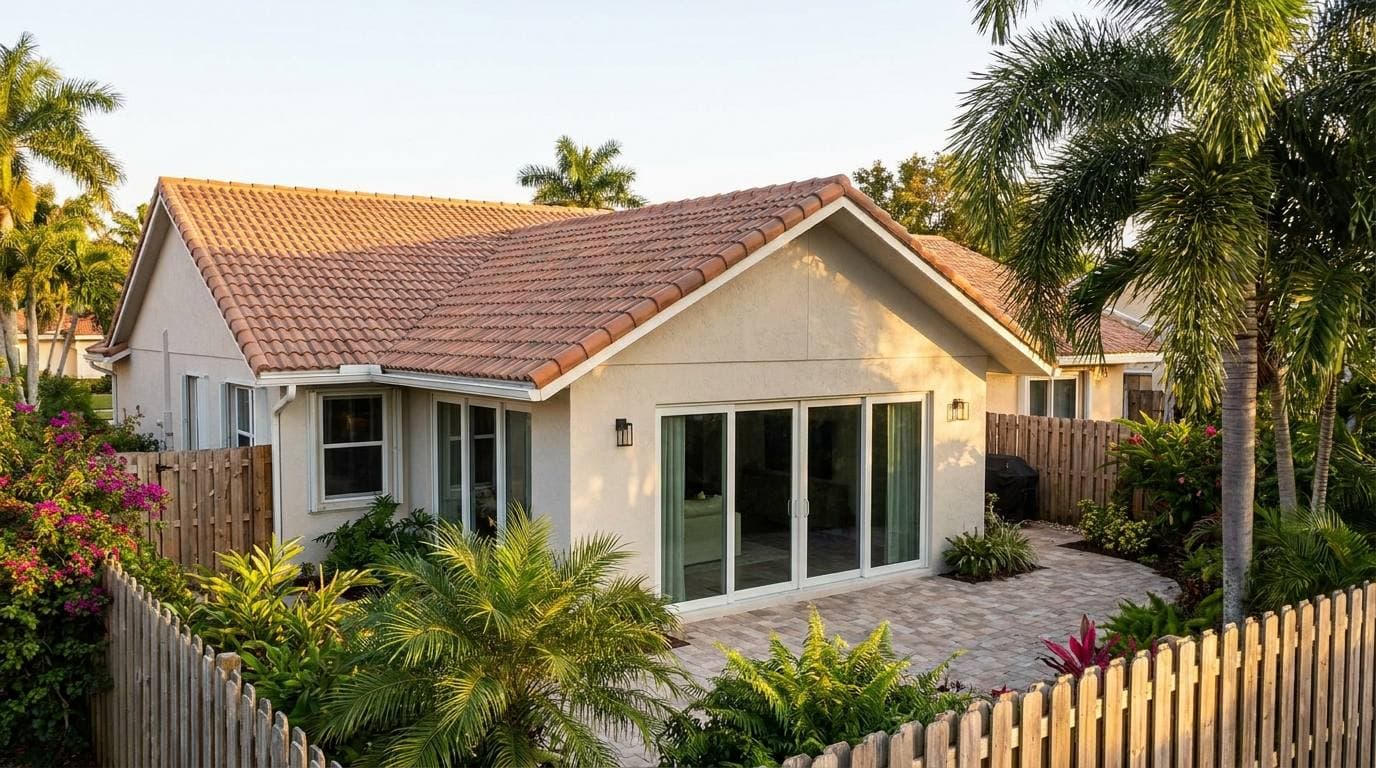
Patio Installation Miami
Patio installation Miami homeowners ask for usually needs no building permit at all — an open slab at grade is exempt in Miami-Dade. What it does need, since March 2025, is the county's written approval, which we file. Free site visit, no trip fee.
The ground under the patio, not the pattern on top
Patio installation in Miami reads like a surface job — square footage, a pattern, a price per foot. The surface goes down last. What decides whether it is still flat and draining in five years is the base, the grade, and where the water goes in a hard rain. Patio contractors in Miami are judged on that half.
What a Gaven patio installation covers
What it isn't
No permit, and an approval nobody used to need
Read the exemption's parenthesis and it settles three scope questions contractors argue about. It covers slabs outside the building other than screened patios and pool slabs, so a screened patio and a pool slab are written out by name. The same page draws the deck line at Wood Decks 18 inches or less above ground do not require a permit. Patio installation at grade sits on one side of that line; a framed structure sits on the other.Miami-Dade RER — Permit Exemptions
That the exemption reaches only the Florida Building Code was a footnote until March 31, 2025. Ordinance 24-92, adopted September 2024 and codified at §24-42.8, brought non-structural impervious surface improvements — pavement, slabs, pavers and anything else that reduces the pervious area — under county review. On single-family and duplex lots, prior written approval by the Director shall be required. On an already-developed residential lot, that approval did not exist before that date.Miami-Dade Code §24-42.8
So the honest pitch is not “we pull your permit.” It is that patio installation in Miami-Dade now clears a county review it never used to, and four numbers decide whether it clears the first time.
Zoning runs a second ceiling.Chapter 24 governs how much of a lot sheds water; zoning governs how much can be built on it, and they are measured differently. In RU-1, the county's single-family district, minimum lot area is 7,500 square feet and maximum lot coverage is 40%. The obligation also outlives installation: the code makes the owner responsible for periodic maintenance to avoid clogging and soil compaction.Miami-Dade Zoning — RU-1
Six phases, one licensed team
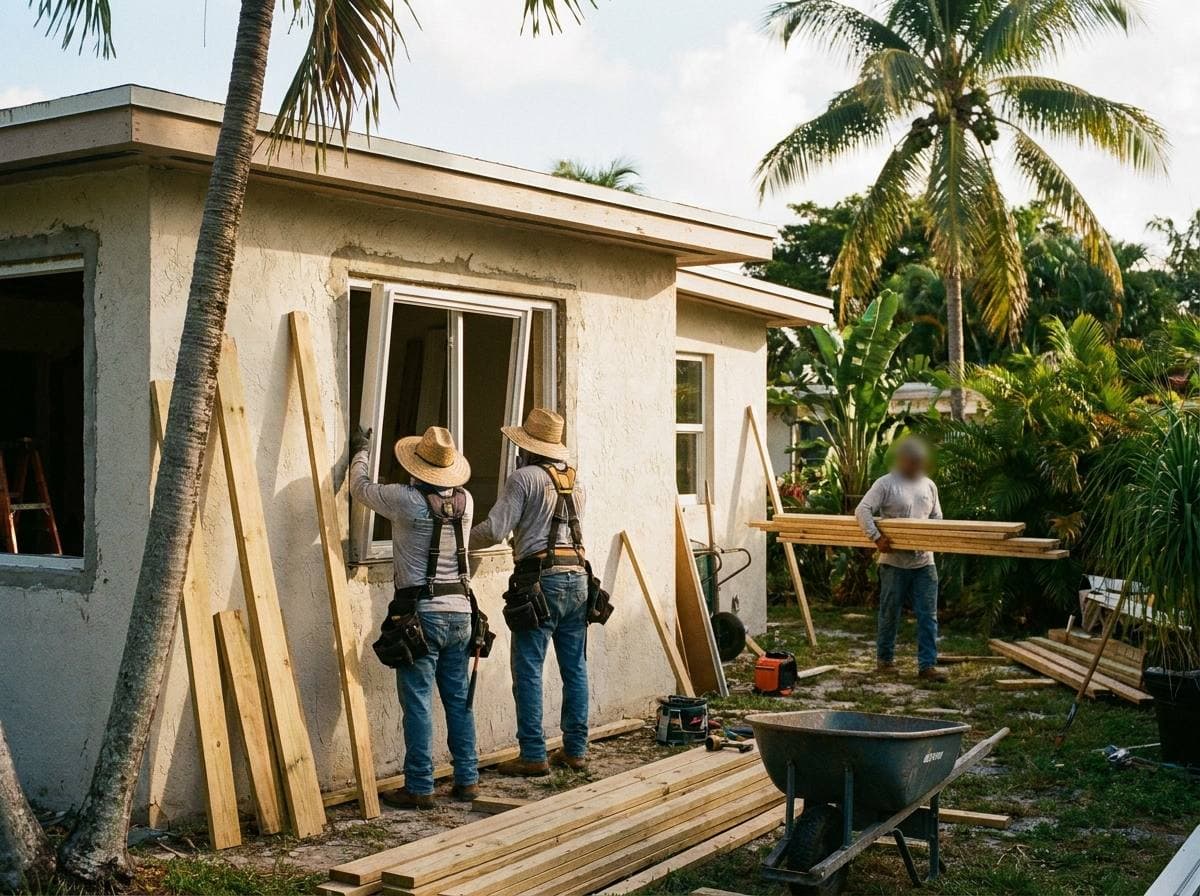
Every Gaven patio installation runs the same six phases in the same order. On a patio the sequence looks short from outside — mostly earth, base, and one surface — but three of the six happen before anything is delivered.
Discovery
Free site visit, no trip fee. We walk the yard, pull the permit history and flood-zone determination, and find the low corner and the neighbor's grade before anything is drawn.
Design and scope
Layout, elevations checked against the adjacent properties, the pervious-area math, and a fixed number. Material on a patio installation gets chosen after the drainage is solved, not before.
Permitting
There is no building permit to pull on an open patio at grade. What we file is the Chapter 24 impervious-surface approval, plus any municipal review, under our license.
Demolition and rough trades
Old slab out, subgrade cut and compacted, base built in lifts, underdrain and edge restraint where the soil permeability calls for them.
Finishes and installation
Concrete poured or pavers set to the designed slope, joints filled, edges locked, perimeter swale cut where the plan calls for one.
Punch and closeout
Final walkthrough against the approved grades, drainage tested with water rather than assumed, and a written labor warranty.
The license matters most where the permit doesn't
Patio installation is the job where a license looks least relevant and is most useful. Nobody checks a certification at the building counter, because there is no building permit to issue. What there is, since March 2025, is a county approval with numbers in it — retention, pervious percentage, setbacks, elevations — and a party who signs for them.
A crew that has only heard patios don't need permitsbuilds to that sentence, and it was true right up until it wasn't. A contractor who files patio installation work in Miami-Dade every month also knows a municipality can keep the review in-house when its own ordinance is as strict as the county's.
Verify it before you sign. Our license is public and our permit history is on the public BuildZoom record: 500+ projects since 2015, 37+ BuildZoom-verified permits.
A patio is rarely the whole project
Most of the patios we build are one line in a bigger scope — an addition, an exterior renovation, a whole-home remodel — because grading, downspouts, and the slab fail together and are best designed together. See what a licensed Miami general contractor carries end to end.
Patio questions, answered
Do I need a permit to install a patio in Miami-Dade?
Not a building permit, in the ordinary case — the county exempts open patios and slabs outside the building. But that exemption is scoped to Florida Building Code requirements only, and since March 31, 2025 a single-family or duplex lot needs prior written county approval before pavement, slab, or pavers go down.
How much does a patio cost in Miami?
We don't publish a patio installation range, because the number lives underground. Two patios of the same size price differently once soil permeability, the grade against the neighbors, and the retention the lot must hold are known. We quote it fixed after the site visit.
Is a patio the same thing as a deck?
No, and the county draws the line at a number: wood decks 18 inches or less above ground do not require a permit. Below that you are building a surface on a compacted base. Above it, a structure with footings, framing, and railings.
Do you build screen enclosures, patio enclosures, or pool decks?
No. A screened enclosure is a different trade on a different code path, and a pool deck sits outside this scope — the county writes screened patios and pool slabs out of the open-patio exemption by name. A specialist is the right call there.
Is it cheaper to pour concrete or install pavers?
On the surface, poured concrete usually comes in lower and pavers cost more to set. Underneath, the base and the pervious-area math are largely the same either way, and that is what moves the number. A concrete patio and a paver patio diverge less here than people expect.
Will a paver patio count as pervious area?
Only if all three of the county's conditions hold at once. The pavers have to sit in a low-traffic area on sandy soil, on a slope under 5 degrees, with at least 24 inches between the water table and the paver base. They have to be certified pervious by the manufacturer. And the soil beneath them needs a permeability rate of at least 0.8 inches per hour, below which an underdrain is required. On a lot with a high water table the first condition decides it before the product ever matters.
My city has its own building department — does the county rule still apply?
Jurisdictional, not universal, which is why it is worth asking early. The county's stormwater standards set the floor, and a municipality that adopts an ordinance at least as strict can keep the review at city level. The same patio can be reviewed at two different desks depending on the address.
Are you licensed and insured?
Yes. Gaven is a Florida Certified General Contractor, license CGC1524886 — the license class unlimited as to the type of work — verifiable on the state record at MyFloridaLicense. General liability and workers' compensation certificates issue before any crew sets foot on the property.
Start with the ground, not the pavers
Every patio installation starts the same way here: a free site visit, no trip fee. We walk the yard, check your grade against the neighbors, see where water already stands after a hard rain, and tell you what the county approval will ask for — before a proposal exists. Then one fixed number and one licensed team.
Last updated August 2026.