
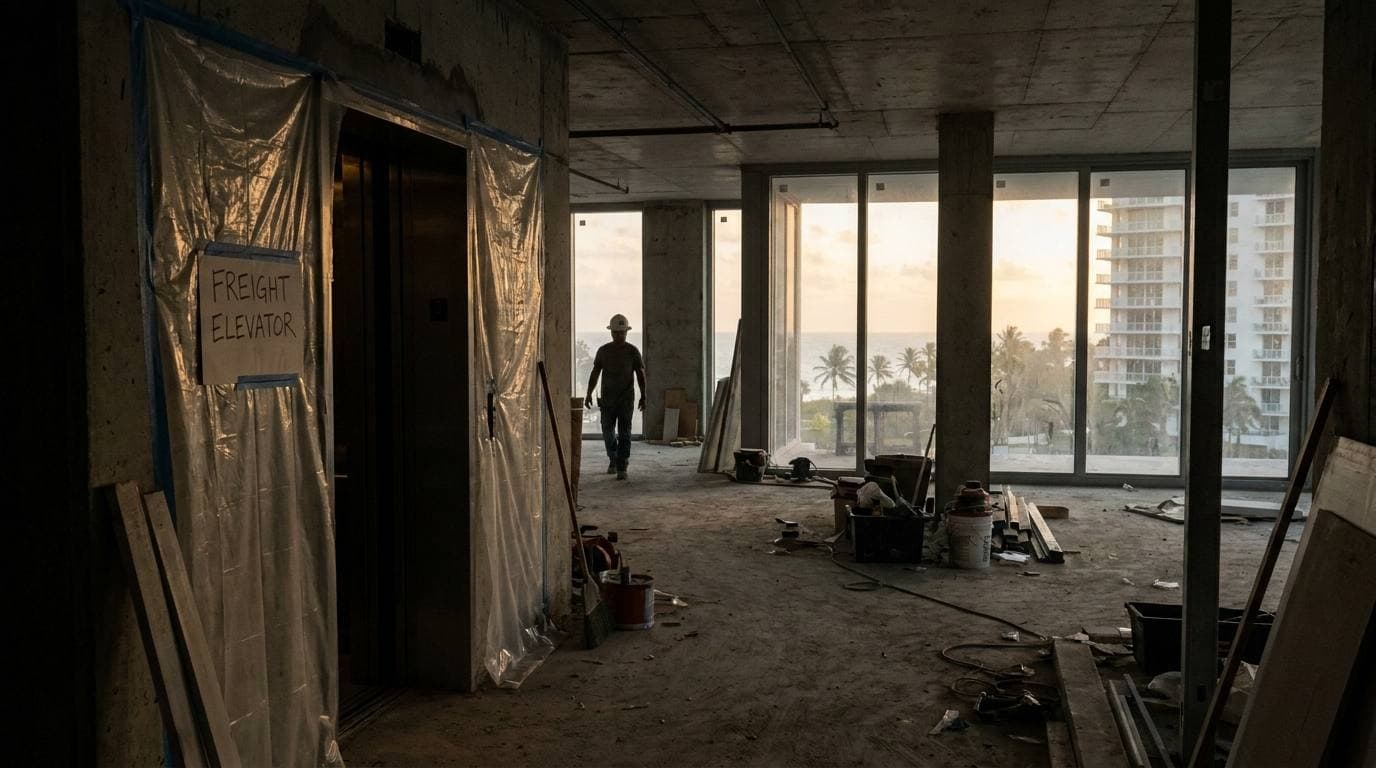
Interior Renovations Miami
Interior renovations Miami homeowners plan almost always start with the same unanswered question: does this work need a permit? The line is written down, it is not the same number in every jurisdiction, and it separates a weekend project from a licensed, inspected build.
What interior renovation work covers, and what we take on
Interior renovations cover everything inside the existing envelope: walls, floors, ceilings, millwork, and the runs behind them. Most of that range is not a general contractor's job — swapping a light fixture and reframing a load-bearing wall are both interior work, and only one needs a license.
The interior remodeling we take on starts where a permit, an inspection sequence, and a licensed party accountable for the structure are all required — almost exactly the line the building department already draws. Our interior renovation services do not extend below it.
What a Gaven interior renovation covers
What it isn't
We are not an interior design studio, and that is a real distinction rather than a disclaimer. A designer decides what the room becomes. An interior renovation contractor is the license that can legally open the wall, move the circuit, pull the permit, and face the inspector. Most good projects use both. If you already have drawings, we build from them.
Which interior work needs a permit in Miami, and where the line moves
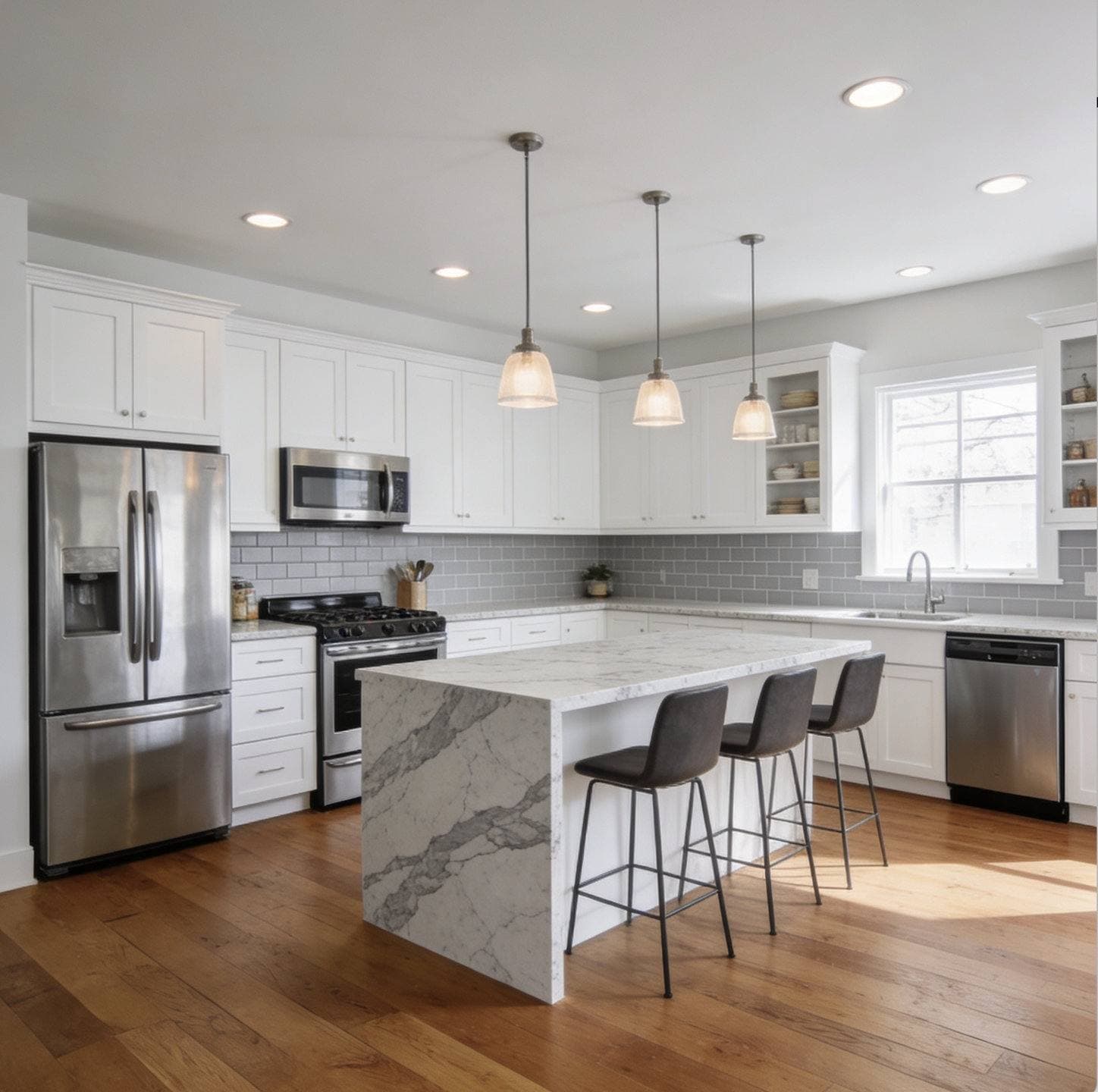
How a permitted interior renovation runs
Every Gaven project runs the same six phases, one licensed team from first site visit to final inspection.
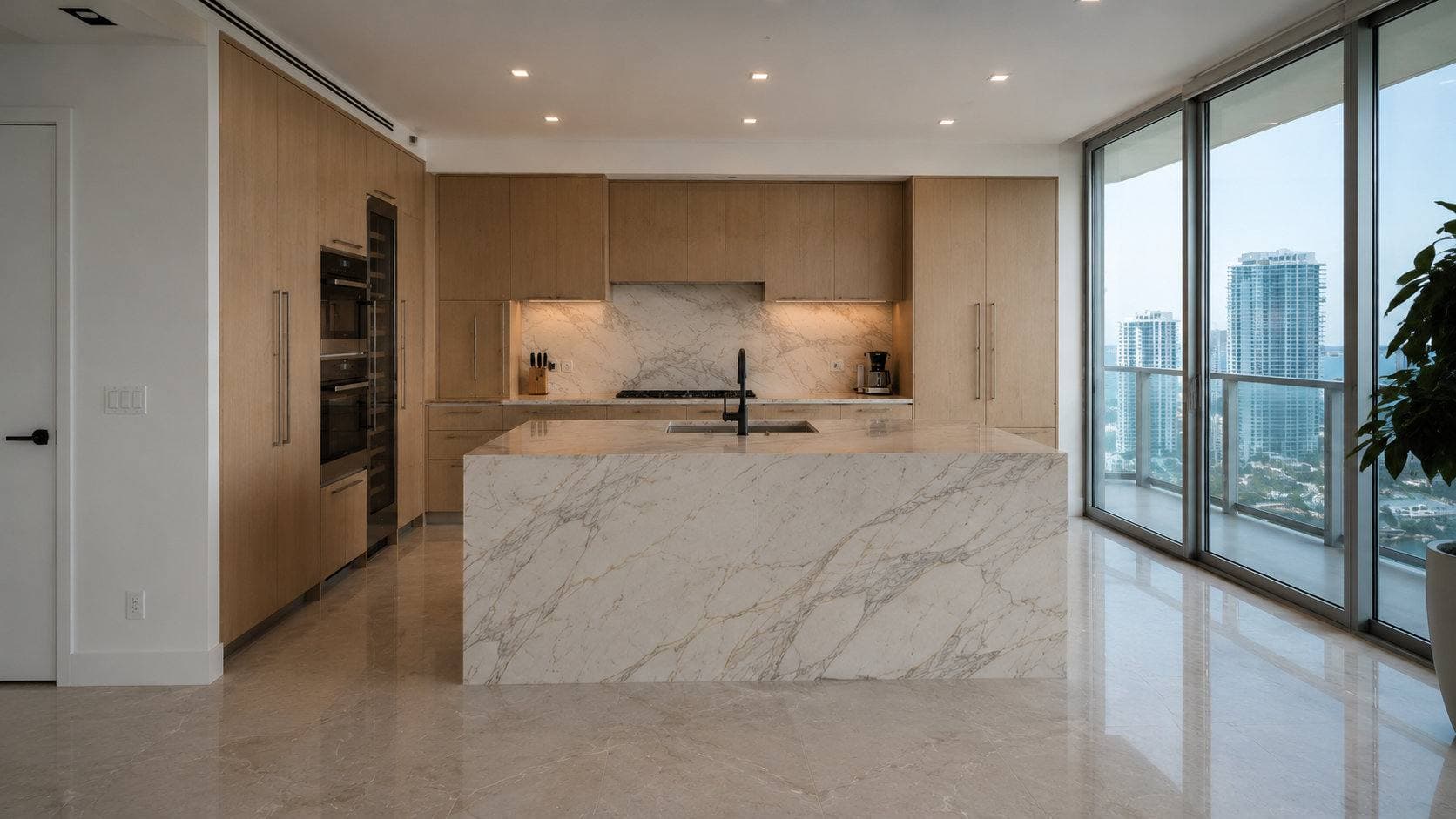
Discovery
A free site visit, no trip fee. We establish the two facts that decide everything downstream: which jurisdiction issues your permit, and whether the work is repair or alteration.
Design and scope
Drawings, allowances, and a fixed scope with honest variance bands. If a designer is involved, we build from their drawings.
Permitting
We pull the permit under our license. The building official verifies the contractor's certification first, tying the license to the job from day one.
Demolition and rough trades
Interior demo and structural work first, then the rough-ins, sequenced so the inspections land in the right order.
Finishes and installation
Millwork, tile, flooring, stone, and fixtures — the phase you live in, and where a schedule slips if selections lag.
Punch and closeout
Final inspection, one walkthrough, one punch list, and a written one-to-two-year labor warranty.
The license is what lets an interior renovation be permitted at all
Gaven is a Florida Certified General Contractor. Under Chapter 489 of the Florida Statutes a Certified General Contractor's scope is unlimited as to the type of work — the license class that carries structural interior work rather than stopping at the finishes. The general contractor is responsible for the structural components and pulls the permit, while electrical, mechanical, and plumbing run in-house or are subcontracted under the license.
That matters most at the permit counter, where the building official confirms the contractor is certified before a permit issues. It is why an unlicensed handyman cannot legally pull one for interior work that has crossed out of the exemption list.
Verify it before you sign. The license is public and the permit history is on the public BuildZoom record: 500+ projects since 2015 · 37+ BuildZoom-verified permits.
The full general contracting picture
Interior renovation is one scope inside a broader practice — permitting, structural work, additions, and new construction all run through the same license and the same six phases. The full picture lives with our licensed Miami general contractor practice.
Permits, exemptions, and where the line sits
Does interior renovation work need a permit in Miami, or is it exempt under a dollar threshold?
Both, depending on the work. Miami-Dade exempts non-structural minor repair up to $1,000, with electrical, plumbing, and mechanical each capped separately at $500. But those thresholds were written for repair — an alteration needs a permit regardless of cost.
Why do Miami-Dade and the City of Miami publish different dollar thresholds for the same interior work?
They are separate lists from separate building departments. Miami-Dade caps licensed plumbing and mechanical repair at $500; the City of Miami caps the same disciplines at $2,500. Which one governs depends on your address.
Can I put up an interior partition wall without a permit?
Only while it stays furniture. The City of Miami exempts partitions not fixed to the structure and no taller than 5 feet 9 inches. Fasten it down or build it taller and it is construction.
I am only replacing cabinets. Is that exempt?
Usually, until a trade gets involved. Miami-Dade exempts replacing cabinets and vanities in residential units but requires a permit once there is associated electrical or mechanical work.
Does the flooring exemption apply inside a condominium unit, or only in a single-family home?
Inside the unit. Miami-Dade exempts surfacing existing interior floors in single-family residences, duplexes, and condominium units, but states explicitly that it excludes the common areas of residential buildings.
If the work is exempt, does that mean the building code no longer applies?
No, and this is the most expensive misreading of the exemption lists. The City of Miami states directly that exempt work must still comply with code. An exemption removes the permit and the inspection, not the standard.
Do you take on small interior jobs — one room, one wall, one floor?
No. We run full-scope projects where a permit, an inspection sequence, and a licensed party accountable for the structure are all required. Below that, a specialist is the better use of your money.
Are you licensed and insured?
Yes. Gaven is a Florida Certified General Contractor, license CGC1524886, verifiable on the state record at MyFloridaLicense. General liability and workers' compensation certificates issue before any crew sets foot on the property.
Find out which side of the line your project is on
Every interior renovation starts with a free site visit, no trip fee. We walk the scope, name the jurisdiction that governs your address, and tell you whether the work is exempt repair or permitted alteration — before there is a proposal, and even when the answer is that you do not need us.
Last updated August 2026.