
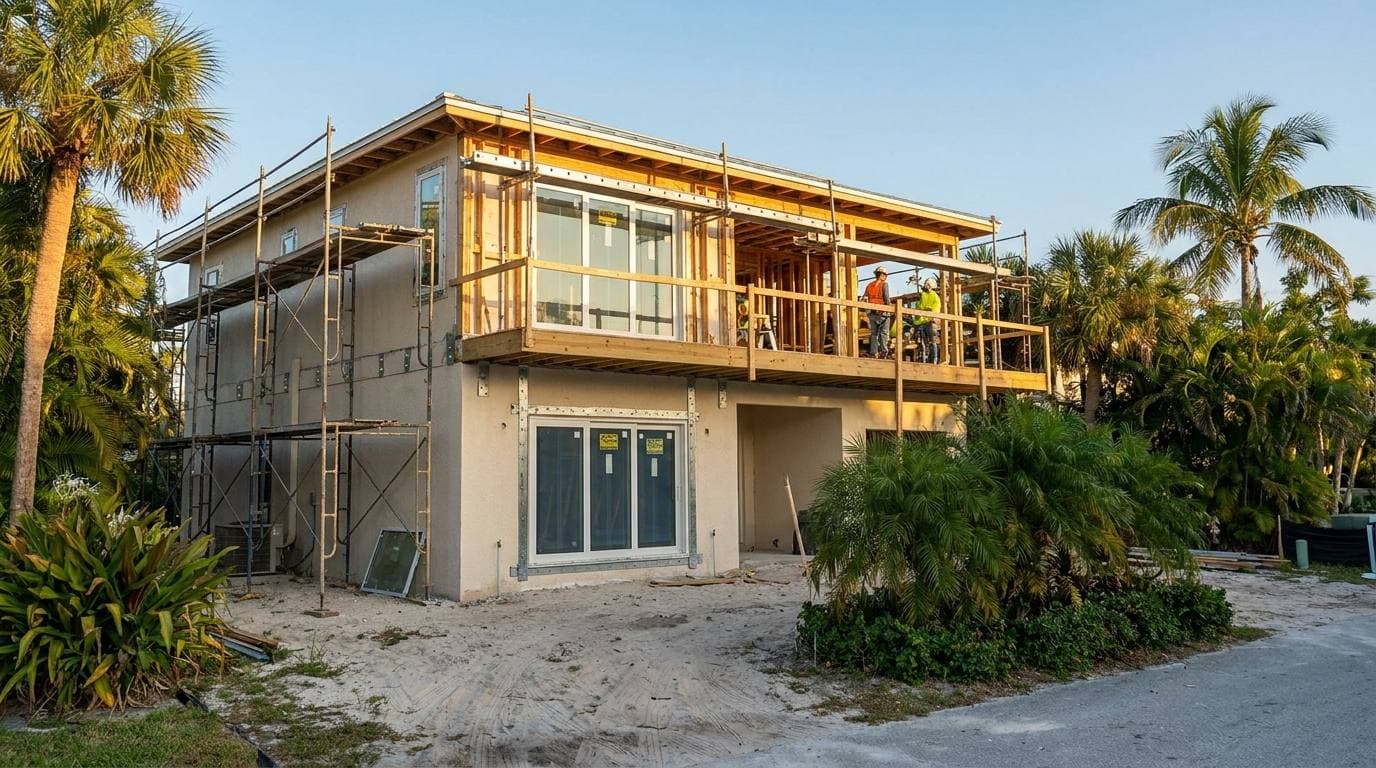
General Contractor near Morningside
General contractor near Morningside means working inside a designated historic district, where an addition or a large exterior alteration goes in front of a city board before it ever reaches a plans examiner. We file that certificate first, because the permit waits on it anyway.
Two tracks, and the expensive one is not obvious
Every project in the district answers one question before it answers any other: does it wake the preservation board, or does it clear at the counter? The City of Miami runs two tracks over historic property. Small repairs get a standard certificate, reviewed by staff, and if you are already pulling a building permit for them you do not file separately at all. New construction, demolition and large repairs or alterations get the special certificate, which needs a vote from the Historic and Environmental Preservation Board. Almost everything a general contractor is hired for sits on the second track.
What goes in front of the board
What clears without a hearing
Ninety acres designated to stop a boulevard
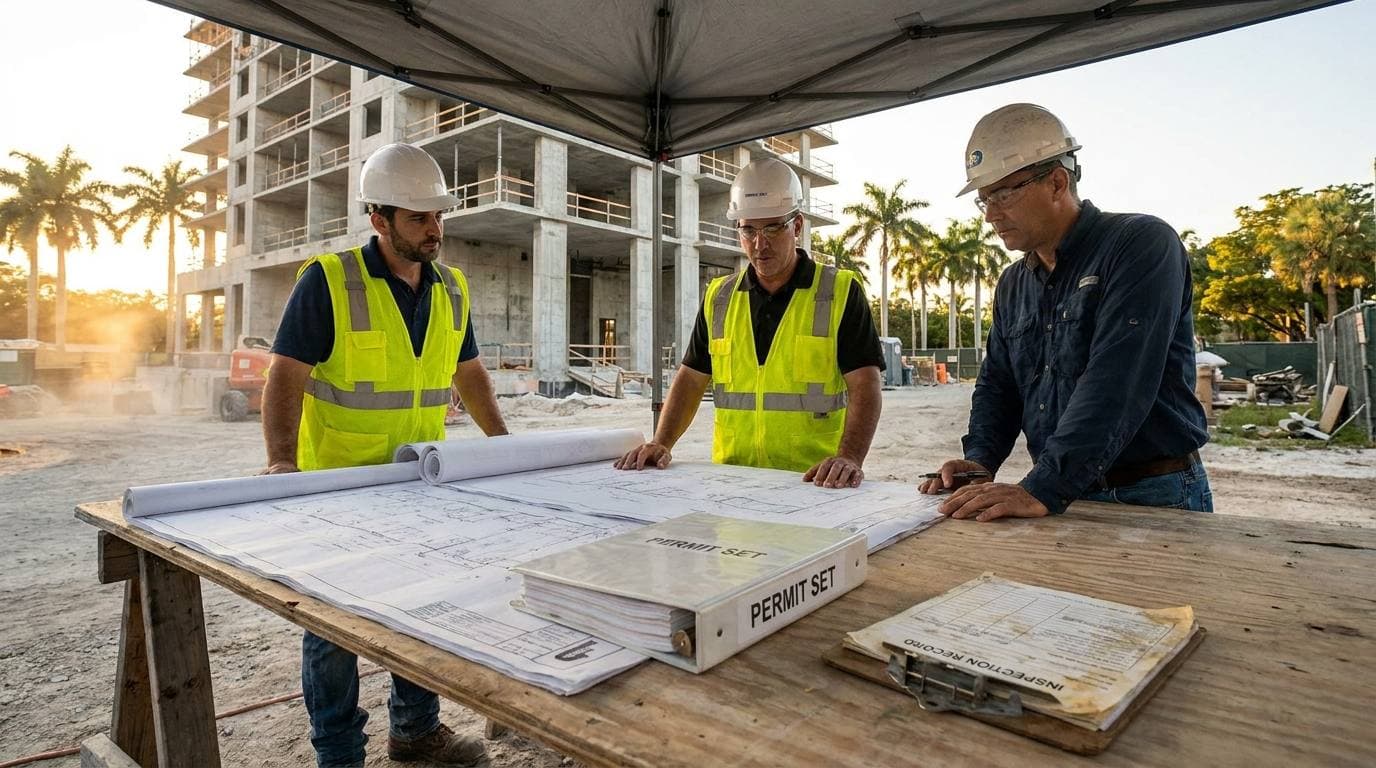
Morningside is not an old neighborhood that happens to have rules. It has the rules because of why it was designated. The National Register nomination puts it plainly: to discourage encroaching commercial development from Biscayne Boulevard, the City of Miami made it a local historic district in 1984 — the city's first. National Register listing followed in 1992, under the district's official name, Bay Shore. The protection came before the honour, and it came for a defensive reason. That is why the review is real rather than ceremonial.
The nomination also fixes the boundary and the inventory, and both matter to anyone drawing plans. Ninety acres, roughly bounded by NE 55th Street to the south, Biscayne Boulevard to the west, NE 60th Street to the north and Biscayne Bay to the east. Inside it, 201 single-family residences and 70 outbuildings. Of those 271 buildings, 223 contribute to the period of significance and 48 do not. The period runs 1922 to 1942: the first three subdivisions were platted between 1922 and 1924, and a fourth, south of NE 55th Terrace, in 1936.
Two lines in that document change the construction rather than the paperwork. The first is that every building in the district is masonry, and one or two storeys. That is not a stylistic note. A masonry wall does not open the way a frame wall opens; a second storey over masonry is a structural question about what is under the slab before it is an architectural one, and the answer is found by opening something rather than by assuming. The second is that the district is a designed landscape as much as a set of houses — center parkways down most streets, circular islands at many intersections, and east-west streets that terminate at the bay. That is why a site plan here is read for what happens between the sidewalk and the front door, and why the certificate checklist asks for a landscape plan at all.
Five architectural styles sit inside those ninety acres — Mediterranean Revival, Art Deco, Colonial Revival, Mission and Masonry Vernacular. A contractor who can describe your house before seeing it is describing a subdivision, and this is not one.
Six phases, and the third one moves to the front
The sequence is the same one we run everywhere. In a designated district it is the weighting that changes: permitting stops being a step between design and demolition and becomes the phase the whole schedule is built around.
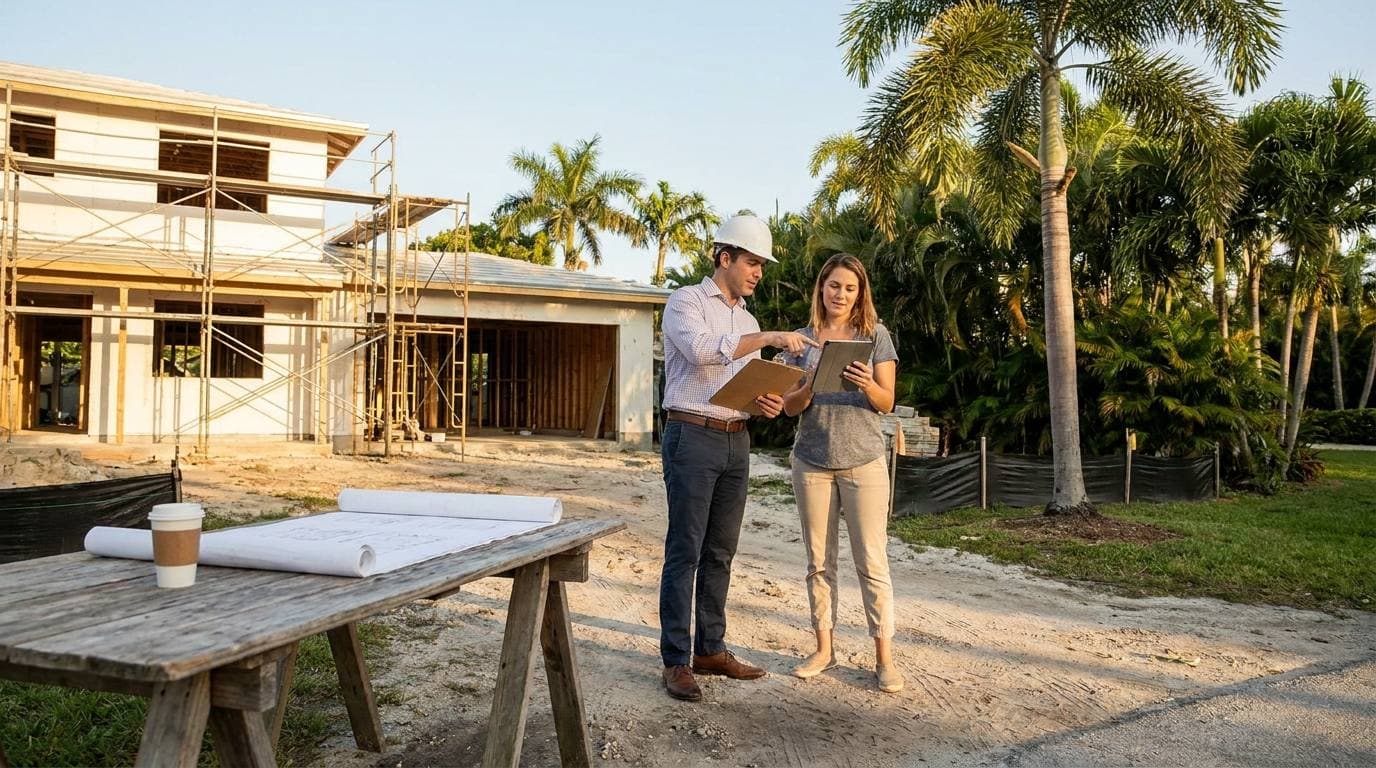
Discovery
We establish which track your scope falls on and whether your address is a contributing building, before anyone is paid to draw anything.
Design and scope
Drawings that go to a board are drawn to a different standard: signed and sealed plans, a survey signed and sealed within the year, a landscape plan, a materials page, and renderings where the work is new construction.
Permitting
The certificate goes first. The city's own guidance is to complete it before applying for the building permit, because the building application is put on hold for the approval anyway. Budget up to two months, plus a fee set by the scope.
Demolition and rough trades
Nothing comes down until the approval is in hand and its conditions are on the drawings. Masonry demolition here is selective and slower than frame, and it is where an eighty-year-old house tells you what it actually is.
Finishes and installation
Anything the board approved by material, color or profile gets installed as approved. A substitution made on site is how a finished project ends up back in front of the board.
Punch and closeout
Inspections closed, permits closed, and the approved conditions demonstrably met — which in a historic district is a separate question from whether the building department is satisfied.
From Morningside to the office in Doral
The simplest way is one road for most of it. From Biscayne Boulevard at the western edge of the district, head south to NE 36th Street and turn right. NE 36th Street becomes NW 36th Street and runs straight west across the city, past the north side of Miami International Airport and over the Palmetto Expressway, into Doral. Turn north on NW 82nd Avenue and you are at NW 41st Street. We are at 8200 NW 41st Street, Suite 200-4, Doral, FL 33166.
If NW 36th Street is backed up around the airport, the highway alternative is I-195 west out of the Upper East Side to I-95 south, then the Airport Expressway west to the Palmetto and north from there. Call before you leave and we will tell you which one is moving.
The license is the difference
The district facts on this page — the boundary, the 271 buildings, the 223 that contribute, the 1922 to 1942 period and the 1984 designation — are not ours. They are in the federal nomination form, and you can read the same pages we did. National Register nomination, Bay Shore Historic District
So is the review process. The two tracks, the two-month window, the signed and sealed drawing set, and the instruction to finish the certificate before applying for the building permit are the city's own published guidance. One detail there catches most owners out: anyone who speaks for you at the hearing must be registered as a lobbyist if they are paid, or hold power of attorney if they are not. City of Miami, Special Certificate of Appropriateness
Work in Morningside is contracted, executed and invoiced by Gaven Constructions under the license above. Any permitting, drawings or engineering the scope requires is identified and priced before the project is approved, and that includes the certificate phase rather than treating it as an afterthought.
The same license builds outside the district
A historic district changes the approvals, not the trade. Additions, whole-home remodels and new construction across Miami-Dade, Broward and Palm Beach run under the same Florida general contractor license and the same six phases. The board is one more jurisdiction to satisfy, not a different company.
Building in a designated district
Do I need preservation board approval to build an addition on a Morningside house?
Almost certainly yes. The City of Miami puts new construction, demolition and large repairs or alterations on a historic property into the Special Certificate of Appropriateness track, which requires approval by the Historic and Environmental Preservation Board rather than a staff sign-off at the counter. An addition is all three of those things at once: new construction, some demolition, and a large alteration of an elevation the district was designated to protect. Small repairs are the other track and are handled by staff. The line between the two tracks is the line that decides whether your project starts with a board hearing or with a permit application.
How long does the Morningside historic review add to a project schedule?
The City of Miami states that the Special Certificate of Appropriateness review can take up to two months, and that is before the building permit process begins rather than alongside it. The city's own guidance is to complete the certificate first, because a building application filed ahead of it gets put on hold for the approval anyway. Budget the two months as a real phase with a real cost, not as paperwork that runs in the background. A contractor who tells you the historic review happens while the crew mobilises has not filed one.
Does it matter whether my Morningside house is a contributing building?
It matters, and most owners do not know which one they have. The National Register nomination for the district records 271 buildings in total: 223 that contribute to the 1922 to 1942 period of significance and 48 that do not. Contributing and non-contributing status is a starting point for how a proposal is read, not a permission slip in either direction — the district's rules apply across the boundary regardless. Finding out which category your address falls into is part of the pre-application conversation, and it is worth having before you pay an architect to draw something.
Can I change the windows on a Morningside house?
Window and door replacement is reviewable work in a designated historic district, and the city's checklist asks for dimensioned drawings of existing and proposed openings, a schedule specifying material, size, type, operation, color and finish, and a scaled profile section of the new units. That level of documentation is the answer in itself: the question is not whether you may replace them but whether what you propose reads correctly against the original. In a South Florida district that also has to satisfy current windload requirements, the two demands have to be solved together rather than in sequence.
Are you licensed, and how do I check it myself?
Gaven Constructions is a Florida Certified General Contractor, license CGC1524886, and the work is contracted, executed and invoiced by that company. You can look the number up yourself on MyFloridaLicense before you sign anything, and our permit history is a matter of public record on BuildZoom: 500+ projects since 2015, 37+ BuildZoom-verified permits. In a historic district the license carries more weight than usual, because the certificate application asks for signed and sealed plans and a survey, and the person who files them is accountable for what the board approved.
Do you charge more to work in Morningside than elsewhere?
No. One structure covers Miami-Dade, Broward and Palm Beach, with no distance surcharge and no minimum that moves with the address. What does change here is scope rather than rate: the certificate phase is real work with a real timeline, and drawings that will go in front of a board are drawn to a different standard than drawings that will only go to a plans examiner. Those costs are identified and priced before the project is approved, not discovered in month two. We also do not take partial work — no single-trade jobs, no fixture swaps.
Find out which track your project is on
Before drawings, before a number: whether your scope needs a board hearing or clears with staff changes the schedule by about two months. We can usually tell you from the scope and the address.
Last updated September 2026.