
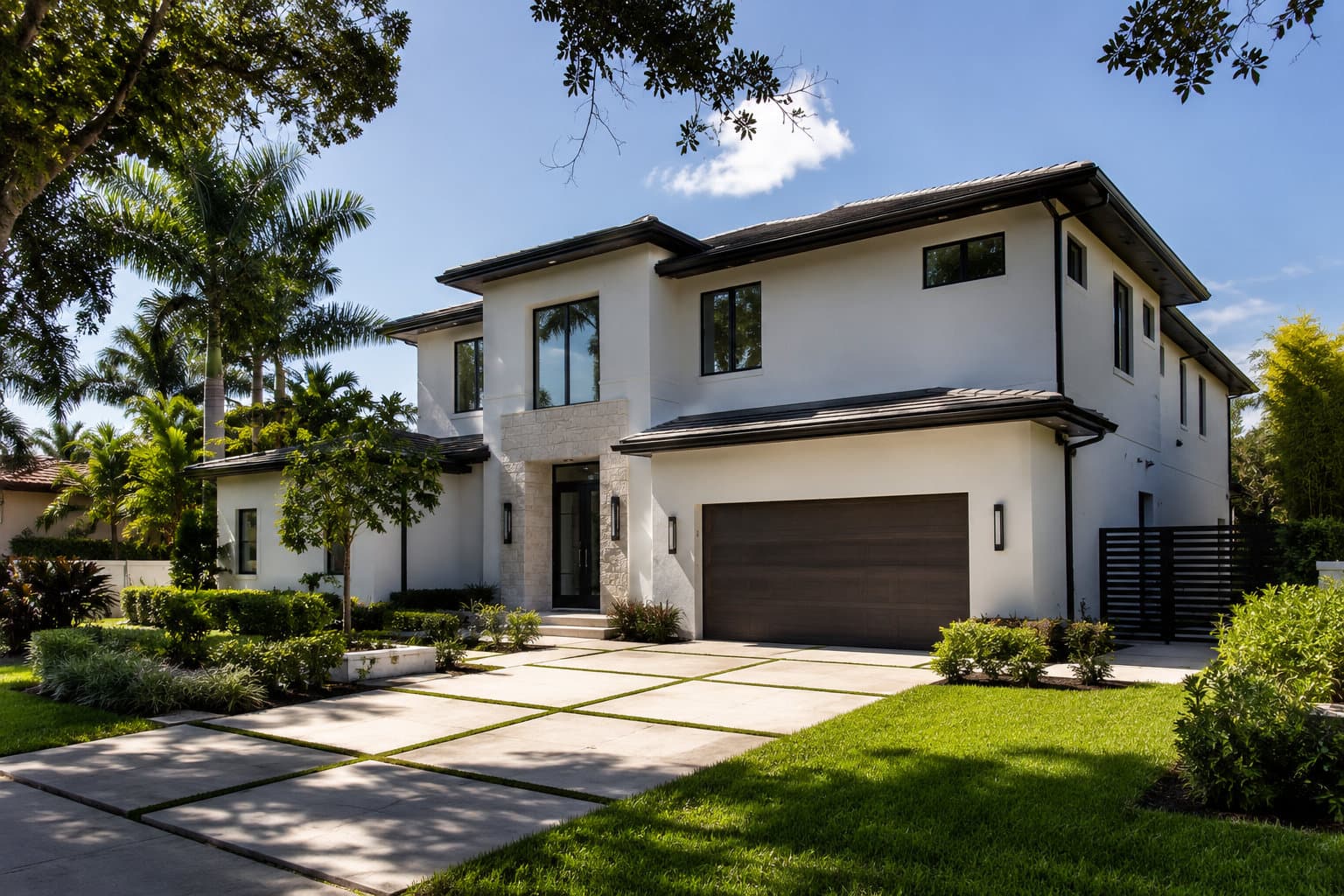
Exterior Renovations Miami
Exterior renovations Miami buildings need are envelope work on an existing structure — the wall assembly and what sits behind the cladding, the assemblies rated for wind pressure, and the anchorage a Notice of Acceptance names — permitted, inspected, and carried under one Florida Certified General Contractor.
Envelope scopes, not exterior trade calls
Exterior renovations Miami properties need are envelope scopes, not trade calls: the wall assembly and what sits behind the finish, the openings that break through it, and the anchorage holding them against wind pressure. The code inspects that as a system, layer by layer.
What a Gaven exterior renovation covers
What it isn't
The roof, and why it is not ours to do.We do not do roofs, and the reason sits in the statute rather than in our preferences. Florida law defines a Certified General Contractor's scope as unlimited as to the type of work — then names the exceptions. Section 489.113(3) requires roofing — along with electrical, mechanical, plumbing, sheet metal, swimming pool and air-conditioning work — to be subcontracted unless the contractor holds a state certificate or registration in that trade category. So the roof is not a job we turn down; it is one the license obliges us to place with a licensed roofer and sequence under the permit — which matters at exactly one line on the building, where the roofing underlayment has to lap the wall in the right order.The Florida Legislature — § 489.113, Qualifications for practice
What the code actually requires of an exterior wall
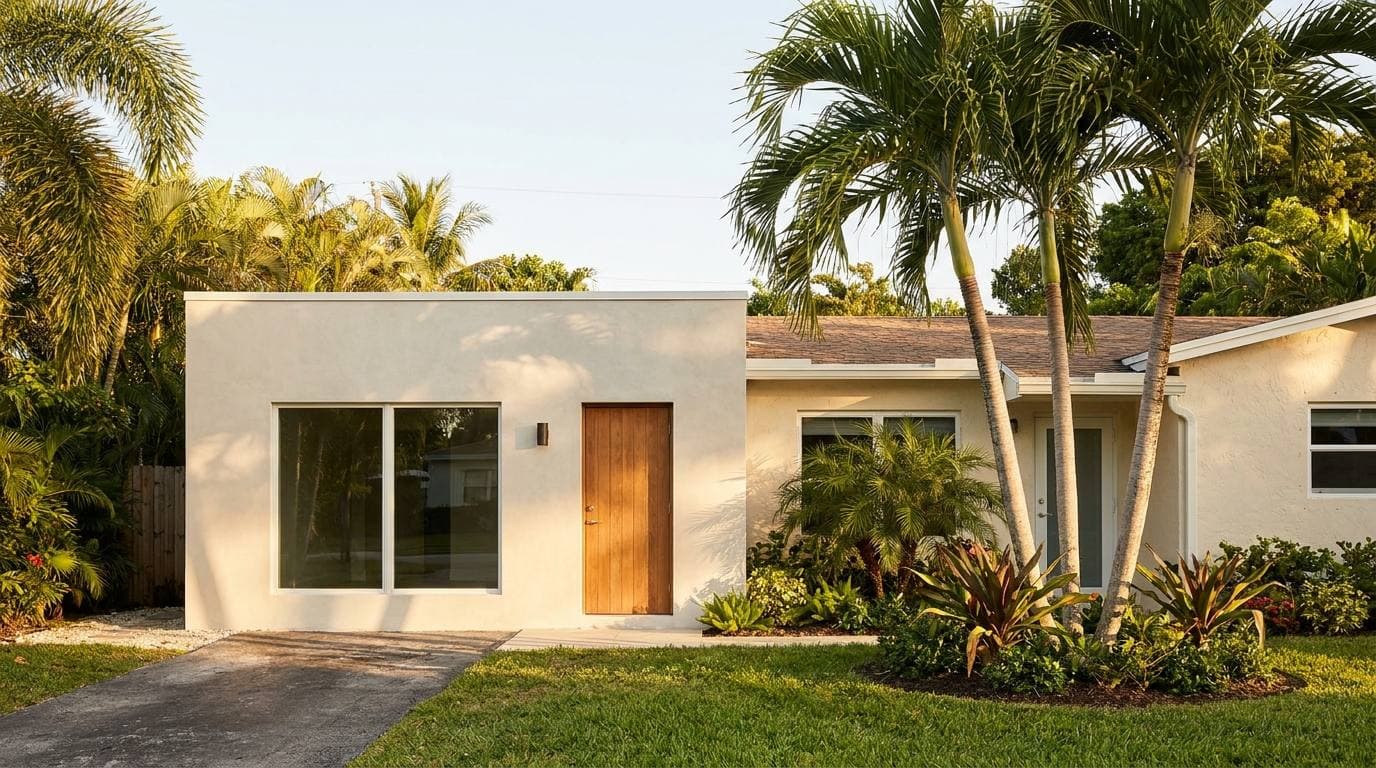
Six phases, one licensed team
Every Gaven project runs the same six phases in the same order. On an exterior renovation that order is not a preference — each layer covers the one the inspector has to see first.
Discovery
A free site visit, no trip fee. We read the wall: what the substrate is, where the assembly was interrupted, whether the openings are original, and which wind zone the address sits in.
Design and scope
We specify the envelope as an assembly: barrier and flashing details where they apply, lath and furring, plaster or cladding, and the approval numbers for every opening. Fixed price against that spec.
Permitting
We pull the permit under our own license and file the product approvals for anything penetrating the wall. Miami-Dade, Broward and Palm Beach each review to a different wind standard; the address decides which.
Demolition and rough trades
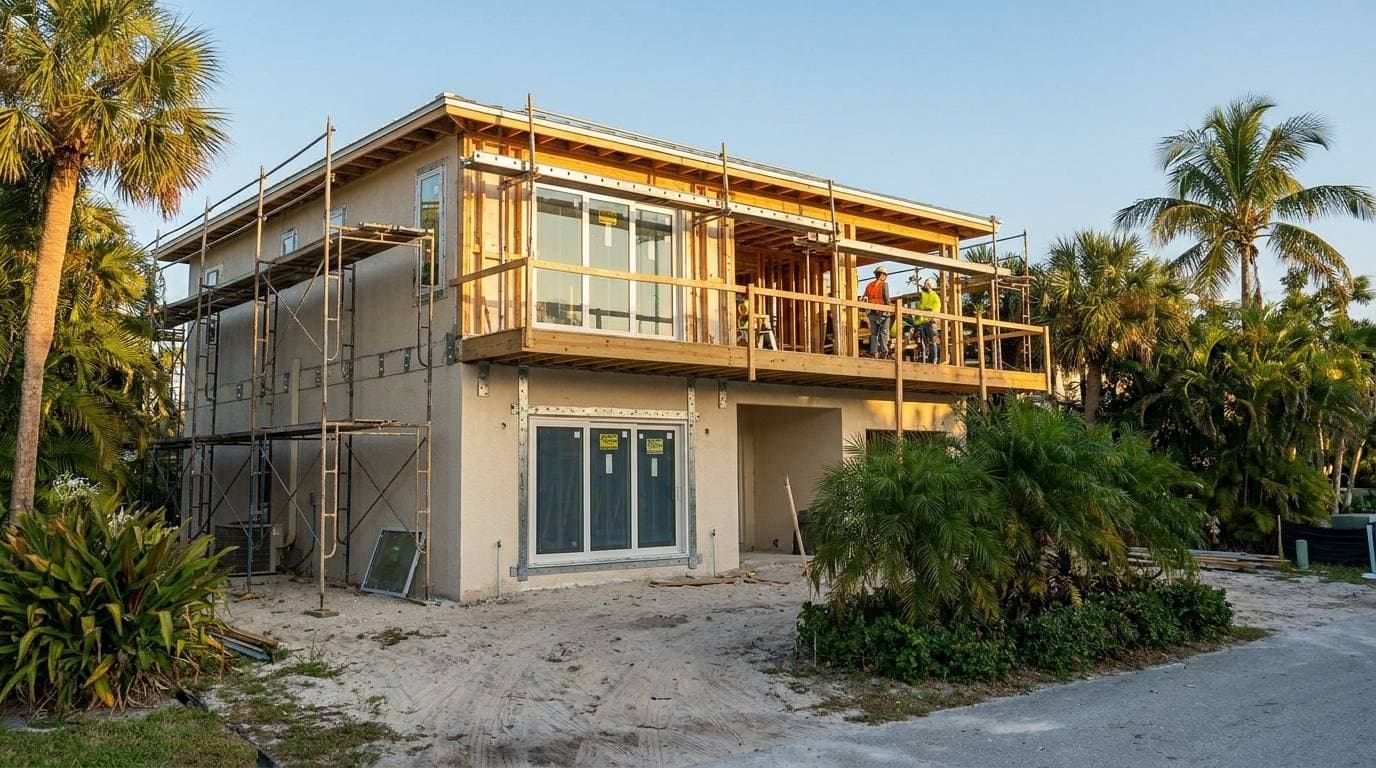
The finish comes off because the substrate is what is being repaired. Structural repair, lath, furring and flashing go in first and are inspected before anything covers them.
Finishes and installation
Plaster or cladding goes over an inspected substrate, and each opening is set with the buck, anchor and fastener spacing its approval names. Sealant joints are last, and are the secondary defense.
Punch and closeout
Final inspection, a written punch walk, and the documents handed over: permit card, product approvals, warranty terms. The permit closes under the license that opened it.
The license is the difference
Gaven is a Florida Certified General Contractor. Chapter 489 of the Florida Statutes defines that class as unlimited as to the type of work which he or she may do — the class that can carry a structural repair inside the wall itself, rather than stopping at the finish over it.The Florida Legislature — § 489.105, Definitions
Unlimited comes with a named list of exceptions, worth reading before you hire. The same chapter requires roofing, electrical, mechanical, plumbing, sheet metal, swimming pool and air-conditioning work to be subcontracted unless the contractor holds a state certificate or registration in that trade. That is the statute deciding who does what.
The permit ties that license to your wall: pulled under our number, inspected against our name, closed by us. Every claim here is checkable before you sign — 500+ projects since 2015 · 37+ BuildZoom-verified permits.
Envelope work is permitted work, and permits are pulled by a license class
The wall is structure, so whoever signs for it has to hold a license class that can carry structural work — not a trade registration for the finish over it. That is the same question as what a Miami general contractor covers.
Envelope questions, answered straight
Do you do roofs?
No, and the reason is statutory rather than commercial. Florida law requires a contractor to subcontract roofing unless certified or registered in that trade. So the roof goes to a licensed roofer and we sequence the tie-in, where the roofing underlayment laps the wall barrier.
What does a permit cover on an exterior renovation, and when is one required?
The permit covers the assembly, not the appearance: structural repair in the wall, the barrier and flashing behind the finish, and the anchorage of anything penetrating it. One is required when the scope touches structure, changes an opening, or replaces a wall assembly. We file before demolition, because the layers inspected are the ones about to be covered.
Do you take on stucco repair by itself?
No. Plaster is applied under ASTM C926 over lath and furring installed under ASTM C1063, and a crack in the finish is usually the second standard reporting a problem, not the first. We take envelope scopes where the substrate can be opened and inspected first.
Does my wall actually need a drainage plane behind the finish, or is that only for some construction?
It depends on what the wall is made of, and this is the question most exterior copy gets wrong. The Florida Building Code requires the weather-resistant envelope with drainage behind a water-resistive barrier, then exempts concrete and masonry walls designed under its own structural chapters — which is a great deal of South Florida housing stock. A framed wall with veneer over it takes the barrier-and-drainage route; a properly designed block wall does not. The first thing worth establishing is which one you own.
Are the wind requirements the same in Palm Beach County as in Miami-Dade?
No. The High-Velocity Hurricane Zone is Miami-Dade and Broward, and only those two counties. Palm Beach sits in the Wind-Borne Debris Region: wind-rated assemblies are required, the HVHZ test protocol is not. Design values also vary by risk category, so the same assembly can be specified differently across a county line.
The window is already NOA-approved — why does the installation still matter?
Because the Notice of Acceptance approves a tested assembly, not a product. The buck, the anchor type, the fastener size and spacing, and the substrate are all named in it. Substitute any one on site and the approval no longer describes the wall.
Can I just have the exterior painted, or the siding replaced?
Not through us. A coating or cladding swap over an untouched substrate leaves the wall exactly as it was, which is usually where the problem is. We open the wall, correct the layer that failed, and rebuild in code order.
Are you licensed and insured?
Yes. Gaven Constructions holds Florida Certified General Contractor license CGC1524886, verifiable on MyFloridaLicense, and carries general liability and workers' compensation coverage, certificates on request. Our permit record is public on BuildZoom.
Find out which layer is actually failing
Send the address and what you are seeing — a crack that follows a line, a stain under a window head, an opening that leaks in wind-driven rain. We will open enough of the wall to tell you which layer failed and price the repair against a written spec. No trip fee.
Last updated August 2026.