
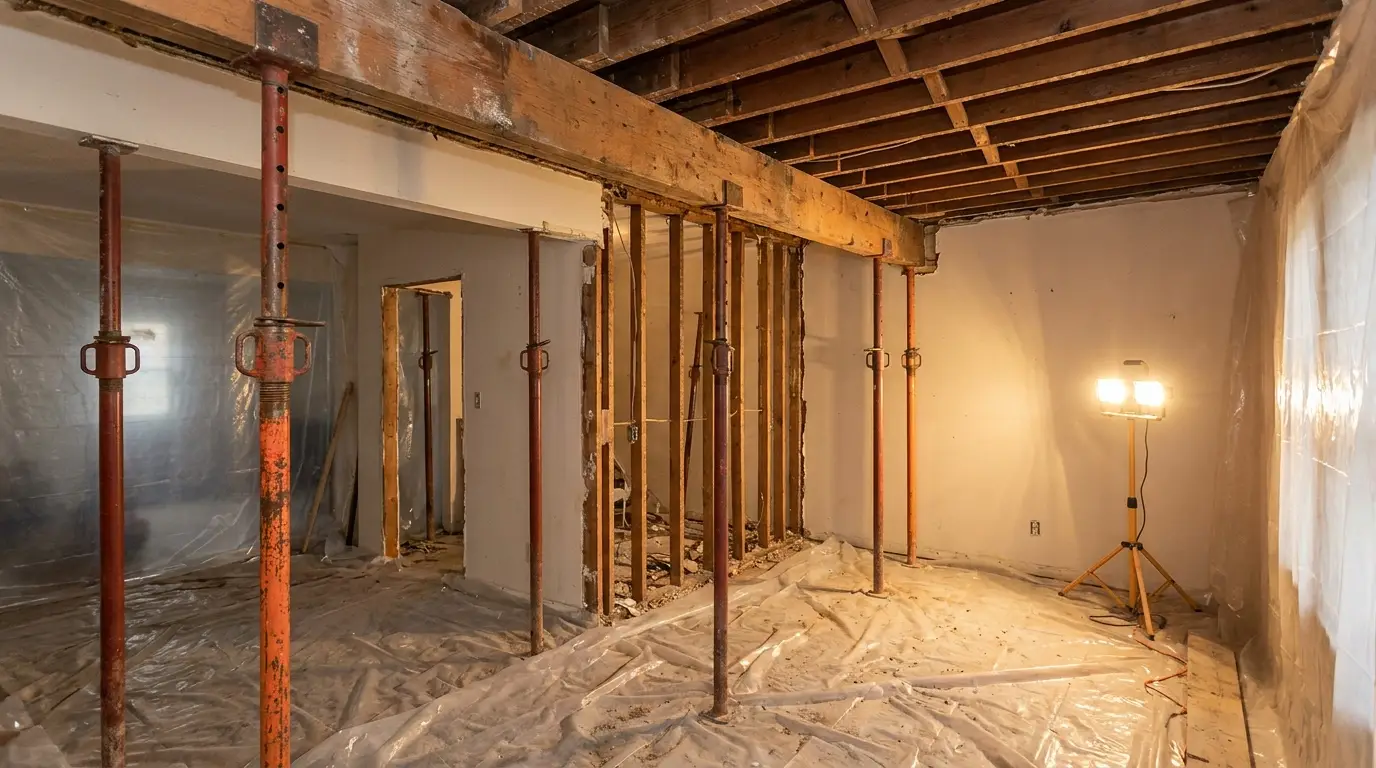
Demolition Services Miami
Demolition services Miami homeowners need come attached to a project: the wall comes out because something is going back in its place. This page covers what a licensed contractor surveys, permits, contains, and hauls in that phase, and why Gaven runs it inside a remodel.
Demolition is a phase of a project, not a product
The walls come down because something specific is going back in their place. Gaven runs demolition as phase four of a six-phase remodel, under the same license and the same permit as everything that follows it.
What a Gaven demolition phase covers
What it isn't
What actually happens during the demolition phase
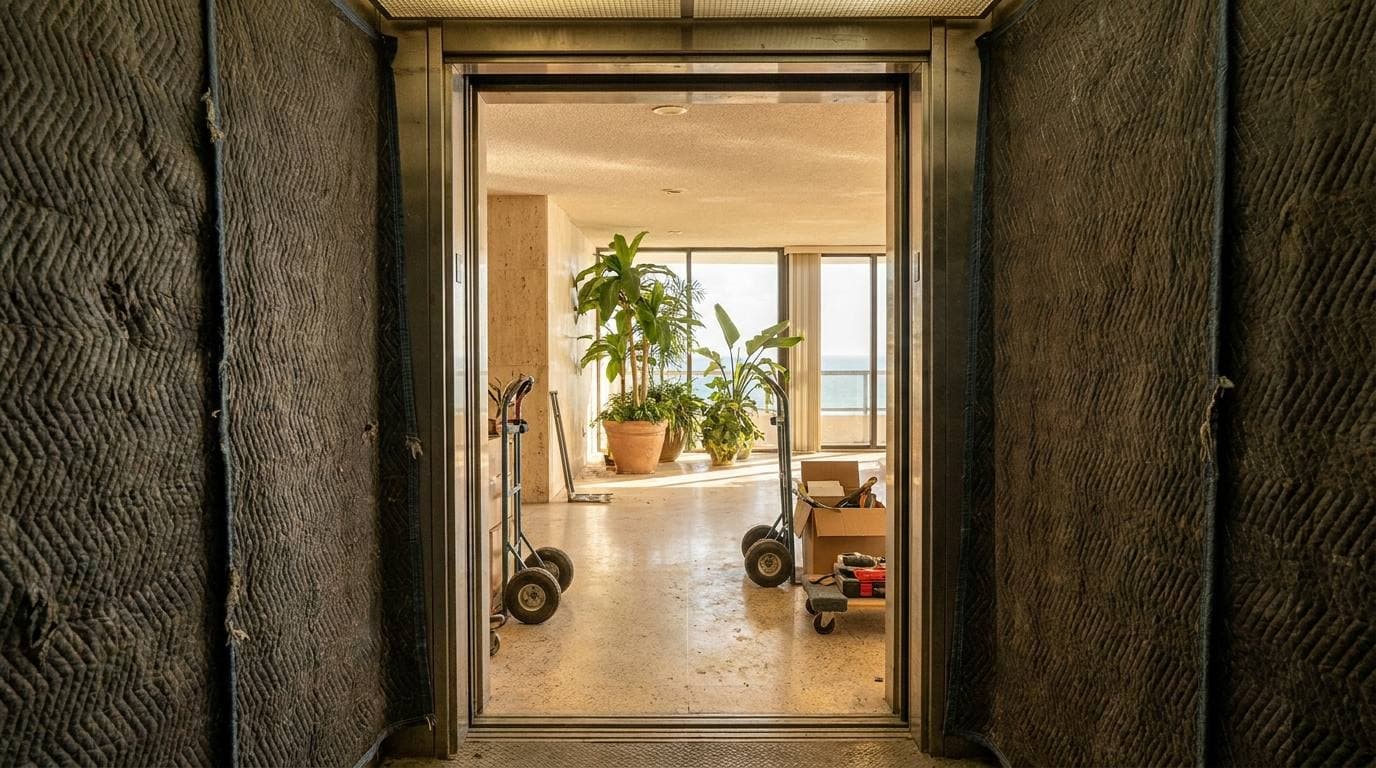
Demolition looks like the least technical part of a remodel and is one of the most procedural. Two documents come before the tools, and then four things decide how the phase actually goes.
Six phases, one licensed team
Demolition is phase four, and its job is to make phases five and six possible. The sequence is the same on every Gaven project, one room or the whole house.
Discovery
Site walkthrough, build year, existing conditions, and a first read on what is structural and what has to be protected.
Design and scope
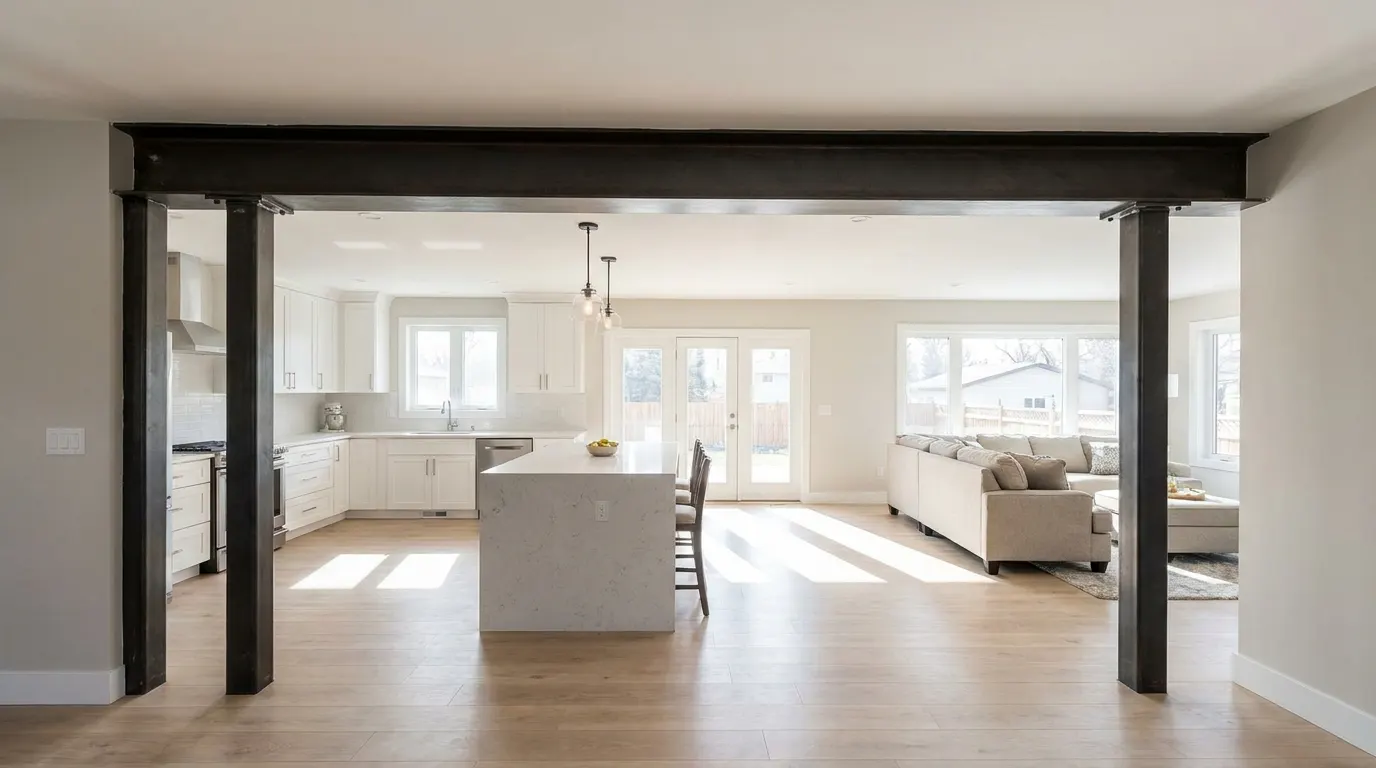
The drawings decide what comes out. Structural removals are engineered here, on paper, not at the wall with a crew standing by.
Permitting
The demolition scope goes onto the set with the rest of the remodel, filed under our license.
Demolition and rough trades
Protection, containment, selective removal and haul-off, then the electrical, plumbing and mechanical rough-ins and their inspections.
Finishes and installation
Drywall, tile, cabinetry, countertops, fixtures and trim, in the order the trades can actually work in.
Punch and closeout
Final inspection, punch list and handoff, with the permit closed rather than left open on the property record.
The license is the difference
Florida answers the demolition question in its own words, and it is why this phase never leaves the license. The state's Department of Business and Professional Regulation asks in its construction-industry FAQ whether demolition is part of the licensed practice of contracting in Florida, and answers yes. Section 489.105(3) defines a contractor as a person who undertakes to construct, alter, remodel, demolish, or improve any building or structure. The department then narrows the verb rather than leaving it open: the term “demolish” applies only tosteel tanks more than fifty feet in height, towers more than fifty feet, other structures more than fifty feet — and all buildings or residences. A house sits in that last clause, with no height test attached to it.
Florida does license demolition, and it licenses it more than one way — what separates the routes is how much you may take down. Senate Bill 704 removed the old three-story floor in 2012, and what replaced it is a ladder. A certified or registered residential contractor may demolish residences up to three stories. A building contractor may demolish a residence or commercial building that does not exceed three stories. A certified or registered general contractor's license, in the department's own words, allows you to demolish any building, residence or structure, regardless of its height. There are narrower routes as well: a state certified specialty license, with building demolition on the department's list of voluntary statewide specialties, and a local specialty demolition certificate of competency, valid only inside the jurisdiction that issued it. Gaven holds the first class, and it is the only one of the three Division I licenses with no ceiling written into it.Florida DBPR — Construction Industry FAQs, Demolition Contractor
It cuts the other way too. Someone demolishing a residence for compensation without one of those credentials is not in a gray area, they are outside the statute that defines the trade. The statute names one exception and it is the one that describes a job site: under section 489.113(2), a crew subcontracted by an appropriately licensed Division I contractor and working under that licensee's supervision does not need its own license, unless its own scope requires one.
Verify it before you sign. The number above is verifiable on the state record at MyFloridaLicense, and the permit history behind it is public: 500+ projects since 2015 · 37+ BuildZoom-verified permits.
Demolition is phase four of six
If the wall is coming out because something is going back in its place, the demolition question is really a scope question, and the answer sits one level up in what a licensed general contractor carries.
Demolition, permits, and what the license covers
Does Gaven do demolition on its own?
No. We run demolition as a phase of a remodel we are also rebuilding, never as a standalone job. The value of a licensed general contractor on a teardown is that one party answers for what replaces it. If nothing is being rebuilt, a demolition contractor is the correct hire and we say so directly on the call.
Do you need a permit for demolition in Florida?
For demolishing a structure, yes, and in practice most interior demolition that touches structure, electrical, plumbing, or mechanical is permitted too. The demolition scope is filed with the permit set for the remodel rather than as a separate application. What gets filed depends on the jurisdiction and the scope, so we confirm it with the building department before anything opens.
What license do you need to do demolition in Florida, and does the license class limit what you can take down?
The class is the limit. Florida licenses demolition by more than one route — a Division I contractor's license, a state certified specialty license (building demolition is on the state's list of voluntary statewide specialties), or a local certificate of competency that is only good inside the jurisdiction that issued it. Height is what separates them. A residential or building contractor is capped at three stories, while the state's own construction-industry FAQ says a certified or registered general contractor's license allows demolition of any building, residence, or structure regardless of its height. Gaven is a Certified General Contractor, so nothing in a residential scope falls outside the license.
What is the difference between interior demolition and a full teardown, and which one does a remodel need?
Interior demolition is selective: cabinetry, tile, fixtures, and non-structural partitions come out while the envelope and the structure stay. A full teardown removes the structure and starts new construction, not a remodel. Nearly every remodel needs the first and none of the second, which is why the two are quoted and permitted differently.
How long does the demolition phase take on a Miami remodel, and why does it run longer in a condo than in a house?
On a single-family house with driveway access it is one of the shorter phases. In a condo the removal itself is rarely the constraint. The service elevator window, the association's permitted work hours, and the loading-dock reservation cap how much material leaves each day, so the debris path sets the schedule rather than the demolition work.
My house was built before 1978. Does that change how the demolition phase is handled?
Yes, and it is a legal difference rather than a preference. Under the EPA's Renovation, Repair and Painting rule, work that disturbs paint in pre-1978 housing must be performed by a certified firm using lead-safe practices. Confirming the build year is part of discovery, and it decides who may open the wall.
What happens if you find asbestos, an undersized panel, or unpermitted prior work once the walls are open?
We stop, document it, and price it before continuing. Asbestos abatement is a separately licensed scope, coordinated with a certified abatement contractor rather than absorbed into our crew's work. An undersized panel or unpermitted prior work becomes a written change order. Surfacing it in phase four is what keeps it out of a rough inspection in phase five.
Are you licensed to run demolition and remodeling in Miami-Dade, Broward, and Palm Beach County?
Yes. Gaven Constructions is a Florida Certified General Contractor, license CGC1524886, verifiable on the state license record at MyFloridaLicense. That single license covers the demolition phase and the rebuild that follows it, in all three counties.
Planning the project the demolition belongs to?
Tell us what is coming out and what is going back in its place. We scope the demolition phase inside the remodel, price it with the rest of the work, pull the permit under our license and stay through final inspection. Call or email for a written scope in Miami-Dade, Broward and Palm Beach.
Last updated August 2026.