
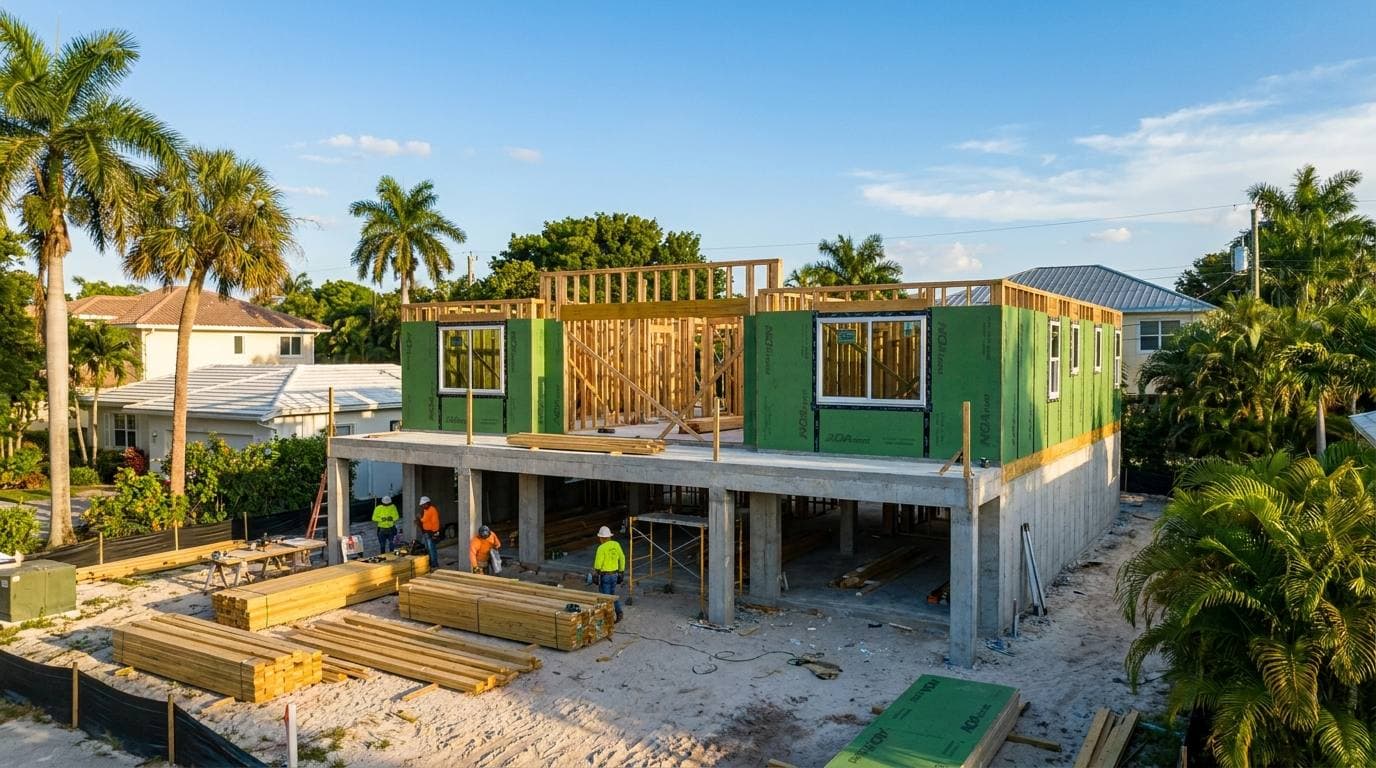
Concrete Work Miami
Concrete work Miami buildings need is usually repair, not a fresh pour — spalled balcony edges, delaminated slab soffits, and reinforcing steel that has lost its concrete cover. Gaven executes that repair inside a permitted project, under one Florida certified general contractor license.
Concrete that is already in place, and breaking down around the steel
Concrete work Miami owners bring to a general contractor is the structural half of the trade: concrete that is already in place, carrying load, and deteriorating around the reinforcing steel inside it. That is a different job from pouring flatwork, and a different license. If what you need is a new sidewalk, a driveway, or a decorative surface, a flatwork specialist is the right contractor and we are not.
What a Gaven concrete repair covers
What it isn't
Why concrete fails from the inside out in salt air
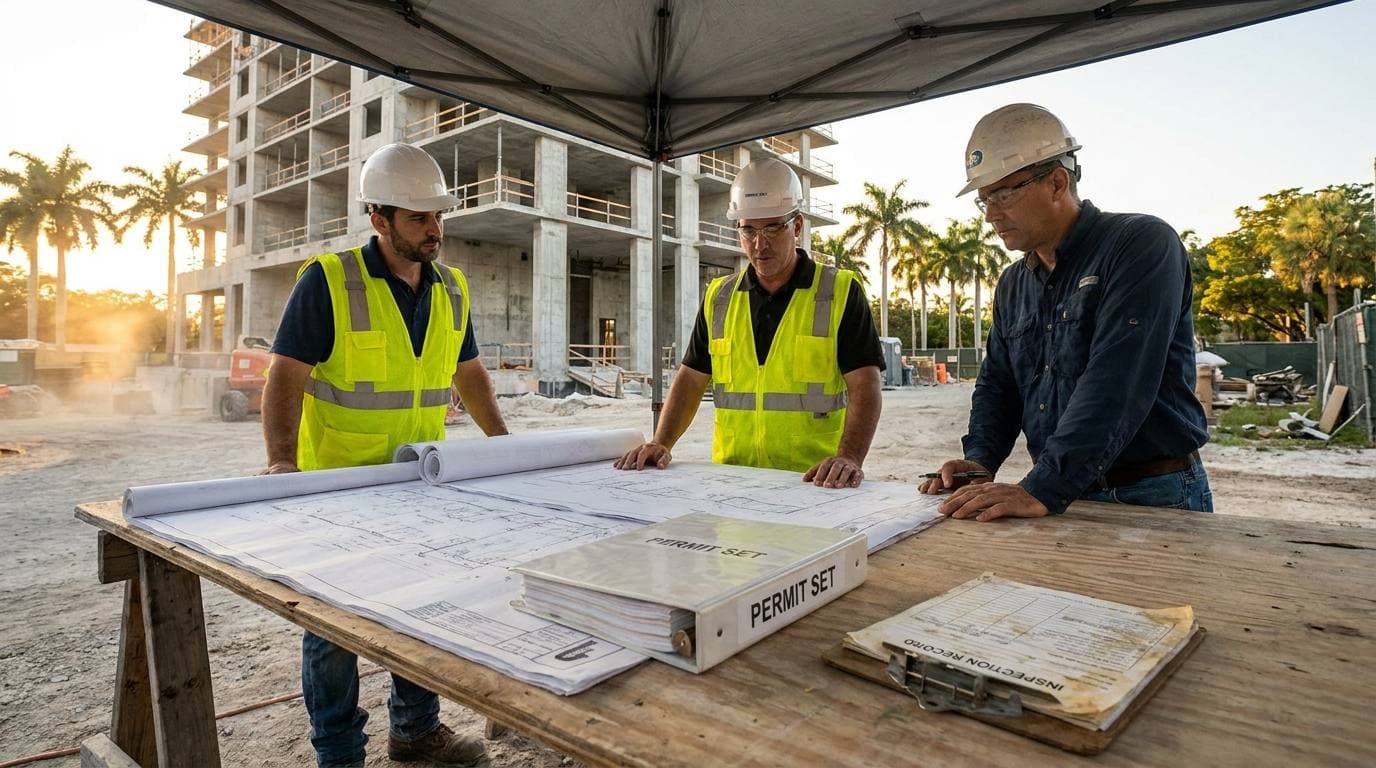
Reinforced concrete is two materials doing two jobs. The concrete carries compression; the steel bar inside carries tension. The concrete also does a quieter second job — it keeps the steel chemically passive, in an alkaline environment where it does not rust. That protection is a function of depth, and the trade name for it is cover.
Cover is the thickness of concrete between the outside face and the nearest bar, and the design code sets it by exposure, not by preference. Coastal air is the aggressive case: airborne chlorides work through the cover over years, reach the bar, and break down the passive layer that was keeping it inert. That is where concrete work on a South Florida building starts.
Six phases, one licensed team
Concrete work Miami projects run the same six phases as every other Gaven job, because that is what keeps a structural scope from turning into an open-ended patching bill. The difference is in what each phase is looking for.
Discovery
A free site visit, no trip fee. We sound the concrete rather than reading it, because delamination is silent to the eye and hollow to a hammer, and we map where the separation actually extends — almost always further than the visible break.
Design and scope
Repair quantities are written as measured area and depth, not as a lump guess. Where an engineer's report already exists, its findings define the scope. You see the number with honest variance bands, because concealed section loss is found by opening the element, not by estimating it.
Permitting
We pull the permit under our license. Across Miami-Dade, Broward, and Palm Beach County the building official verifies certification before a permit issues, so the license and the job are tied together from day one.
Demolition and rough trades
Deteriorated concrete is chipped back to sound material and behind the bar, so the steel is exposed around its full circumference instead of on one face, then cleaned and supplemented where section has been lost. Shoring goes in first wherever load path is affected.
Finishes and installation
Repair mortar is placed and cured to rebuild the original cover depth, not just the surface plane. Coating, waterproofing and railing details follow the concrete work rather than substituting for it.
Punch and closeout
Final inspection, closeout, and a written labor warranty. One walkthrough, one punch list, one licensed team accountable.
The license is the difference — and so is its limit
Structural concrete is inside a contractor's scope by statute. Florida law makes a general, building, or residential contractor responsible for any construction or alteration of a structural component of a building or structure — the clause that separates structural concrete work from the surface trades, and the reason a balcony or suspended slab repair is a licensed act rather than a maintenance call. The general class is the one without a ceiling on the building it may take.Florida Statutes §489.113
The same statute book draws the line we will not cross. Florida's milestone inspection is a structural inspection of a building, including an inspection of load-bearing elements, and the statute contemplates it being provided by a team of professionals with an architect or engineer acting as a registered design professional in responsible charge. Read the trigger precisely, because most pages do not: the 30-years-and-every-10-thereafter clock runs on buildings under the condominium or cooperative form of ownership, not on every building that turns thirty. Miami-Dade's recertification program — the one people still call the 40-year — is a separate county requirement carrying the same credential.Florida Statutes §553.899
Gaven does not sign that report, and no general contractor does. The engineer or architect specifies what has to be repaired; we are the licensed contractor who executes it, pulls the permit, and carries it through inspection. A firm offering to handle your recertification end to end is describing someone else's signature. Verify ours before you sign: the license is public, and the permit history is on the public BuildZoom record — 500+ projects since 2015 · 37+ BuildZoom-verified permits.
The general contractor behind the repair
Concrete repair is one scope inside a larger licensed practice — permitting, structure, and the trades that follow the repair all run through the same team. The full picture of what we build and how we carry a project lives on our licensed Miami general contractor page.
Concrete repair questions
Does Gaven do sidewalks, driveways, or stamped concrete?
No. Flatwork at grade is a specialist's trade and we do not bid it. The concrete work Miami owners hire us for is structural repair on a building that already stands: balcony slabs, suspended slabs, and the steel inside them. If your job is a new pour on the ground, we will say so.
Who signs a 40-year recertification or milestone inspection report — can a general contractor do it?
No. The milestone inspection statute contemplates a team led by an architect or engineer as the registered design professional in responsible charge, and county recertification programs carry the same requirement on the report. Gaven does not sign it. We do the other half: once the repairs are specified, we are the licensed contractor who scopes them, pulls the permit, and carries the concrete work through inspection.
What causes concrete spalling on a Miami balcony, and how is it different from a surface crack?
A surface crack is in the concrete; spalling starts in the steel. Airborne chlorides work through the cover, reach the reinforcing bar, and break down the alkaline layer keeping it from rusting. The oxide that forms occupies several times the volume of the metal it consumed, and that expansion pushes the cover off from inside. A spall is the visible end of a process that has been running for years.
Can a handyman do concrete work?
Not this kind. Patching a spall without removing the corroded steel behind it hides the mechanism instead of stopping it, and structural concrete work on a building is a licensed act in Florida. Gaven takes no handyman scopes at all — a stated limit, not a preference.
What is rebar cover, and why does a repair have to restore it?
Cover is the thickness of concrete between the outside face and the nearest reinforcing bar, and it is what keeps the steel chemically passive. A repair that fills the void but leaves the bar shallow gives back the appearance and none of the protection — which is why the work is to chip behind the bar, wrap it in new material, and rebuild to the designed depth.
Why does repairing existing concrete follow a different code than pouring new concrete?
Because they are different problems. The design code assumes a clean slate: chosen materials, known geometry, nothing already corroding. Existing concrete has its own code, ACI 562, because the work begins with evaluating what caused the failure. A contractor whose experience is pouring new work is not automatically qualified to assess a thirty-year-old slab.
How do you find delamination before it spalls?
By sounding it. A separated plane above the bar reads solid to the eye and hollow to a hammer or chain drag, so the area is mapped by sound and marked before chipping starts. It is routinely larger than the visible damage, which is why we measure on site rather than from a photograph.
Do you pull the permit, or do I?
We pull it, under our license. The building official verifies the contractor's certification before a permit issues, which is why a licensed general contractor is the party that files — and it keeps one party accountable for the inspections.
Are you licensed and insured?
Yes. Gaven is a Florida Certified General Contractor, license CGC1524886, verifiable on the state record at MyFloridaLicense. General liability and workers' compensation certificates issue before any crew sets foot on the property, and on condominium and association projects we name the association on the certificate of insurance as required.
Concrete work Miami buildings need, scoped honestly
Every concrete work project starts with a free site visit, no trip fee. We sound the concrete, map how far the delamination runs, and tell you whether what you have is a repair, an engineer's question, or someone else's trade. Then one scope, one fixed number, one licensed team.
Last updated August 2026.